

How Long Are Direct TPMS Sensors Meant To Last (And Can You Replace Them Yourself)?
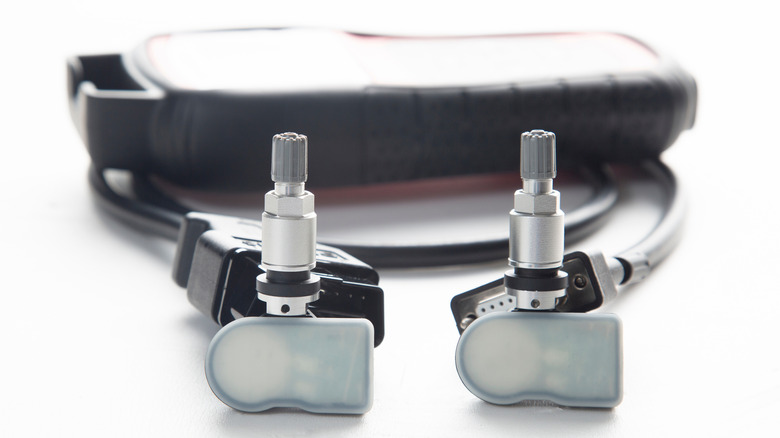
The sensors for your vehicle's tire pressure monitoring system (TPMS) can last longer than a set of tires. The sensors have embedded long-life batteries that can power the unit for 5 to 10 years, but there's a catch: when those non-replaceable batteries, replacing the sensors is the only option. It's not necessary to swap the TPMS sensors when replacing tires, but it's definitely worth considering if the vehicle is five to 10 years old or older.
The lifespan of TPMS batteries will depend on battery type, temperature exposure, installation quality, and vehicle usage. TPMS sensors on stored vehicles could have a longer service life than those in daily-driven cars. Why? The sensors will enter sleep mode when the vehicle is not moving, hence preserving battery life. Meanwhile, vehicles exposed to extreme heat or cold may need new TPMS sensors sooner than the expected 5- to 10-year lifespan, since batteries can degrade faster in hotter climates and fail sooner in freezing weather.
And when they fail, replacing them won't be cheap. Direct TPMS sensors, the type where the sensors are on the tire valve or inside the wheel, cost roughly $70 to $150 each, with labor costing $50 to $100 per tire. You can expect to pay more for newer car models or premium luxury vehicles. It's not that hard to swap the old sensors for new ones, and you can definitely replace them yourself if you have the right DIY knowledge and tools.
Replacing TPMS sensors is like changing tires
The process of removing old TPMS sensors and installing new ones involves steps similar to removing a tire from the wheel. But for this, there's no need to remove the tire from the rim entirely. You'll need to jack up the vehicle, support it with jack stands, use a lug wrench to loosen the nuts, and remove the wheel. The next step is to deflate the tire to break the bead from the rim, giving you easier access to the sensor on the valve stem or inside the wheel.
After that, it's all a matter of removing the old sensor, installing the new one, remounting the tire on the rim, inflating it, and putting it back on the wheel hub. Repeat the steps for all four tires (including the spare, if so equipped), and you're golden. However, you're not totally done yet, since recalibrating all the TPMS sensors is usually required after replacing them. Bear in mind that resetting or recalibrating the sensors may also be necessary if the tire was removed entirely from the rim (e.g., puncture repairs, tire rotations, etc.) or when replacing the 12-volt battery.
How to calibrate new TPMS sensors
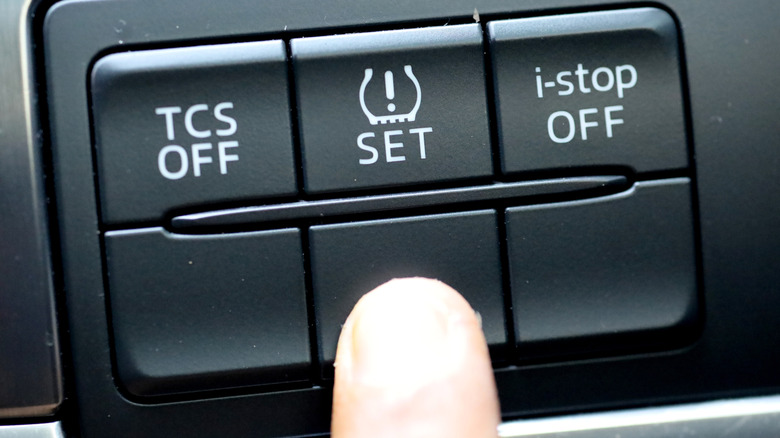
The recalibration procedure for new TPMS sensors will vary by vehicle type. For instance, some Honda cars are easier to calibrate without expensive scan tools. The typical procedure is to press and hold the TPMS button on the console or steering column, wait for the indicator to blink twice, and drive the vehicle for 30 minutes or more at speeds of 30 to 60 mph. However, that is not possible on all cars, and some may require a trip to the dealership or a bespoke scan tool to calibrate the TPMS.
You might think that there's nothing you can do to make the TPMS sensors last longer, especially since they're located inside the wheel and are inaccessible without removing the wheels and tires. On the contrary, periodically checking and correcting the tire pressure, installing valve stem caps (and keeping them on), and resisting the urge to use tire sealants will go a long way in extending the useful life of your car's TPMS sensors.
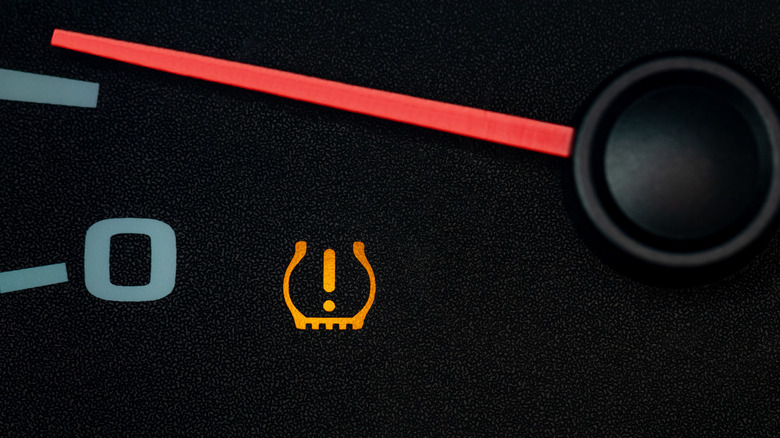
Finally, have the sensors checked ASAP if the TPMS warning light stays on, blinks, or remains lit after 60 to 90 seconds, or if the system displays inaccurate tire pressure readings, even after manually checking tire pressure and inflating all four tires. Driving with faulty sensors is not only dangerous, but it can also affect your car's fuel economy if the readings are inaccurate.