

Why MSRP Actually Means You Have Room To Negotiate

Sometimes you can't believe how we got here. And by here, we mean to a moment in time, when the entire informational ecosystem lies at your fingertips, and we even have artificial intelligence — and a law from 1958 is somehow still telling us how much a new car is supposed to cost. See, the reason we have a Manufacturer's Suggested Retail Price (MSRP) on cars, and not, say, a giant sticker price on a box of cereal, is that cereal manufacturers haven't been classed as unscrupulous.
Sellers of deliciously addictive cookie-flavored treats? Sure. Nefarious as hell. But car manufacturers and dealers were singled out by Congress in the mid-1950s, when an Oklahoma Democrat (we know, times sure have changed), Senator Almer Stillwell Monroney, spearheaded legislation called the Automobile Information Disclosure Act of 1958.
Thereafter, that window sticker was dubbed a "Monroney." In accordance with federal law, they are still used today and are affixed to either the windshield or a side window of the car. They include crucial details, namely, and most importantly, the MSRP. The letter S in that acronym stands for "suggested," and, by law, it is the amount the manufacturer suggests the car should sell for. But MSRP includes padding for the dealer, i.e., their profit. They pay a dealer invoice price, and when you shop, you're trying to squirm below the MSRP and above their invoice price. Squirming is the trick. And it's why we just love car dealers, right?
You can't know the invoice, but you can get close to what that car is worth
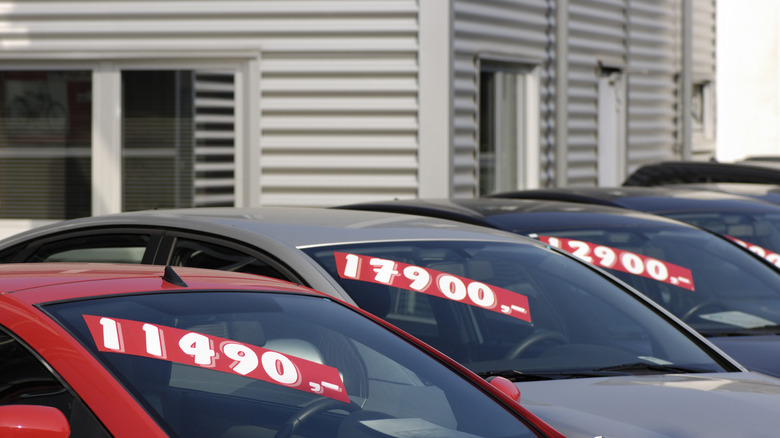
Car dealers don't want to tell you what they paid for their inventory, any more than the grocer wants to tell you the price they paid for the T-bone. Because you would never want to pay more than what that steak costs them. So you're unlikely to know the invoice price, but that's okay, because there are tools to tell you what the car model you're after is actually selling for.
One handy source is Truecar.com, a transaction-based database that provides a live index of what cars are actually selling for. Yes, we know, TrueCar isn't a charity. They're in the business of helping car dealers sell their wares. And their network of 13,000 franchises represents about 35% of the nation's dealers. So even if you don't buy through them, this gives you a decently-sized snapshot, sorted for your zip code, so you could bring it to your dealer as an argument for what others are paying compared to the MSRP. In the case of this Ford Mustang Mach-E, we found a savings of $2,361 off the $39,840 MSRP.
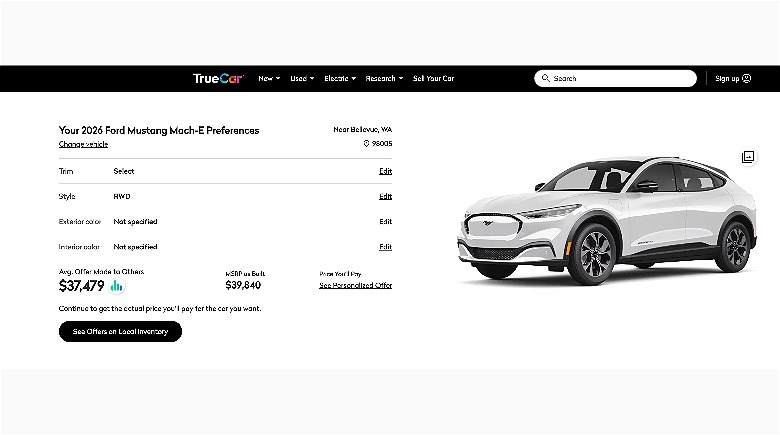
TrueCar says its data reflects about two months of sales, and that its transaction prices run within $20 of the nationwide average. They also saytheir TrueCar Price Graph is weighted by similarly configured vehicles, and that's important. It should make it easier to ballpark, say, the car optioned with heated seats and the upgraded sound system, without having to know if that's the XLE or the LX or whatever packaging that lives in the dealer's head — but probably not yours.
You can use similar tools for used-car shopping
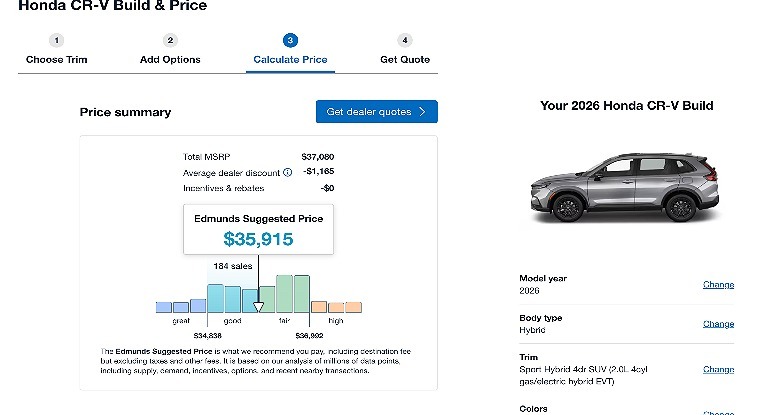
TrueCar is hardly the only tool in the game. Edmunds shows what it calls the Edmunds Suggested Price, and like TrueCar's Price Graph, it's a measure of what other shoppers are paying in your area. Yep, Edmunds is in the business of selling cars, and they're owned by CarMax. They use CarMax and other dealer data to determine the Edmunds Suggested Price. Even so, when we faux shopped for the 2026 sales champion, the Honda CR-V in the Los Angeles area, their $35,915 suggested price was $1,493 below the $37,080 MSRP.
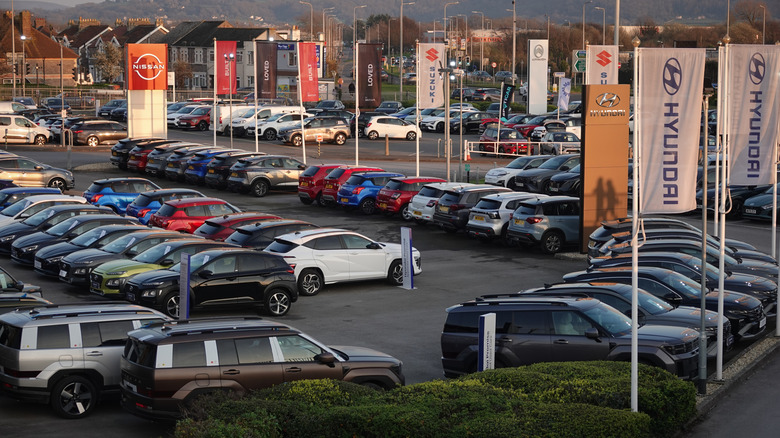
If you're shopping used, CarGurus offers a ballpark of the average selling price of most models. This is based on what they call Instant Market Value, which works much like the tools on TrueCar and Edmunds and grades sale prices for listings in your area on a scale of Great, Good, Fair, High, or Overpriced. CarGurus says they track data at a granular level, including factors such as mileage and trim.
One downside of CarGurus is that it only tracks used-car dealer pricing, not private used-car sales. Even so, their network of over 40,000 dealers should give you a good idea of the going rate for a specific model, and that data will come in handy when negotiating with a private seller.
And used- and new-car transactions are more alike than you think, because MSRP is a mythical figure that isn't what most people pay. The statistic that matters is the average price at which any car is actually selling for. And knowing that number is a far better baseline for getting the price you want.