

Can You Legally Buy Retired Road Signs, And How Can You Use Them?
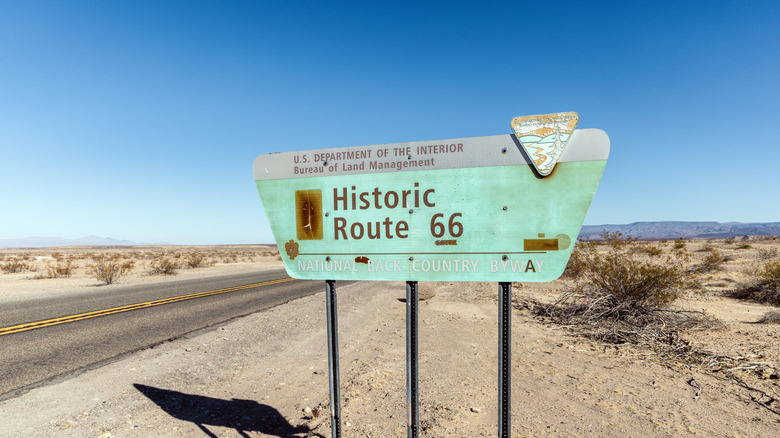
The short answer is, yes, you can buy retired road signs — and if you're lucky, you'll find a pink one. The long answer is you'd better be darned sure they're retired. And the even longer answer is that it's a bit messy in how signs get retired in the first place, and who then has the legal right to sell them.
Of course, you should be asking why a sign would get decommissioned. And you should be asking what happens if you take a sign down that wasn't officially out of service. And also, if you decide to publicly display, oh, a street sign or a warning or caution sign, what are the consequences? The answer to all of the above is going to be, "it depends." Oh, yes, there are definite risks and conditions for doing any of this incorrectly, but the variable is state rather than federal law. And oh boy, there are some states where illegally possessing a really cool speed-limit sign, like the kind they use in parts of Texas, would get you serious jail time.
But if a government entity decommissioned a display (your clue for how it might enter into the public domain) that's probably based on federal guidance listed in the insomnia-curing Manual on Uniform Traffic Control Devices. This is the bible for sign viability maintained by the U.S. Department of Transportation. They want local municipalities to measure factors such as a sign's reflectivity, and suggest that signs ravaged by gunshots "May encourage more gunshots to this and other signs. The sign should be replaced or repaired as soon as practical." Although perhaps you might want to own a bullet-riddled sign as a souvenir?
Don't you dare steal a traffic sign in the Republic of Texas
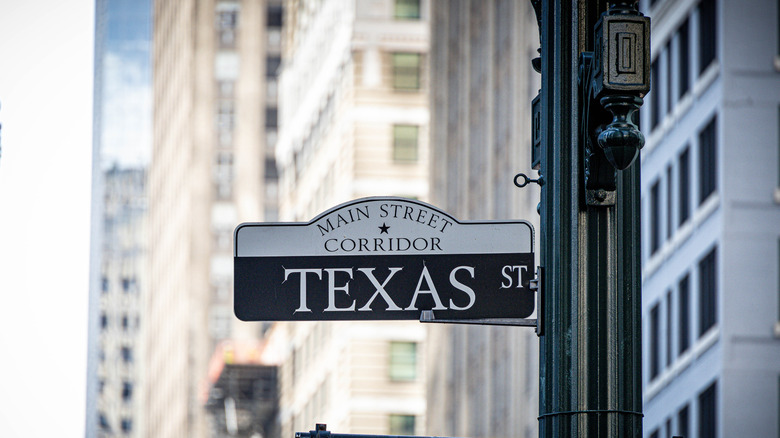
Just so we're clear on what constitutes a retired road sign, it means they are officially no longer in use and, forgive us if this is stating the obvious, not currently attached to a sign holder. For instance, should you get inebriated in Texas and decide on a whim that you must own the local no-parking warning (where perhaps you parked your Cadillac), we highly recommend you sleep it off instead. Because Texas makes it abundantly clear that if you mess with a "traffic control device," you'll face felony, not misdemeanor charges, and at least two years in prison.
If you (dumbly) decide to take up a career as a sign stealer, Michigan is a better choice. It's just a misdemeanor there, even if you commit the crime three times. You can be a serial sign defacer or thief and get no more than a year in pokey. Or, you know, just don't steal signs.
But this raises the very rational question of how signs filter into the public market. Again, this varies by state and municipal statute. But because signs wear out, get damaged in car accidents, and the public often makes sport of defacing and shooting them, it's logical for the government to have a consistent way to make some cash off the sale of signs.
The city of Seattle, for example, lists items that are hard to price (meaning not a laptop or an office chair) out on public auction sites and specifically mentions govdeals.com as a common outlet. Head there, look under the subcategory of Traffic Signals, Signs, Controls, and you'll find everything from street lights to emergency signs, and standard signage as well. You'll also note that govedeals.com tells you where the signs and signals are from, listing cities like Little Rock, Arkansas, and Houston, Texas, among many others.
Do not display a decommissioned sign at the mouth of your driveway

In case you're wondering, yes, some states, like Iowa, do have formal contracts with sites like govdeals.com. Connecticut is contracted to sell its wares to a site called publicsurplus.com, which contracts with state and municipal agencies across the country.
The question remains, however: What you can do with a legally purchased speed-limit sign? And the answer is that you most definitely cannot nail it up as a 65 mph limit on your driveway if anyone could see it from the street. Yes, as with the penalties for ripping off the stop sign at the end of your road, said laws vary. In New York State, for example, displaying any sign that might be "construed as an official traffic-control device" can get you 15 days in jail. Do this three times within 18 months (who would do that?) and you'll be locked in the clink for up to three months.
Notably, in Georgia, if you deface or alter a sign that causes injury or death to someone, that can get you between two and 15 years of jail time. So, yeah, don't. Also, definitely don't publicly display that legally purchased street sign, or even a replica of one, in the state of Georgia. That can cost you $1,000 — or up to a year in jail.
However, even in Georgia, you can hang a 65 mph speed limit sign inside your garage. But don't dare do that on its exterior. Then again, is that riskier or less risky than a coexist lawn sign? We'll just issue an edict right now and say it's at least smarter than driving a car that plainly broadcasts that you make terrible decisions.