

What That Red Border On Some Speed Limit Signs Actually Means
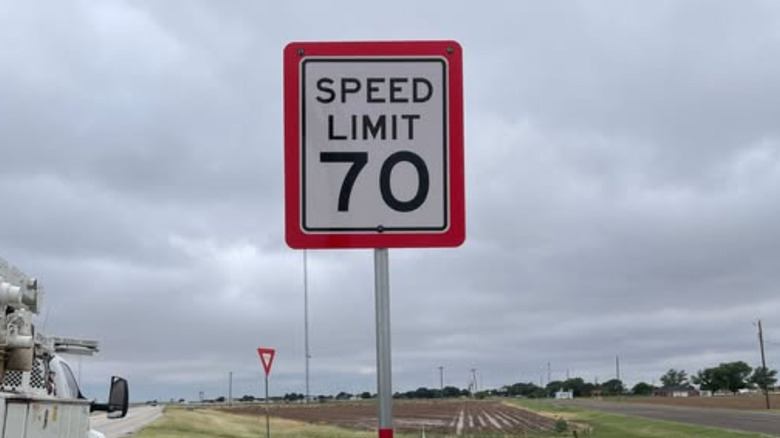
Texas is known for its great wide open expanses of flat, open farm land, and the long straight highways connected between them. The Lone Star State is also associated with higher-than-average speed limits on those long stretches of pavement. When you're traveling Texas roads in your hot rod and put your foot down, you might become accustomed to driving over 80 miles per hour regularly. Being that Texas is one of the most dangerous states for motorists in the U.S., featuring 1.52 deaths per 100 million miles driven, the state is looking to crack down on how normalized extreme speed has become. As a result, it recently started implementing red border "final warning" speed signs, along with increased patrols during certain periods.
Since Texas highways often feed directly into the surface street of a small town, the state has many locations where speeds drop dramatically. In order to notify drivers of a reduced speed ahead, Texas has implemented a three-stage warning system with three different road signs.
When a roadway comes to a reduced speed zone, the Texas Department of Transportation typically places a fluorescent yellow sign reading "reduced speed ahead," followed by a standard white speed limit sign. In some locations, Texas will give you the "red microprismatic border" on the first speed limit sign at the legal reduced speed.
The Efficiency of Texas' Red-Border Signs
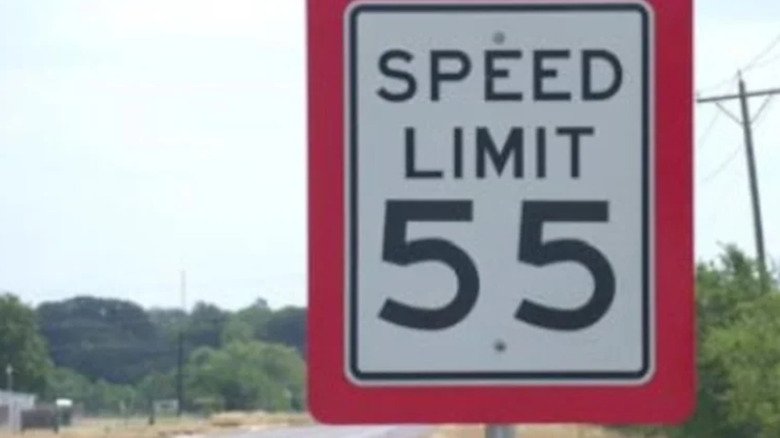
Based on speed data collected and observed by the Texas Transportation Institute leading up to the new red-border signs, at the sign, and downstream of the sign, Texas noted an 18% reduction in vehicles exceeding the limit shortly after entering the speed zone. This correlated to an average reduction in speed at night, and a significant reduction in average passenger vehicle speeds entering the speed zone.
As a result of the study, the TTI recommended widespread implementation of the red border speed limit sign program statewide, "where the speed limit is reduced with no apparent change in roadway conditions." This is a program that has been long in development, as it was originally approved for use by the Texas Department of Transportation all the way back in March of 2003.
There seems to be practically no downside to implementing this speed management system nationwide, given its eye-catching design and quantifiable safety improvements resulting in fewer fines and police interactions. These red-bordered signs don't really function differently from any other speed limit sign. It's simply a clearer way of notifying drivers that a speed limit has been reduced, and you need to be at that speed from this sign until further notice. In comparison, the efficiency of systems like "speed limit enforced by aircraft" signs is much more controversial.