

Can Flock Cameras Tell How Fast You're Driving?
Okay, so it's not a stretch to say everyone (well, at least almost everyone) hates bee stings. But you know what people might hate more than the summer scourge that is a bee sting? Speeding tickets. That, and feeling as though their privacy has been violated, and there's nothing they can do about it. Well, that's the reality of our roads and the gazing eyes of the cameras that cover them. After all, speed cameras are used for public safety operations in California, New York, Florida, Colorado, Tennessee, the District of Columbia, and 20 other states.
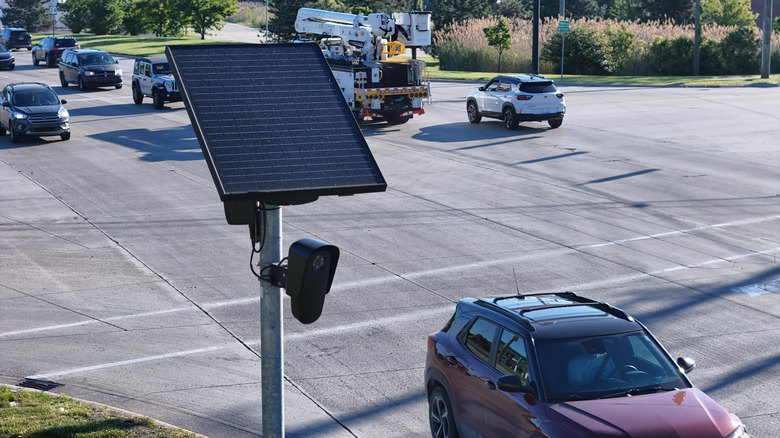
But no cameras seem to catch the same heat from angry motorists as Automated License Plate Readers (ALPRs). Unfamiliar? Perhaps you've heard of the oft-reviled Flock cameras. That's what we're talking about here. They're the controversial collection of high-tech surveillance cameras that can find a car even without a license plate. More recently, these cameras have raised concerns about invasive surveillance networks. But it raises another question: can those advanced ALPRs, like Flock cameras, determine your speed as a dedicated speed safety camera would? And does that mean you should expect a speeding-related nastygram in your mail courtesy of one of these hated cameras?
Can these Flocking cameras bust you for speeding?
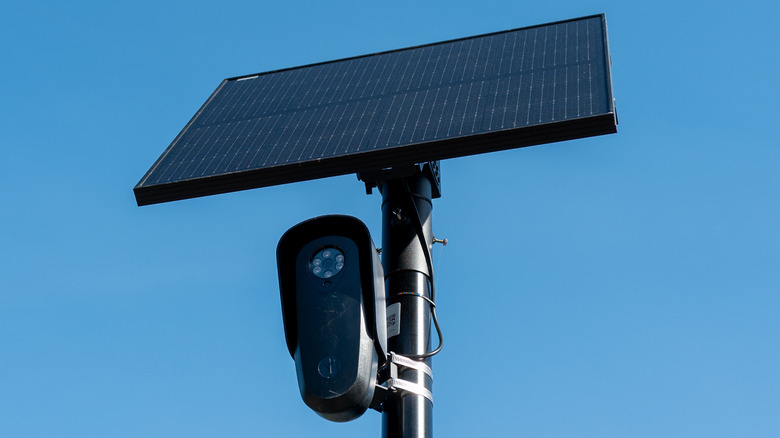
ALPR technology isn't new. The British Police Scientific Development Branch developed the technology 50 years ago. In 1981, UK police used it to identify a stolen car and make the first arrest utilizing ALPR technology. Now, decades later, Flock Safety claims it has changed the game by providing a lower-cost ALPR system that uses a cellular network instead of WiFi and features solar and battery-powered architecture.
So, what exactly do these nosy cameras capture? Flock Safety says its cameras are "built to identify vehicle details that may help generate investigative leads." That means rapidly capturing clear images of vehicles moving at speed, regardless of ambient light. At speed, sure. But what about a vehicle's speed itself? Flock Safety is up front (real up front) in saying that its "cameras do not currently measure vehicle speed." Notice that "currently" is in there.
That doesn't mean you can't get a ticket in the future as a result of data acquired using Flock's network. Currently, Flock Safety offers a Message and Speed Trailer array that combines an ALPR with the sort of check-your-speed signage you'll find in neighborhoods nationwide. That or a Speed Feedback Trailer "focused on vehicle recognition and speed feedback." With either setup, users can access the data in Flock's network. Then there's the fact that some stateside speed cameras have already connected to Flock's ALPR network. So, while you're not likely to get a citation for speeding directly from a Flock camera, the footage can be used to track and investigate your driving.
Cameras can still nail you for speeding
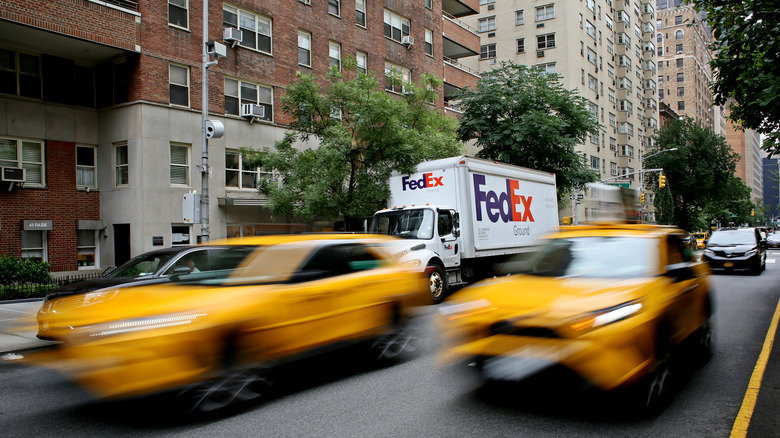
Okay, so we've established that Flock says its ALPR systems don't track vehicle speed. What they do, however, is shoot 6 to 12 or so pictures of a vehicle as it passes by. Really, that's all you need to determine speed, though. Using fixed objects to determine distance, an investigator can get an idea of scale. Then, using the number of pictures taken, frame rate, and distance traveled, a user can determine just how fast a surveilled vehicle was traveling between photos. Presto: camera coverage verifying your lead foot.
Of course, that's a lot of work when dedicated speed cameras can measure your speed accurately. Those automated enforcement cameras capture images of speeding drivers, specifically using sensors like LiDAR or radar. Authorities can then send a citation to a speeder.
Flock cameras capture everything from license plate information to make, model, and beyond at speeds up to 100 MPH. From there, it's easy for users to track drivers' movements without their consent, even though the company says it doesn't specifically detect speeding. It's (gasp) such a surprise, then, that these license plate readers keep getting vandalized.