

Do Variable Speed Limit Signs Improve Safety?
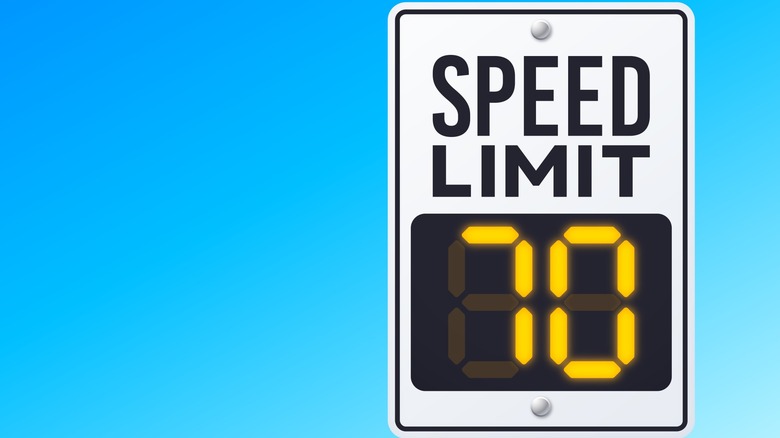
Let's define some terms off the bat. Variable Speed Limit signs (VSLs) are pretty common digital- rather than painted speed limit postings. As the name would suggest, these signs don't display a fixed, designated speed limit decreed by traffic engineers. Instead, the posted speed is fluid and is based on conditions, like children present in a school zone, weather, and possible other factors like the makeup of cars and trucks in traffic.
You probably have some signs like these in your neighborhood, most likely in a school zone. And federal data says at least 13 states have deployed VSLs, though some states have also ditched them. You'll almost surely see more of these in construction zones, too. where a lot more state agencies have adopted them for this temporary use.
But the gist of this story is about VSLs on highways, because there's more study on their effectiveness for that application. For example, 2021 research from the U.S. Department of Transportation (DOT) says VSLs can lead to a 51% reduction in fatal injuries or crashes and a 34% reduction in all crashes.
The theory goes that VSLs reduce the ratio between the fastest-moving cars and the slowest drivers, so that, like in city traffic, everyone is more comfortable traveling closer together, which allows freeways to carry more traffic. Also, drivers traveling at, say, 40 mph, get where they need to go, and any possible accident would be at a slower, less severe speed.
The mixed signals of VSLs
The 2021 U.S. Department of Transportation (DOT) Federal Highway Administration report that showed massive benefits for VSLs is largely based on a compilation of data from three separate studies across Wyoming, Georgia, and Virginia, and some additional studies of systems used in other states.
But the gains aren't universal, in part because a great deal depends on how VSLs are deployed and enforced, as well as how much the signs seem to reduce commuting times. Meaning, when do the variable speed limits go into effect? Are these merely a speed trap, or are they meant to control traffic flow and get everyone where they need to go? Also, would traffic naturally slow down anyway, like during congestion or a whiteout blizzard? Researchers have found that consistency is king and leads to public buy-in.
When VSLs keep cars moving, they seem effective. On an ever-congested stretch of Interstate 5 in Seattle, VSLs were shown to cut accidents by 29%. The researchers also cited Georgia using VSLs to reduce rear-end accidents by 35.2%. But in St. Louis, in part because cops didn't know if they could enforce the variable speed limits, they proved less effective, and led to a public backlash.
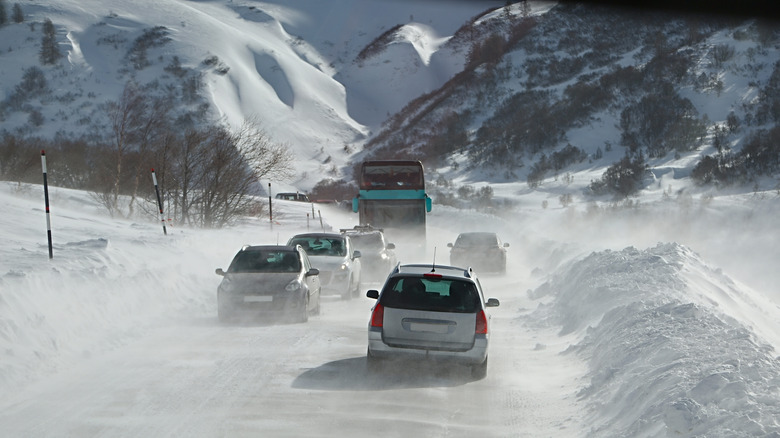
One of the biggest numbers that headlined the study came from Wyoming, for a very specific use case: slowing traffic for severe weather. Wyoming officials found that crashes on a remote section of Interstate 80 were slashed by 67% of crashes per week and estimated that would equal 50.1 fewer crashes per year.
Is a different speeds for trucks more important?
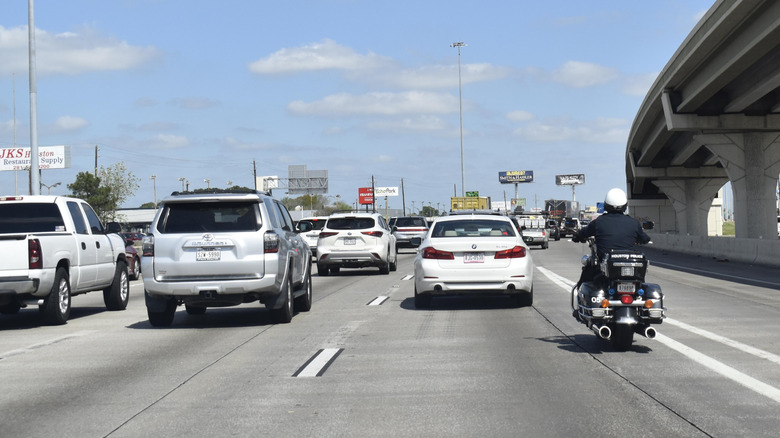
Partly, according to advice from the National Highway Traffic Safety Administration, VSLs should only be put in place when it's clear to the public that just because the speed limits change doesn't mean they're suggestions — they're still actual limits.
And in that vein, according to researchers at the University of Windsor, Ontario, truck drivers tend to be more compliant with variable speed limits than drivers of cars. In turn, if you could limit speeds based on the volume of truck traffic, you might reach a golden mean where we're all progressing. And with the very important upside of reducing the deadliest kind of accident, since trucks and cars don't play nice during collisions.
So experimenters created a model where they're constantly adjusting highway speeds specifically for cars versus trucks. What they found was that their wonkily dubbed "differential variable speed limit" (DVSL) enabled quicker merging and overall improved the flow of traffic. It was also least likely to cause rear-end crashes, which, again, you don't want, especially when a truck hits a car.
However, the University of Windsor authors caveat their work, noting that it's a model, not a live experiment with real humans in real traffic, and relies heavily on whether people comply with (or ignore) posted speed signs. The more likely solution may be holistic, wedding connected-car tech to VSLs. We'll also likely need vehicle-to-infrastructure beacons. All of which may finally make smart highways a reality. Or we'll all just pile into Waymos, because they're already better at avoiding accidents than human drivers.