

What Mechanics Have To Do To Service Sealed Transmissions
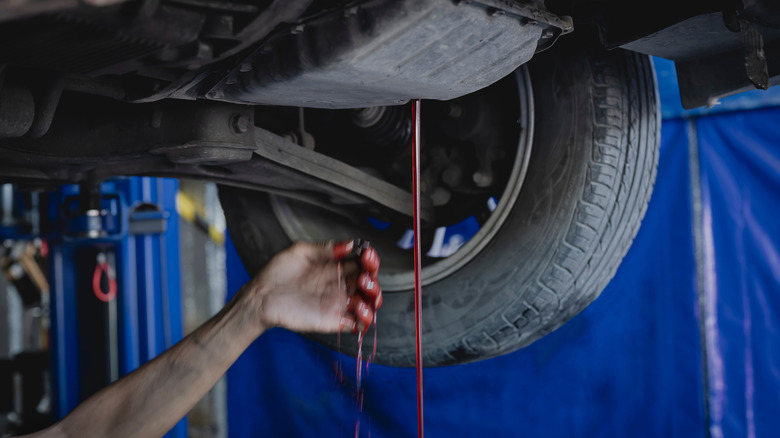
Maintaining an automatic transmission is more straightforward if the unit has a dipstick. They make it easy to check the fluid level and enable car owners to check the fluid color to see if it's time for a fluid change. However, some modern cars have eliminated the transmission dipstick, which could pose a problem for car owners who love tinkering and servicing their own vehicles.
Automatic transmissions without dipsticks are referred to as "sealed" units, and manufacturers often advertise sealed transmissions with "lifetime automatic transmission fluid (ATF)" inside, but there's no such thing as a forever fluid. Unfortunately, checking the ATF condition and fluid level in sealed transmissions requires the right tools, skills, and technique, which is why automakers generally recommend that only qualified mechanics work on sealed transmissions.
The process starts by placing the vehicle on a lift to access the ATF drain plug and refill hole. In some cases, the mechanic might need to remove the left-front wheel and some panels to find the plugs. Next, the technician will loosen the plug, drain the fluid, and use a fluid pump to refill the transmission with ATF. It may sound like a DIY job that you can do in the garage, and you probably can if you're familiar with the process and have the right tools. However, checking the fluid level after refilling, which is effortless if the unit has a dipstick, is not exactly a walk in the park.
ATF needs to be warm (not hot) to check the fluid level
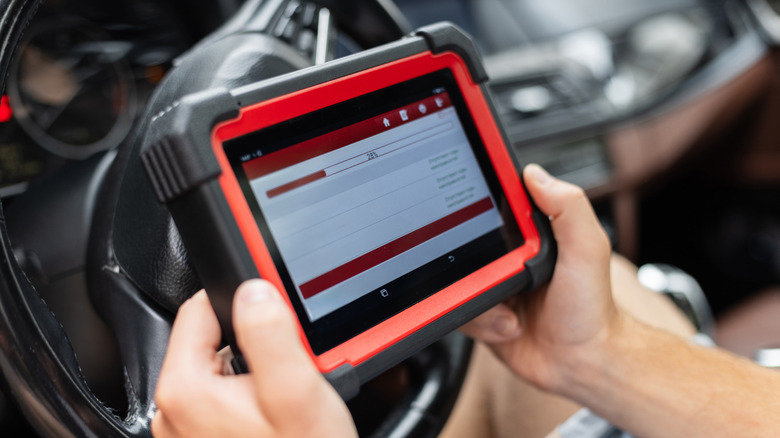
It's tricky to adjust the fluid level in a sealed transmission unit. Since there's no dipstick, mechanics will typically use an OBD-II scanner, an infrared thermometer, a laptop with diagnostic software, and, in some cases, a jumper wire connected to the OBD-II port to complete the diagnostics. Freshly poured ATF should be warm before adjusting the fluid level. If it's too hot or too cold, the fluid level will not be accurate.
For instance, certain Lexus and Toyota trucks and SUVs should have the fluid level checked if the ATF is between 97 and 115 degrees Fahrenheit, which you can only determine using a scan tool, computer software, or an infrared gun. In some cars, installing a jumper wire on two pins of the OBD-II port is required to determine if the ATF is warm enough. The process involves repeatedly shifting the gear lever between neutral (N) and drive (D) while simultaneously applying the brakes.
After warming the ATF, the mechanic will loosen the drain plug again (some vehicles have dedicated drain plugs for checking the fluid level) and wait for the ATF to drain to a trickle before reinstalling the drain plug. Not all vehicles are the same, and the process may differ by make and model, which is why servicing a sealed transmission requires a certain level of training and expertise.
If you have a vehicle with a sealed automatic transmission, don't wait for something to feel odd before bringing it in for inspection. Automakers recommend transmission servicing at 60,000 to 100,000 miles. Vehicles that frequently tow, drive in stop-and-go traffic, and drive in extreme hot or cold weather may require a transmission fluid change before the recommended 60,000-mile interval.
How much do mechanics charge to service a sealed transmission?

It all depends on the type of transmission service and the vehicle make and model. A basic fluid change, where the mechanic will drain about 30% of the ATF and refill to the proper level, will cost $150 to $175. Meanwhile, a complete ATF flush will cost $165 to $290, since the mechanic will use a specialized pump and flushing liquid to drain all the fluid from the transmission. Expect to pay more if the mechanic recommends dropping the ATF oil pan and replacing the transmission oil filter.
The cost of an ATF fluid change is less than what you'd expect to pay for a new, rebuilt, or used transmission, so keeping up with maintenance will save money in the long run. Since it's virtually impossible to check the fluid condition without a dipstick in a sealed transmission, you'll need to rely on the odometer reading to know when to visit a mechanic or garage for servicing. Fresh ATF or CVT (if you have a continuous variable transmission) fluid is the lifeblood of any automatic transmission, and timely servicing will ensure the gearbox delivers many years of trouble-free service.