

U.S. Space Force Is Learning To Scramble Rocket Launches Like They're Fighter Jets
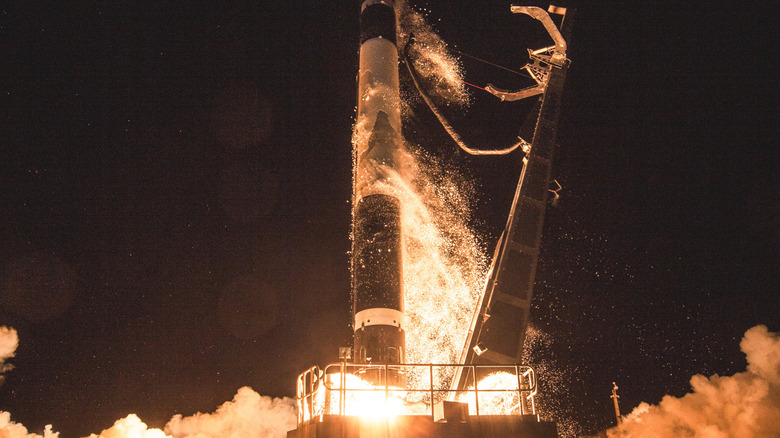
Last week, New Zealand space company Rocket Lab (which also has an American subsidiary) smashed the record for launching an Electron rocket with a payload for a specific mission. As part of the U.S. Space Force's Tactically Responsive Space (TacRS) program, Rocket Lab was given an unscheduled Notice to Launch, with the objective of putting one of the company's Pioneer spacecraft into orbit to participate in a drill in the minimum possible amount of time. That time: 16 hours, 42 minutes in the end, or 10 hours faster than the previous record holder from another TacRS mission. Planning a rocket launch usually takes ages, as in months of sometimes even years. Rocket Lab just demonstrated it can be done in less than a day, and with an actual payload that then went on to do actual work.
Essentially, the Space Force is figuring out how to scramble space rockets the way the Air Force scrambles fighter jets. As activity in space gets bigger and bigger, it's getting more and more likely that satellites could get targeted in a conflict. China, in particular, is building out a range of anti-satellite (ASAT) weaponry, including highly maneuverable spacecraft that could forcibly seize an enemy object in orbit — or even ram straight into it. The USSF wants to be able to respond to such a crisis rapidly, like every other military branch does.
It doesn't have to be higher or farther, but it does need to be faster
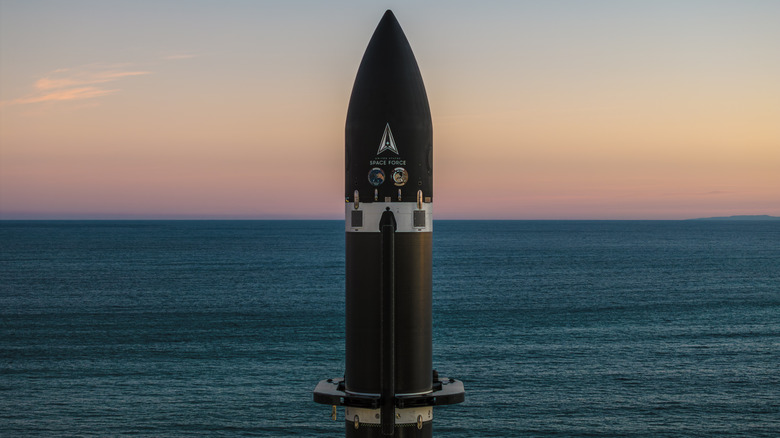
Even after the hyper-rapid launch, the mission isn't done yet. The next phase of Victus Haze (yes, that is an actual mission name and not what Immortan Joe named his bong) is a rendezvous and proximity operations drill in space. Rocket Lab's Electron rocket deployed a Pioneer spacecraft, which the company says was built for maneuverability. It is simulating a direct response to a wayward satellite, played by a Jackal spacecraft made by True Anomaly. Basically, if a spacecraft became a threat, unintentionally or otherwise, how fast could the Space Force do something about it? Pretty fast, at least by space rocket terms. But if the bad guy can hit their target in just a few hours, well, we're still out of luck there.
The TacRS program is ongoing, with three more missions on the way in the next year. Victus Surgo and Victus Salo (these names!) will both be launched by SpaceX Falcon 9s, carrying spacecraft by Impulse Space and MIT, respectively. Victus Sol (now we're just playing 'Destiny 2') will be launched by a Firefly Alpha. If those somehow get even faster than what Rocket Lab just did, space really is becoming a place you can just go to, instead of having to plan for. What a time to be alive.