

Why Ford's 3.0L Power Stroke Diesel Died An Ignoble Death
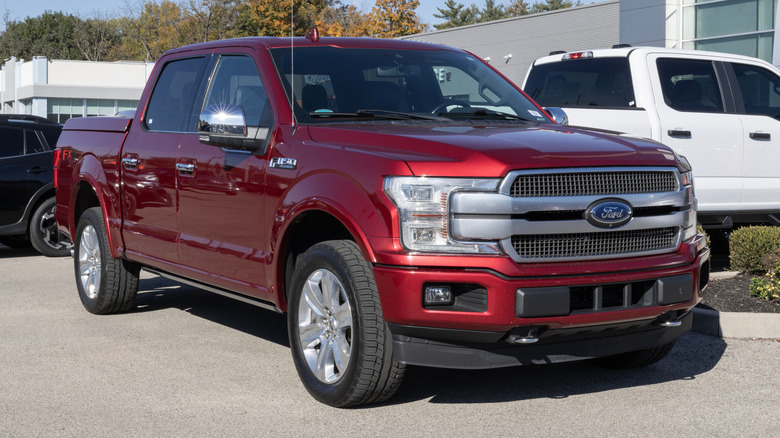
Ford introduced the 3.0-liter Power Stroke in the 2018 F-150 as the fuel-economy option in the lineup — the engine to get if you wanted diesel torque and highway efficiency without stepping up to a heavy-duty truck. It returned up to 30 mpg on the highway and 440 pound-feet of torque, numbers that made a genuinely strong case for anyone who towed regularly and kept an eye on fuel costs.
For a brief moment, it looked like Ford had quietly built one of the most sensible F-150s ever made. However, it lasted just four model years. Ford pulled the plug after 2021, and the 2022 F-150 lineup moved on without so much as a farewell press release. No successor, no upgrade path, no explanation beyond a corporate memo pointing at shifting customer preferences.
The reasons behind that decision stack up fast, and none of them are flattering. A new hybrid power train arrived and outclassed it on power, torque, and towing capacity all at once. Buyers also kept choosing gasoline engines over the Power Stroke, leaving the diesel to rack up low sales numbers year after year.
And underneath all of that, the engine carried reliability issues that made ownership more high-maintenance than the average F-150 buyer bargained for. These days, some deem the 3.0 Power Stroke underrated, but others believe its demise was entirely logical.
Why the 3.0L Power Stroke got sacked
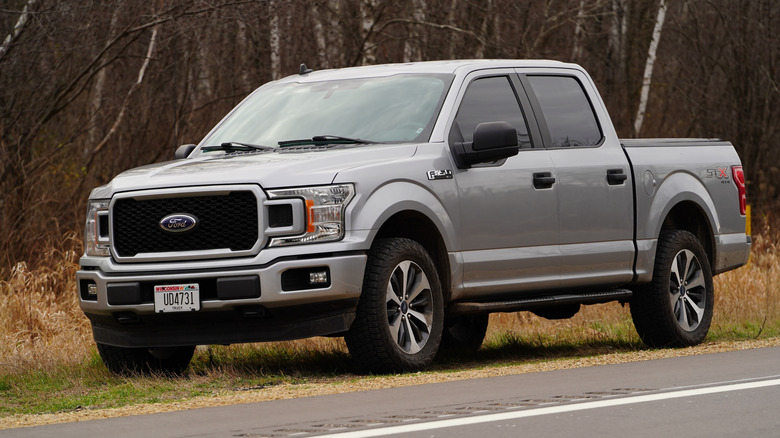
When the discontinuation was confirmed in July 2021, a Ford representative issued a statement to MotorTrend that summed up the situation bluntly: "Our customers overwhelmingly order our EcoBoost V6 gasoline engines, which is why we are removing the diesel from our lineup. For customers who need maximum towing torque, we now offer the F-150 PowerBoost as the ideal combination of capability, power and fuel efficiency, which wasn't available when Power Stroke was introduced."
Translation: Buyers didn't want it, and a better option had arrived. The numbers back that up. The PowerBoost hybrid puts out 430 horsepower and 570 lb-ft of torque, tows 12,700 pounds, and carries a maximum payload of 2,120 pounds. The 3.0-liter Power Stroke managed 250 hp, 440 lb-ft, 12,100 pounds of towing, and a payload of 1,840 pounds. The Power Stroke was rated at 22 mpg city, 27 highway. The PowerBoost hybrid came in at 24/24.
However, diesel fuel prices have been higher than regular-grade gasoline prices for nearly 20 years. The engine Ford marketed as the fuel-saver of the F-150 lineup was burning fuel that costs more while offering marginally better mpg ratings on the highway, and worse ones in the city. For most buyers, the math simply didn't add up. The price premium made a bad situation worse.
By 2021, the Power Stroke was $500 more expensive than the PowerBoost throughout the lineup, couldn't be paired with the 36-gallon extended range fuel tank, and wasn't available with Pro Power Onboard — a mobile generator that became a genuine selling point after Texas's 2021 winter storm crisis. In essence, Ford was asking buyers to pay more for a truck that didn't do anything all that much better.
Common problems with the 3.0L Power Stroke
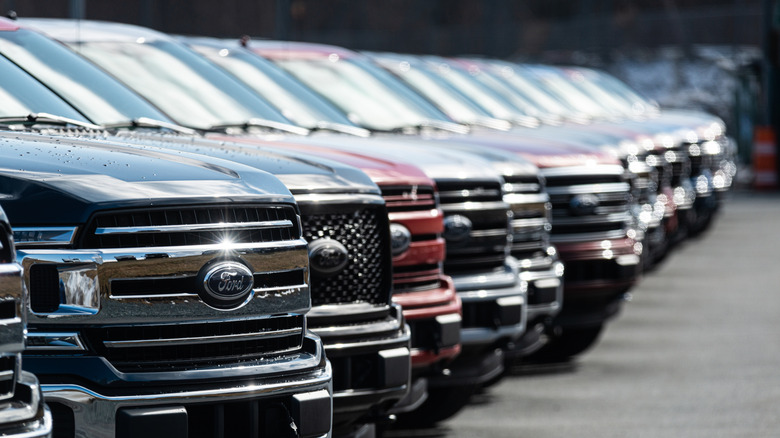
Last, but certainly not least, the 3-liter Power Stroke suffered from problems that helped push the last nail into its coffin. The worst issue was the Bosch CP4.2 high-pressure fuel pump, which simply was not designed for 520-plus-micron diesel fuel available in the U.S. Because of that, metal-to-metal contact became a problem, and it led to small glitter-like metal shavings finding their way into the fuel system. Since this affected the rails, pump, injectors, valves, and fuel lines, the only solution was to replace them all — a task that could cost $10,000.
The Power Stroke can also suffer from oil dilution during active regen cycles. Whenever fuel is injected into the cylinders, some of it can bypass the piston rings. When this happens, the fuel can enter and mix with the oil in the pan, which contaminates the oil, reduces its viscosity, and accelerates wear. So it became necessary to replace the oil after 5,000 miles instead of the factory-recommended 10,000.
Lastly, the Power Stroke experiences problems with its diesel particulate filter and exhaust gas recirculation cooler, both of which make it unsuited for short-distance trips. Clogged DPFs and EGR cooler failures were a recurring complaint throughout the engine's production run. And not only was the Power Stroke struggling against its own in-house alternatives, it also got outgunned by Chevy's 3.0-liter Duramax — which launched in 2019 with 277 hp, 460 lb-ft, and a 33 mpg highway rating, beating the Power Stroke on every metric that mattered.