

Here's Why Hood Ornaments Have Nearly Disappeared
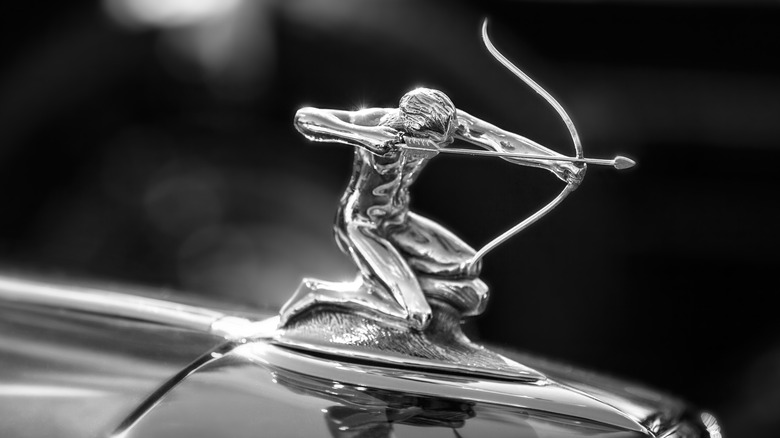
There was a time when driving a car with a hood ornament meant you were behind the wheel of something more special than other vehicles on the road. Hood ornaments started appearing in older cars as mere decorations to spruce up an otherwise industrial-looking radiator cap. Much like modern manufacturers use distinctive grille designs as visual signatures — such as BMW's kidney and nostril grilles – early vehicles often made the radiator a focal point of the vehicle's styling.
Automakers and aftermarket companies began adding "mascots" disguised as radiator caps, and the trend stuck. The earliest hood ornaments included animals, airplanes, people, Mickey Mouse (no kidding), and Charlie Chaplin (we couldn't make this up). For example, Bugatti's iconic Dancing Elephant, a radiator cap, was a recreation of the actual work of Rembrandt Bugatti (younger brother of company founder Ettore Bugatti).
Hood ornaments were everywhere in the early 20th century, but the styling element disappeared gradually into the modern era. Safety experts began questioning the potential collision hazard of hood ornaments in the 1960s. Then, European legislators in the early 2000s regulated hood ornaments to be collapsible to prevent them from posing a risk to people or pedestrians who might get hit by the car.
As cars got sleeker, hood ornaments got outdated
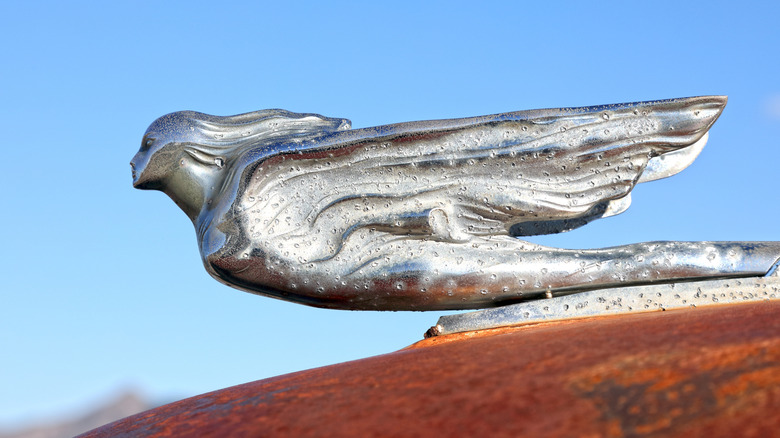
Large, flat surfaces like exposed radiators are not exactly aerodynamic-friendly, and an upright hood ornament adds drag. As production cars transitioned from open, enclosed, to streamlined bodies, tucking the radiator under the hood (and getting rid of the hood ornament) significantly streamlined a car's design. Eventually, the cumbersome brass and copper radiators of vintage cars gave way to smaller, thinner, lightweight, and more efficient aluminum units. Meanwhile, automakers began designing lighter bodies to make cars more fuel-efficient.
Despite stricter safety regulations, not all carmakers abandoned hood ornaments altogether. Cadillac kept the iconic crest on the hood of its cars from the 1960s to the 2000s, and top-end Mercedes-Benz models marked prestige with their three-pointed star hood emblem. Six-figure ultra-luxury cars from Rolls-Royce, Bentley, and the new Mercedes-Maybach S-Class V12 are the remaining few that provide genuine throwbacks to the glory days of hood ornaments.
Hood ornament theft was a real thing
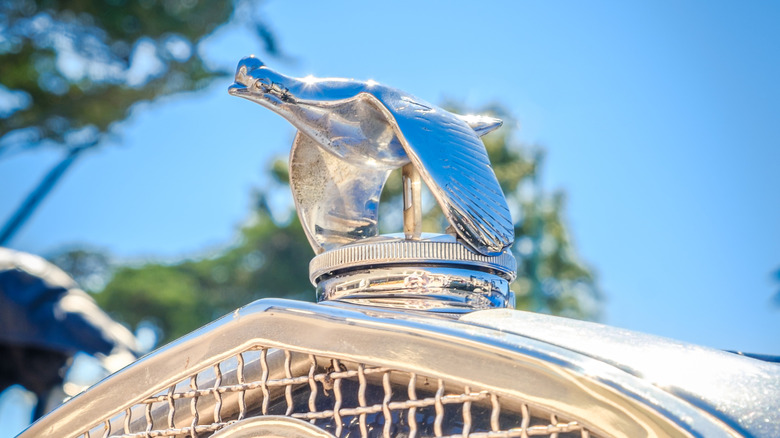
Instead of phasing them out completely, Rolls-Royce and Bentley hood emblems were updated to slide down and retract out of sight, either at the owner's behest (by pressing a button) or automatically. In the 70s, Mercedes-Benz incorporated spring-loaded bases for the hood ornaments of its cars that bend or turn in an accident, but the design also made them harder to steal. Theft similarly became a problem for Rolls-Royce and Cadillac owners when hood ornaments became collectible items. This theft isn't necessarily surprising with such gorgeous design renditions like Packard's Goddess of Speed, Chevy's Master Six Eagle, Jaguar Leaper, and the Pontiac Chief hood ornament.
Although hood ornaments had rather humble beginnings, modern design and safety standards have largely made them footnotes in automotive history. They're still around in some expensive billionaire's toy, and they will forever be associated with status, opulence, prestige, and the good old days of motoring.