

How Often Should You Check Your Engine Coolant?
Cars with internal combustion engines rely on complex cooling systems to keep the engine's temperature within the appropriate range. If this system fails and an engine's temperature starts climbing, it's bad news. Excess engine temps can cause irreparable damage to many of an engine system's components and may lead to blown head gaskets, damaged pistons, broken thermostats, and much more.
One of the best ways to prevent your car's engine from overheating and causing critical damage is to regularly check the engine coolant. While many coolants are rated for multi-year use, it's still best to check your coolant at least once a year, maybe even more often for the hyper-vigilant among us. Not doing so could be one of the most expensive automotive mistakes you'll ever make, as engine repairs are neither cheap nor convenient.
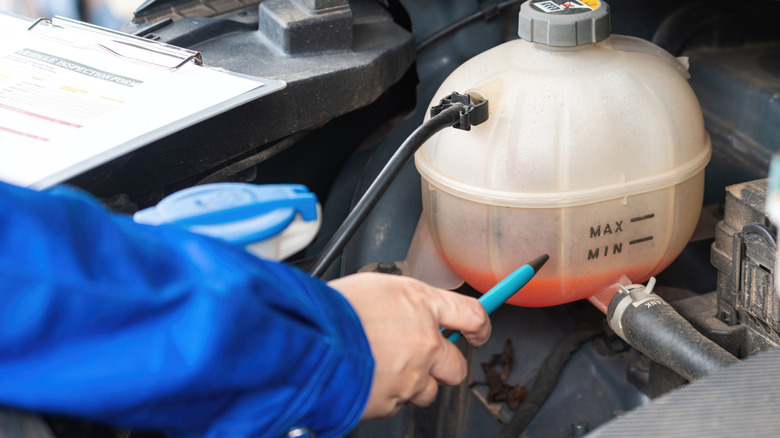
Not every overheating problem ties directly back to the coolant, but checking your coolant is one of the easiest and least time-consuming things you can do to be proactive about your engine health. You don't have to go into the shop to do it, and it isn't particularly skill-intensive, either, so it won't be one of those DIY projects that totally ruin your ride. All you need to know is where your coolant tank is located and how to get it open. Having an antifreeze tester at your disposal won't hurt, either. If you really don't trust yourself to get the job done right, you can always ask your mechanic or local dealership to check the coolant as part of any routine maintenance visit. It might cost a few bucks, but that's well worth the peace of mind.
Why coolant is so important
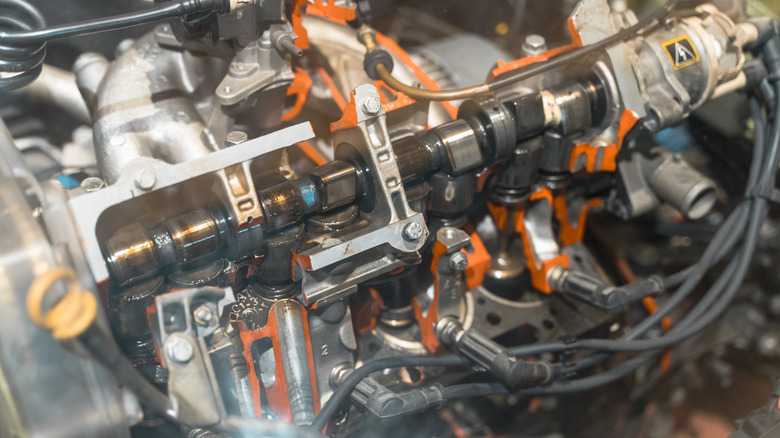
When your engine is turned on, it's continually heating and combusting fuel to make energy, which is then used to propel your car. This process produces a whole lot of heat, and that heat has to be shed to keep the engine functioning at peak efficiency. Your engine's cooling system works by pumping a mixture of antifreeze and water — known as coolant — around the engine, where it absorbs excess heat efficiently and moves it away from the engine to the radiator before being cooled down and cycled back through.
Without the right concentration or volume of coolant, a car's cooling system isn't able to shed heat as fast as the engine produces it, which leads to overheating. This can be the result of a coolant leak. Other times, the coolant can become contaminated by oil or other fluids that leak into the cooling system. Coolant filters exist to help keep other substances from infiltrating the cooling system, but not every car has them.
Having coolant in the system can also prevent corrosion and rust from building up in the engine block, so regular coolant checks are useful even if your car doesn't have any issues with overheating. Coolant is actually working triple time, though, as it has a much lower freezing point than water, which prevents the cooling system from freezing up in low temperatures. If a cooling system simply used water instead of an antifreeze mixture, it wouldn't work during winter in some climates, and the freezing water would expand, possibly cracking the engine.
How to check coolant levels yourself
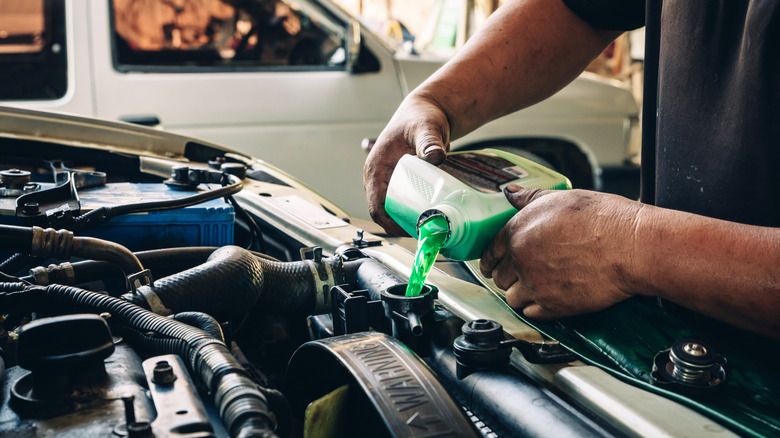
If you're ready to keep on top of your coolant checks but don't want to shell out for a professional to do it, you'll be glad to learn that checking and testing your own coolant is fairly easy. You'll want to have a jug of coolant on hand just in case you discover your levels are low, and it's best to have PPE like gloves and safety goggles on to be safe, but otherwise, you can perform this check in the peace of your own garage with little hassle.
To start, ensure that your engine has been cold. To make things easy, just let it sit overnight and check your coolant before your morning drive. This is crucial because the cooling system becomes pressurized when it's heated. Opening your coolant reservoir in this state could cause serious injury. Once the engine's temperature is lowered, locate the coolant reservoir, using your owner's manual if necessary. You should be able to see the coolant in its tank, which is marked to show appropriate volumes.
At this point, if you have an antifreeze testing tool, you can use it to draw some coolant out and verify that its freezing and boiling points are correct. If something is wrong, drain the coolant, dispose of it properly (it can't just be dumped or thrown in the trash), and fill the tank with new coolant. You can dispose of coolant through auto shop, service center, or even local government antifreeze recycling resources using a sealed, labeled container. If everything is fine with the test, all you need to do is add pre-mixed or ready-to-use coolant up to the appropriate line and close the reservoir. And you're done. It's really as easy as that.