

If You Want A Convertible Corvette From These Years, Tough Luck
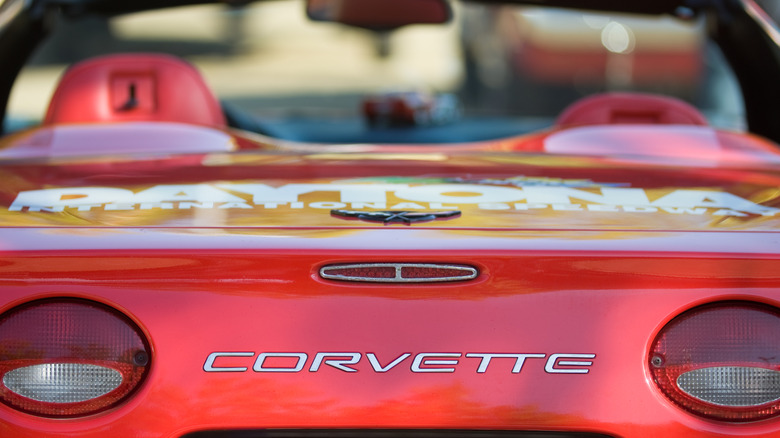
The Chevrolet Corvette has been a staple America's sports car since 1953, when Chevy unveiled it as a fiberglass-bodied two-seater built for performance and style. Over more than seven decades of progress, it has come to represent American automotive ambition, a symbol of speed, status, and homegrown engineering pride. For most of its history, buyers had a choice between a coupe or a convertible. But in 1975, the industry hit a rough patch, and arguably, it never fully recovered.
The oil crisis sent gas prices soaring, emissions regulations tightened, and rollover safety standards loomed large enough that Chevy worried convertibles might be banned outright. The 1975 Corvette had pitiful horsepower numbers, and Chevrolet dropped the convertible body style altogether, with the very last example leaving factory doors in late July 1975. For a decade, the only way to get one was with a fixed roof. By the mid-1980s, gas prices dropped back under a dollar, the regulatory doom never materialized, and Chevy went back to the convertible drawing board.
As such, the 1986 Corvette convertible returned to showrooms, ending an 11-year drought. But that wasn't the only gap. A decade later, when the C5 generation launched for 1997, the convertible was held back yet again, arriving a year later in 1998. If you've got your heart set on a drop-top Corvette from these missing years, you're out of luck. Here's a closer look at the Corvette years that left convertible fans waiting, and when Chevy brought it back.
The 1975 Corvette goes coupe-only
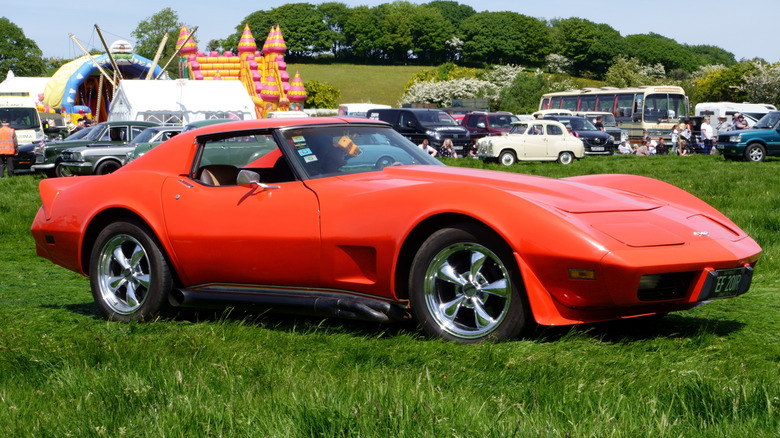
The 1975 Corvette came to market in a very rough timeline. The effects of the oil crisis were beginning to bear down on the industry. The Corvette's small-block V8 had been losing power for years, dropping from 300 horsepower in 1968 to 270 in 1971, and down to just 165 horsepower by 1975. 1975 also saw cars start using catalytic converters, and the Corvette was no exception. Despite the power drop, sales actually held quite strong.
The 1975 sales tally rose to within 300 units of the 1969 peak at 38,465. Car and Driver tested a base automatic model and recorded a 0-60 mph time of 7.7 seconds, calling it "highly competent, with power-everything to help you guide the long body around." As far as convertibles were concerned, the situation wasn't all that reassuring — only 12% of 1975 Corvettes were ordered as convertibles.
Convertible demand had been declining for years, and the government potentially accelerated the trend with a rollover safety standard that posed a direct threat to the body style. In a 1972 case, Chrysler Corp. v. Department of Transportation, automakers argued the standard's rollover test was impossible for convertibles to meet, and the court agreed, finding "a soft top convertible is inherently incapable of passing such a rigid requirement."
The court sent the standard back to regulators, ordering changes "so that it does not in fact serve to eliminate convertibles and sports cars from the United States new car market." Although the convertible survived the onslaught, the Corvette one was abandoned, and it took GM eleven years to bring it back.
The 1986 Corvette brings the convertible back
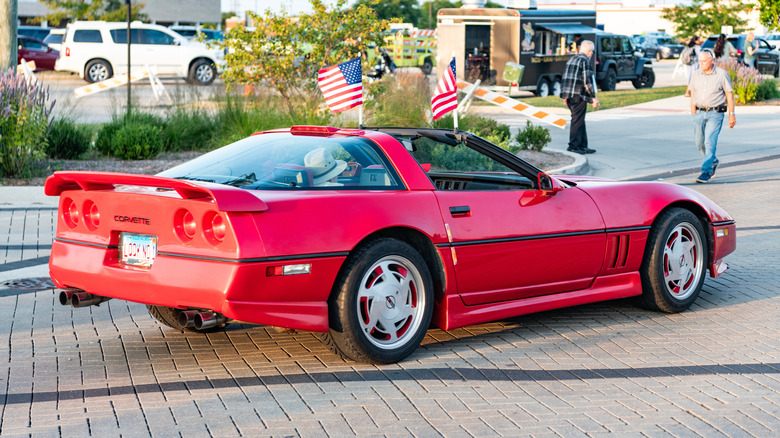
By the mid-1980s, the landscape looked very different from the one that killed the Corvette convertible a decade earlier. Gas prices had come back down from their late-1970s highs, and the regulatory rollover threat and lack of demand that spooked automakers in the early 1970s never fully materialized. Convertibles across the industry came back.
With Chrysler's Lee Iacocca — one of the most influential individuals in automotive history — leading the way with the 1982 LeBaron convertible, other automakers followed suit, and convertible demand began rebounding across the industry. For the Corvette, the timing lined up with the release of the C4. The C4 was designed from the outset with an open-top variant in mind, which let Chevrolet introduce the convertible without major platform changes.
The first Corvette convertibles in 11 years left Bowling Green in early 1986, but the new open-top C4 certainly wasn't cheap. It was priced at $32,032 – about $5,000 more than the coupe. Even with a stronger tailwind than before, convertibles didn't really recover. Just 7,315 C4 convertibles were built that year, compared to 27,794 coupes. Afterwards, demand remained well below coupe levels.
Chevy decided to launch the C5 Corvette as a coupe-only model for 1997, with the convertible following a year later in 1998. The convertible never really recovered after its 1960s peak where 5-6% of all cars sold were convertibles. These days, convertibles are truly dying, and given that the Jeep Wrangler — an SUV with a removable roof — is America's best-selling open-air vehicle, it seems that buyers have largely moved on from traditional drop-tops.