

How Often Should You Replace Your Engine's Oxygen Sensors?
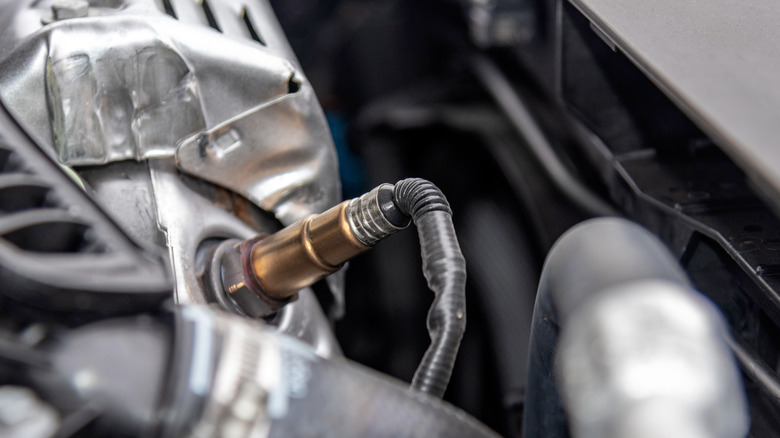
Oxygen sensors play an important role in your car's engine, but they aren't like many other components, such as oil filters, for which automakers provide a strict service schedule. Instead, the real answer to "how often should you replace your engine's oxygen sensors?" is "as often as you need to." While some sources say an oxygen sensor can last 30,000 to 50,000 miles in a properly maintained engine, many experts pin the operational life of an oxygen sensor as high as 100,000 miles or may even claim they can last as long as the vehicle itself. It's a classic case of "your mileage may vary."
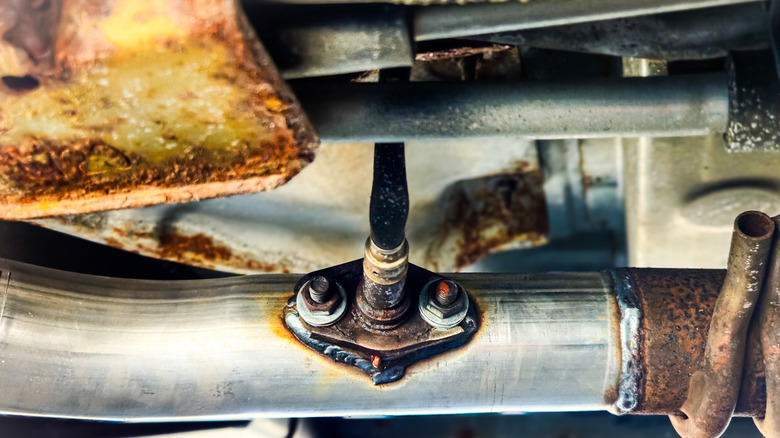
Also, although you can't tell when to replace your oxygen sensors just by looking at the odometer or calendar, it's fairly easy to recognize when they're not working right. To understand what's happening, though, we have to know what oxygen sensors do and why modern cars have more than one. The first O2 sensor is typically located ahead of the catalytic converter, and it analyzes and ensures a correct air-fuel mixture. If the ratio is off either way, the sensor signals the car's engine control unit (ECU) to adjust the mix. The additional O2 sensor(s) will be positioned in the exhaust stream after the gas passes through the catalytic converter to check how well that component is doing its job. As for the sensors, if they're not working properly, there are ways your car can tell you.
What's damaging your oxygen sensors
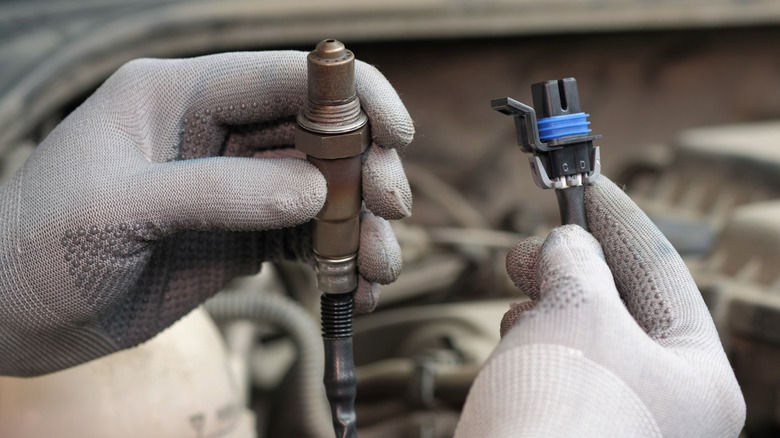
For instance, an issue with the first O2 sensor can hamper your vehicle's fuel efficiency and performance, as well as cause misfiring and rough idling due to fluctuations in the fuel-air mixture. Not enough fuel is called a lean mixture, and it can lead to reduced engine power and extreme heat. However, as we'll discuss below, heat alone isn't usually the concern, but it can be a major factor in sensor failure.
With a rich air-fuel mixture, when there's too much fuel, some of it can pass through the exhaust without being burned. In that case, the O2 sensors can get so fouled that they need to be replaced. But fuel is not the only potential source of sensor contamination. You also have to watch out for coolant and oil leaks. Each can have additives that are especially hard on oxygen sensors, and really, anything that gets into your exhaust that doesn't belong there, including dirt and debris, can damage the delicate O2 sensors.
The situation with downstream sensors is trickier. For example, if one of those breaks down in a car with a fully functioning catalytic converter, there may be no physical sign of trouble at all. Moreover, if the catalytic converter and sensor both stop working properly, you may only pick up on the bad smells coming from the former. Another sign is the ol' check engine light. A failing sensor could be the reason it keeps coming on after it's been cleared — and it could be the reason the light came on in the first place.
Avoiding a thermal shock to the system
If you really want to protect your O2 sensors, you may want to consider adjusting how you drive — much the same way some folks are changing their driving habits now that gas is so expensive. Speaking of gas, let's first mention that you have to be careful filling up. Lead is known to damage sensor elements, and today's "unleaded" gasoline is technically still allowed to have .05 grams of lead per gallon. Additionally, lead remains an important ingredient in some racing fuels. So if you're a gearhead with some of that in your garage, be aware of the potential for contamination.
The sensors themselves are designed to stand up to pretty hot conditions, but overly aggressive driving can still shorten their lifespans. Consider a popular model from Bosch — the LSU 4.9. It's rated for an operational temperature of up to 1706 degrees Fahrenheit, and it can withstand up to 1886 degrees for short periods of time. Yet if the sensor gets that hot and then is suddenly exposed to something cold — like condensed water in the exhaust system or even splashes from the road — it can cause tiny cracks in the sensor as its different layers of material respond differently to the change. This is known as thermal shock. The outcome is a bit like pouring warm water on a frozen windshield. Of course, a damaged O2 sensor can lead to fairly large cracks in your bank account, too, at least if not caught.