

Do Dark Colored Cars Really Get Worse Gas Mileage In Hot Weather?
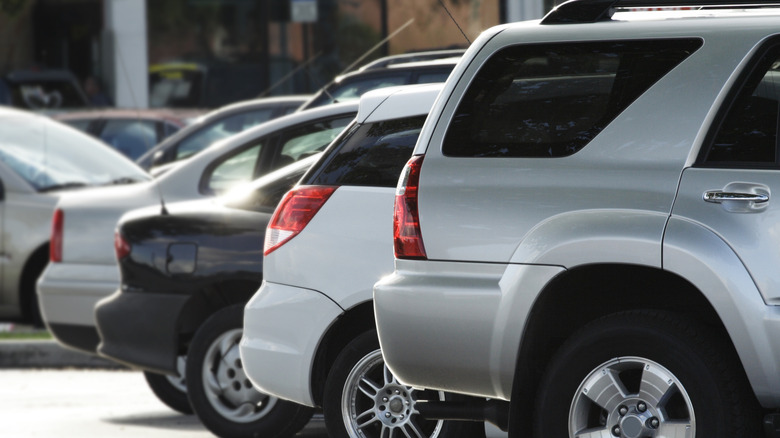
With rising fuel prices, some people will try anything to improve their gas mileage. And though it sounds ridiculous, some might even consider a white car over a black one, in the hope of saving a few cents at the pumps. But as crazy as it might sound, there is some science to support choosing a lighter-colored car over a darker one.
According to studies published by Berkeley Lab as far back as 2011, vehicles painted silver, white, or light-colored hues reflect about 60% of sunlight and are "easier to air condition to a comfortable temperature," which translates to savings at the pumps. This also means that black cars or dark paint can absorb more heat, and their dark colors can significantly contribute to the greenhouse effect in the cabin.
On a 90°F (32°C) summer day, the temperature inside a vehicle (with closed windows) can reach a scorching 124°F just 30 minutes after parking. Magnifying that scorching heat is the fact that dark-colored cars can also make cities hotter and raise air temperatures by about 3.5°F. All cars can heat up like ovens in the summer, but the reflective nature of silver or white paint can help reduce cabin temperatures by deflecting some of the sun's long-wave radiation.
Cars sip less fuel in warm weather, but the A/C eats more energy
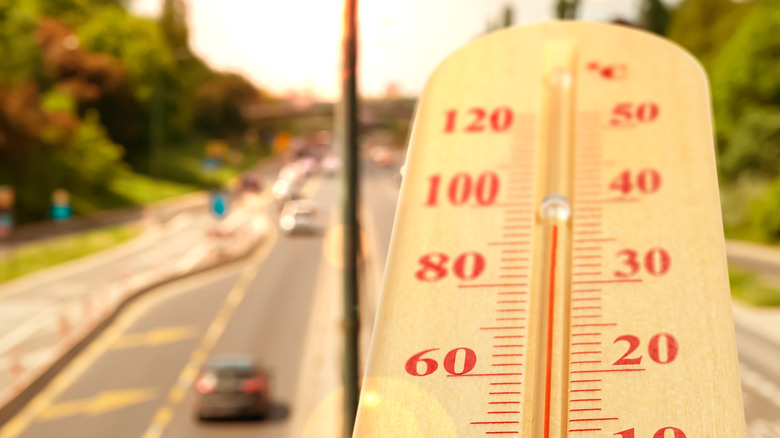
In a separate Berkeley Lab study, building surfaces with clean white roofs can reflect 80% of sunlight and stay 55° F (31°C) cooler than gray or dark-colored surfaces, which helps save up to 40% on energy and air conditioning costs. Apparently, the savings apply to light-colored cars, too. Studies show that cars painted white, silver, or other light colors could be 2% more fuel efficient than dark cars. The increase in fuel economy also helps lower emissions, with Berkeley Lab research showing that light-colored cars could emit up to 1.9% less carbon dioxide.
According to the U.S. Department of Energy, vehicles are more fuel-efficient in hot weather. Warm air is less dense and helps reduce drag, which means your car's engine will have an easier time pushing the vehicle through the road and consume less fuel. However, rolling down the windows to cool the cabin on a hot summer day will significantly increase the wind resistance the faster you go, and this could negate any fuel savings that you can possibly gain from the warmer air.
But using the air conditioner can reduce fuel economy by 8-10%. Moreover, using the A/C on hybrids, plug-in hybrids, and electric cars has similar or possibly worse effects on energy consumption. We can't blame you for turning the A/C into full blast or lowering the windows for immediate cooling, but both light- and dark-colored cars can still save fuel in the summer by following a few basic guidelines.
Fuel-saving tips for hot weather driving
It's fine to drive with the windows down at slower speeds, but you can improve the fuel economy and aerodynamics by closing the windows and using the A/C when driving faster at highway speeds. In addition, letting the interior cool down before driving will help the A/C cool the cabin more efficiently. For that, you can do a science trick of lowering the passenger window and repeatedly opening and closing the opposite door to rapidly draw hot air outward and cool air inwards.
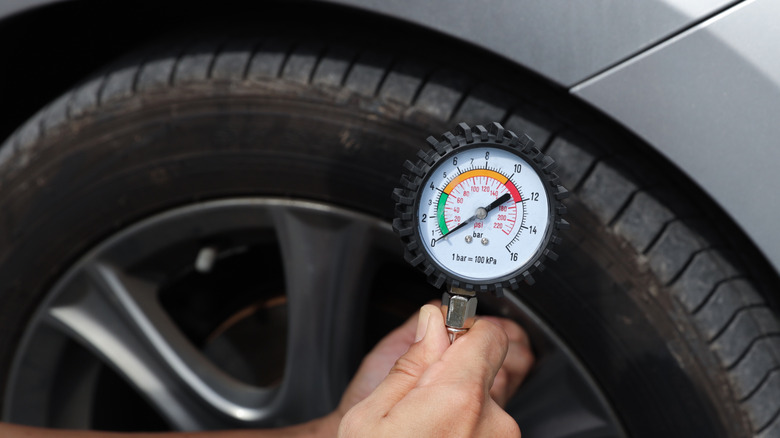
Next, check the tire pressures more often to maintain proper inflation on all four tires. For every 1 psi drop in air pressure, gas mileage drops by about 0.2%. Add that to having a black car, and you stand a better chance of saving gas by keeping an eye on tire inflation. However, remember to inflate to the recommended tire pressure and not the maximum pressure indicated on the sidewall.
Finally, timely maintenance matters most to any vehicle in any weather. Keeping up with oil and filter changes (reusing an oil filter is a big no-no), checking the brakes, rotating the tires, and flushing or replenishing the cooling system before summer arrives will guarantee your car is ready to face the heat — regardless of the color.