

Want To Fly To Japan In Two Hours? This Jet Could One Day Make That A Reality
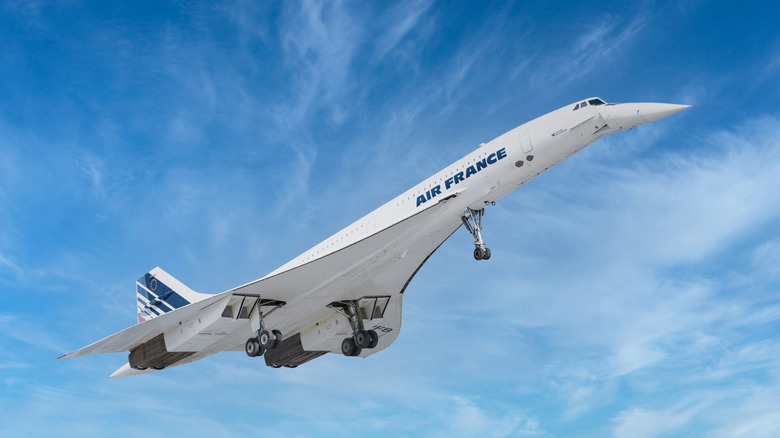
Japanese researchers and engineers are the latest entrants into the ever-quickening race toward commercial flight at hypersonic speeds. According to AeroTime, in April 2026 at the JAXA Kakuda Space Center, a team composed of representatives from the Japan Aerospace Exploration Agency (JAXA), the University of Tokyo, Keio University, and Waseda University completed preliminary testing for a new, experimental plane capable of hitting Mach 5, which is five times the speed of sound, or about 3,800 miles per hour. If brought into commercial use, such an aircraft could take off from Tokyo and land in New York City in about two hours.
These researchers aren't the only ones working on hypersonic air travel, and ground-based transportation has also gotten significantly faster with China's unveiling of a maglev train faster than commercial planes. The Japanese team's recent test is a promising proof of concept, though. Supersonic speed refers to travel faster than the speed of sound, up to about five times that speed. It was first achieved in an aircraft in 1947. However, hypersonic speed — speed exceeding five times the speed of sound — has proven more challenging to design for. Not only do such speeds require better insulation from the outside environment, but they also require an entirely distinct type of jet to maintain sufficient thrust for travel.
JAXA proves their craft can withstand the pressure of Mach 5 flight
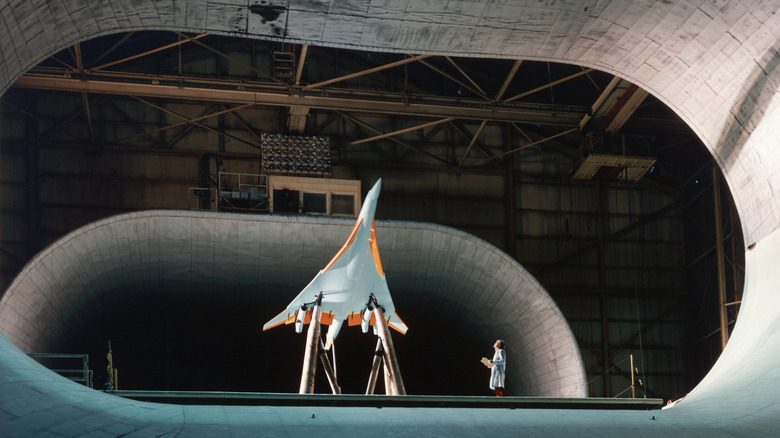
Rather than demonstrating flight capabilities, what this recent test did was prove that their aircraft design can hold up to the harsh conditions created by flying at Mach 5. If you've ever seen a movie where a spaceship burns up while entering the atmosphere — or if you read about the SpaceX Starship suffering "rapid unscheduled disassembly" while returning to Earth — you already have a good idea of the problems aircraft experience at excessive speeds. Flying creates friction as the hull of the craft carves through the atmosphere, and shockwaves compress air and create heat.
This issue makes an aircraft's heat-shielding capabilities the first hurdle engineers have to consider before even dreaming of achieving hypersonic flight. At Mach 5, JAXA estimates that the friction from the atmosphere could create temperatures as high as 1,832 degrees Fahrenheit, so this first test was to determine whether their heat-shielding technology could withstand such extreme temperatures. To test this, they ran wind tunnel tests to simulate hypersonic speeds and analyzed air, hull, and internal temperatures throughout the "flight." They concluded that all internal temperatures remained within acceptable bounds, which means that internal electrical systems should function without issue for the duration of a flight (and hopefully that passengers don't get cooked, either).
Unlocking hypersonic travel isn't as easy as solving a heating problem and slapping a bigger jet onto a plane, however. The JAXA team has a lot of work ahead before their research can become accessible to the general public. And even if they do come up with a viable product, it's far too soon to let ultra-fast flights rip across the country.
Next stop: trans-Pacific international flight?
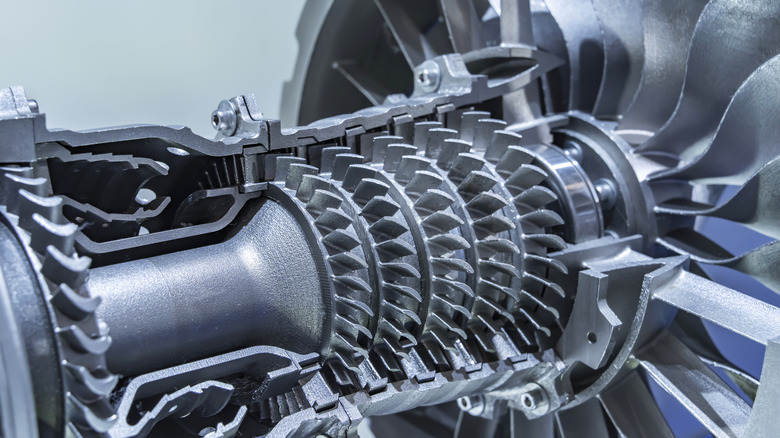
Beyond the problems caused by high temperatures, hypersonic jets need to contend with physics to ever become a reality. Your typical jet engine — like those in commercial planes — works by using the turbofan at the front of the engine to draw in massive volumes of air. Most of that air is pushed directly out the back end, creating thrust, while the rest of the air is drawn into a core that runs through the center of the jet. Inside the core, the diverted air is compressed and superheated by combustion before finally being redirected to spin the turbine and keep the process going.
Once you hit supersonic speeds, the physics behind engines and flight gets more complicated. The higher a plane's speed, the more drag it produces. As you approach supersonic speeds, pressure waves form in front of the aircraft as it compresses the surrounding atmosphere. This produces sonic booms and also creates a phenomenon known as wave drag, which can increase overall drag by 50% or more. In order to reduce drag and maintain hypersonic speeds, a plane needs wings that sweep backward at a drastic angle. It also needs jets that are more efficient and produce less drag of their own.
To address that issue, most hypersonic aspirants, including the JAXA team, use what's known as a ramjet. This type of jet produces power by — you guessed it — ramming air through the jet, leveraging the vehicle's forward speed to continue producing thrust. This works similarly to a typical jet, but it doesn't use a spinning turbine and therefore can't produce any thrust unless the vehicle is already moving.