

Why Diesel Engines Last Longer Than Gas Engines
Let's make something clear from the outset. We aren't talking about diesel engines for marine applications or for 18-wheelers. Or wacko diesel engines for trains. We're talking about diesel engines for passenger cars and pickups outlasting their gas-driven brethren in like-versus-like applications.
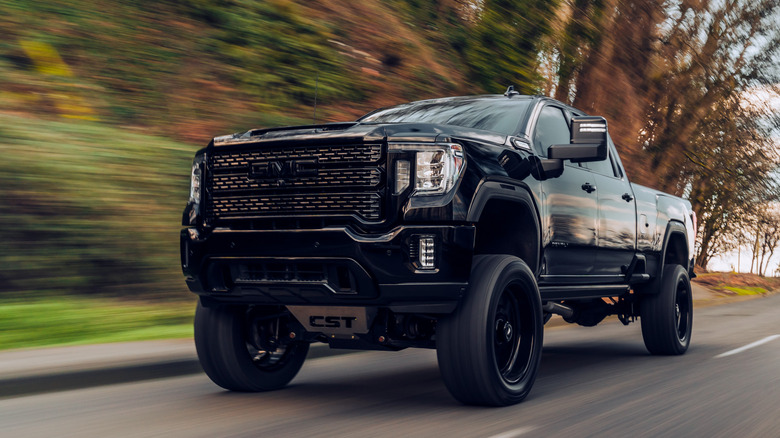
Basically, that comes down to pickup trucks. You can have your diesel in a Ram, a Ford, a GMC and a Chevy, and they're all trucks — or in GM's case, that also includes SUVs based on the Suburban/Tahoe chassis, including the GMC Yukon and Yukon XL. (But sorry, Cadillac fans, Escalade lovers don't get to breathe diesel emissions anymore.)
For the sake of ease, think in terms of a ubiquitous power plant, the turbocharged 3.0-liter inline-6 LZ0 Duramax used across all those GM products that aren't sold by Cadillac. That's because GM will sell you either that Duramax, or a gas V-8 in those GMC and Chevy vehicles. And, theoretically, the diesels should last longer, though there's a bunch of nuance to discuss.
Why are diesels usually more durable? We'll start with one basic clue, which is that diesels run on a fuel that also acts as a lubricant. But it's more fun to talk about this in terms of a really cool word, "lubricity." What it means is key to diesels outlasting gas engines.
Grease is the word
Gas cars run on a less slippery fuel with fewer lubricating properties. Engine oils are often described in terms of their viscosity, which is basically a measure of how they flow, but lubricity is a measure of how well any fluid resists friction. And these factors are related. You want slippery surfaces in engines to reduce wear, and diesels benefit from the fact that the fuel itself is a stronger lubricant. Diesel fuel also has greater viscosity than gasoline , acting as a coating on metal surfaces.
Diesel is a "richer" fuel that's 13% more energy dense than gasoline, too. This enables a different construction of diesel engines that also leads to their longevity. Diesels run at a higher compression ratio because they don't use spark ignition, like gas engines. Instead, compression itself creates the fuel ignition.
This is all a feedback loop. Since you can only derive ignition through a higher compression ratio, you have to build an engine to produce that. Which basically comes down to needing a longer lever to move a piston further, since you can only get more compression with a longer lever. To do that requires what's called a longer stroke, and while longer strokes move more slowly (i.e., at a lower rpm), thanks to diesel's richer energy return, they produce greater torque at slower speeds.
Bigger parts wear more slowly
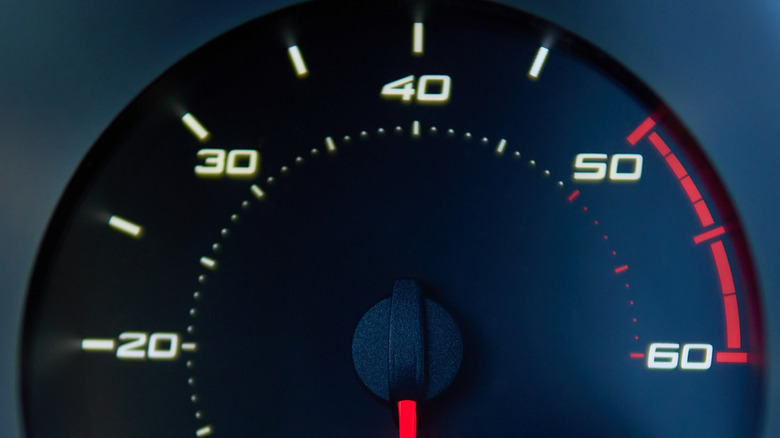
Diesel engines don't rev as high. And you might wonder why you don't have to rev a diesel as high to produce greater torque. Stop: If you don't know this firsthand, eyeball the tachometer of a diesel engine vs. the tach on a gas car. Notice the diesel's far lower redline. Now, why would that be the case? That longer piston stroke we mentioned directly leads to lower rpm necessary to produce propulsion. And the aforementioned "richness" of the fuel enables more torque per stroke.
The inverse equation is that gas engines have shorter strokes, but turn over that stroke more quickly to make power throughout their rev range. But there's a downside to screaming revs. More revolutions per minute is like time speeding up. Or, really, wear speeding up. With more speed you get more damage, and with less speed, many parts of an engine will see reduced wear.
So diesels will last longer, right? Probably. To withstand the added abuse of higher compression, they have to be overbuilt, with more robust cylinders and blocks as well as crankshafts, and they usually get durable gear-driven — rather than belt-driven — camshafts. All of which suggests a diesel engine should outlive a gasoline one.
However, its more rugged construction costs more up front. Just price any 2026 diesel-powered truck or SUV versus the gas option. Those heavier-duty parts can also be more expensive to maintain. Yet there's a Silver(ado) lining. The Duramax Chevy's 25 mpg combined city/highway is far better than the 17 mpg combined for the V-8 version. Over five years you'll spend $2,750 more on fuel for that gas V-8, even factoring in more expensive diesel, which may just tilt the lifetime return on investment toward diesel over gas.