

What Happens When Your Engine's Crankshaft And Camshaft Sensors Go Bad?
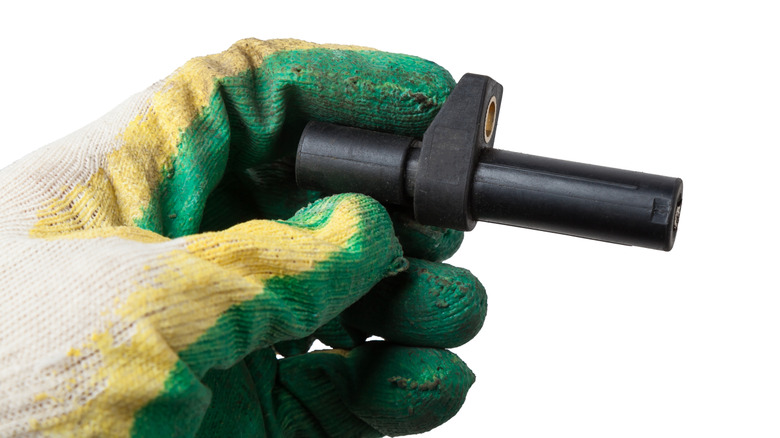
To fully grasp the magnitude of what could happen when an engine's crankshaft and camshaft sensors go haywire, we need to summarize the roles of those sensors during the motor's operation. The crankshaft position sensor measures the crankshaft's position (duh) by detecting its rotational speed or revolutions per minute (rpm). The ECU interprets data from the crankshaft sensor to detect misfires and optimize ignition timing and fuel injection.
On the other hand, the ECU gathers data from the camshaft position sensor to monitor the ignition timing, injector pulse, the opening and closing of the intake and exhaust valves, and whether the pistons are upward or downward in their respective cylinders. Moreover, the camshaft sensor monitors the valve timing in some engines with variable valve timing. All in, the crankshaft and camshaft sensors enable the engine's ECU to know which pistons are at top dead center, what valve timing is appropriate, and how much air and fuel to give each piston to facilitate an efficient yet potent combustion.
With that said, bad things could happen if either sensor goes bad. Misfires, poor acceleration, rough idling, and stalling are common when a camshaft sensor goes wonky. Meanwhile, a faulty crankshaft sensor could cause hard starting, random stalling at idle or when driving, poor fuel economy, and performance issues. Moreover, defective sensors can damage other engine parts if left ignored. In short, faulty sensors are bad news, and an illuminated check engine light will usually accompany the symptoms to fan the flames of an already stressful ordeal.
What causes the crankshaft and camshaft sensors to go bad?

The crankshaft and camshaft sensors are meant to last the life of the engine. However, strenuous heat cycling, moisture, contamination, physical damage to the sensor probes, and wiring problems can shorten their service life and lead to premature sensor failures. Their average lifespan is 100,000 to 150,000 miles, but severe driving conditions and poor maintenance could lead to sensor failure earlier than expected.
Besides monitoring the symptoms, you can pinpoint the problem by hooking up your engine's ECU to an OBD-II scan tool and retrieving the fault code. In most cars, a bad crankshaft position sensor will display the P0335 error code, while a bad camshaft sensor is usually accompanied by a P0340 trouble code. Remember that the codes are typically related to circuit malfunctions and do not necessarily point to sensor issues. In most cases, mechanics need to rule out shorted or frayed wiring, broken connectors, and a wonky ECU before ruling out a bad sensor.
How much to replace the crankshaft or camshaft sensor?
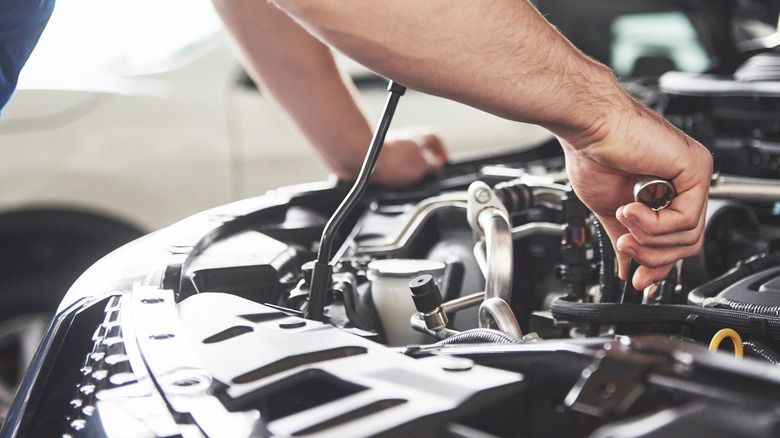
The unpleasant symptoms of a bad crankshaft or camshaft sensor seem bad enough to merit thousands in repair bills. However, replacing either sensor is not expensive. Depending on the engine type and vehicle make, a camshaft sensor costs anywhere from $100 to $300. Meanwhile, a crankshaft position sensor costs $40 to $150 for the part alone.
As for labor, you can expect to pay a professional mechanic around $75 to $400 to replace a crank sensor. For the camshaft sensor, mechanics typically charge $75 to $250, depending on the vehicle. Of course, you can do it yourself and save cash, but you'll need the right tools and skillset to diagnose the system, inspect the wiring, and eventually replace the sensors.
For reference, the crankshaft sensor is near the bottom of the engine. It faces the timing rotor and is usually found outside the engine block. On the other hand, the camshaft position sensor is found on top of the motor and is usually attached to the cylinder head.