

The Gas Additive MTBE Was Banned By California In 2003: Here's Why
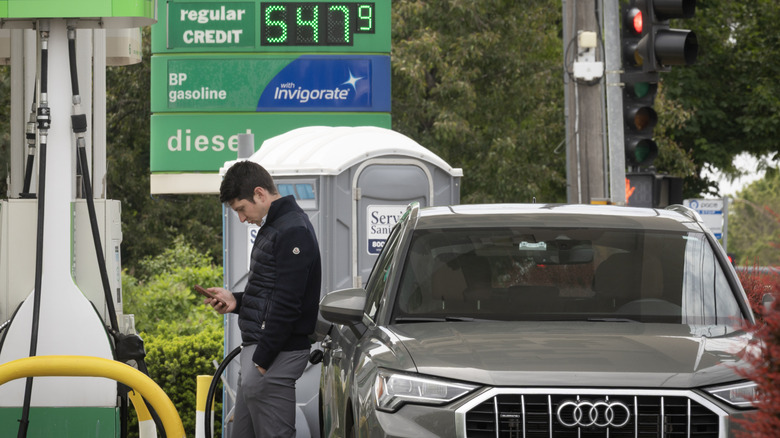
When it comes to environmental and public health protections and regulations, California is frequently ahead of the curve compared to the rest of the United States. It's been no secret that California has long led the adoption of electric vehicles (EVs), and finding a California Proposition 65 warning on a new purchase is no uncommon occurrence, either. The Golden State was also at the head of the movement to ban the fuel additive and octane enhancer known as methyl tert-butyl ether, or MTBE, at the beginning of 2003 and was followed by New York in 2004. By the end of 2005, 17 states had banned or massively restricted the use of MTBE.
In the course of a few short years, MTBE went from being used in 87% of cleaner-burning reformulated gasoline in the country to seeing hardly any use. But the issue with MTBE wasn't its impact on air pollution. In fact, it was specifically better for air quality than contemporary alternatives like benzene and was, as a result, used in high-smog areas like San Francisco. Instead, the issue with methyl tert-butyl ether was its solubility in water and high risk for groundwater contamination, especially when leaking from fuel stored in underground tanks.
Knock, knock, knocking on pollution's door
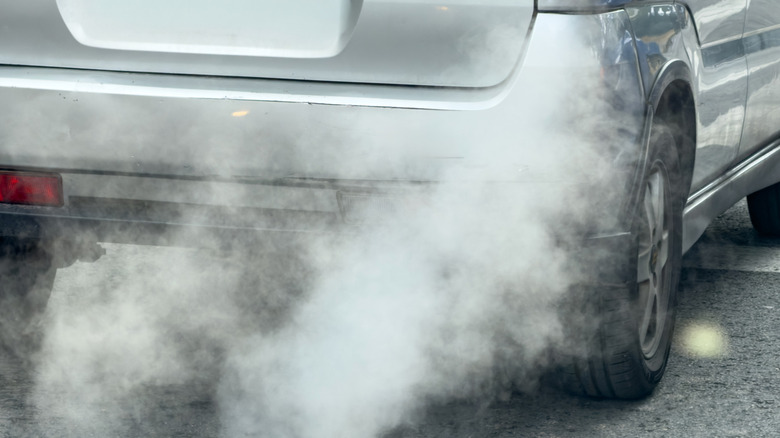
MTBE came into prominence in the 1970s and 1980s as lead fuel was phased out due to serious health concerns involving lead emissions, which may have caused a boom in anxiety, depression, and ADHD, among many other conditions. With leaded gasoline thankfully going the way of the dodo, fuel refiners needed to find alternate means of increasing gasoline's octane rating in order to reduce knock. When your engine's air-fuel ratio is off, knocking becomes inevitable, which quickly leads to engine damage.
MTBE fit the bill nicely, oxygenating fuel effectively while also burning more cleanly. In 1999, MTBE was so popular as a fuel additive, that it was produced in quantities of over 200,000 barrels per day.
Unfortunately for, well, the entire planet, MTBE wasn't particularly healthy in the long run, either. In 1998, the U.S. Geological Survey found that 20% of groundwater was contaminated with MTBE in areas that were using refined gasoline to reduce combustion-related air pollution. The Environmental Protection Agency (EPA) called for the discontinuation of MTBE just a couple years later, though states like California jumped to action, instituting their own bans to speed up the EPA's timeline.
The EPA proposed ethanol as the primary octane enhancer going forward, though BTEX — a mixture of benzene and other hydrocarbons — also rose to prominence and was subsequently regulated for other public health concerns. As it turns out, the science behind oxygenating fuel safely has been a tough nut to crack.
We can see the health and climate impacts
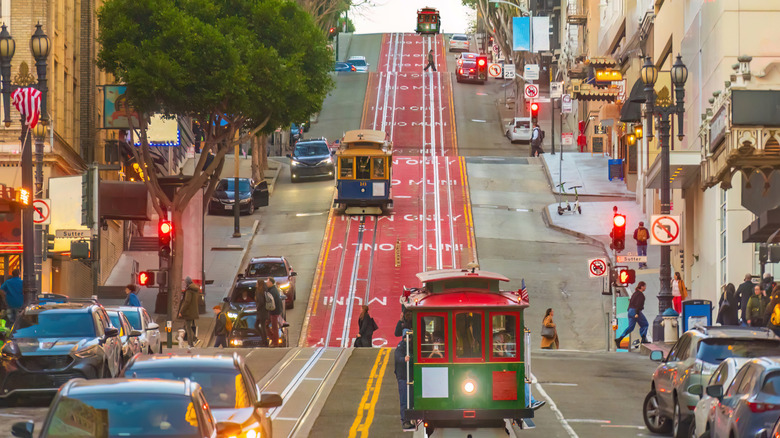
It's easy to read stories like these and think that the changes happening are invisible, with consequences that can scarcely be perceived, but such thinking couldn't be further from the truth. The United Nations estimates that phasing lead out of fuel has saved the global economy $2.45 trillion yearly, and while it will take time to evaluate the health impacts, studies already show decreasing levels of lead in blood globally. Similarly, studies have shown that EV adoption is already cleaning up San Francisco's air quality, and they only made up about a third of new-vehicle registrations in 2023.
If one city can clean up their air at that scale, it's easy to imagine how quickly large-scale efforts to protect public health and the environment can lead to tangible results. California led the charge to ban MTBE in 2003, and now its cities are seeing cleaner air thanks to EV adoption. Americans are even starting to use public transportation, thanks in part to California's increased funding for it. If the state sets a public transit trend, who knows how wide-reaching the effects on the country could be?