

Trump Tried To Kill EVs, Now His War Is Doing The Opposite
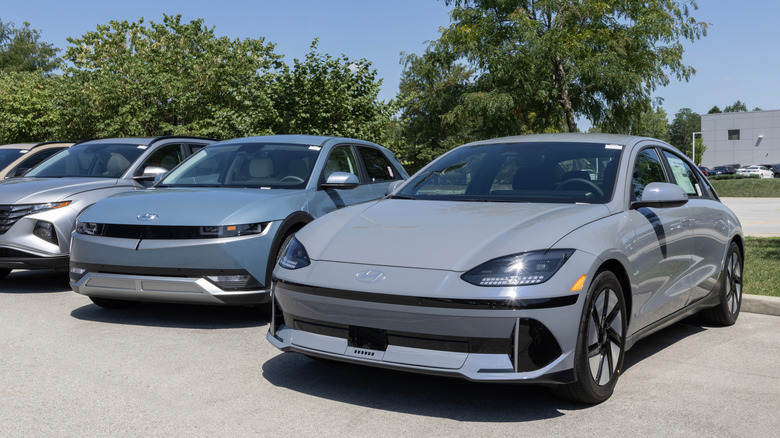
Whether you think it's a good thing or not, there's no denying that Trump and Republicans love the oil industry and hate any tech that might threaten its dominance in the U.S. The electric vehicle tax credit was one of the first things Republicans killed after Trump's inauguration, but it sure wasn't because the party hates subsidies. And yet, despite the current Trump administration doing its best to kill EVs and renewable energy, data suggests that starting a war that made gas expensive is doing the opposite — making drivers trade their gas cars in for electric ones at an increasing rate.
Using data provided by Edmunds, CNBC reports that 67.1% of people buying brand new EVs in January of 2026 traded in gas-powered cars when they did. By April, that figure had risen to 72.1%. Since we're just at the beginning of the month of June, we don't have data from May yet, but in light of other reports that investigated similar trends, it's possible, even likely, that gas-for-EV trade-ins will continue to climb.
EV loyalty is also increasing. Back in January, when EV owners traded in their cars, only 26.2% traded them for new EVs, and only 34.3% of those were traded in for used EVs. Fast forward to April, and EV trade-ins on new EVs were up to 35.4%, while trade-ins for used EVs jumped to 44.5%. According to the data, we have more people trading their gas cars for electric ones, and the people who already own EVs appear to be growing increasingly loyal and less likely to go back to combustion cars.
A real shift or a temporary blip?
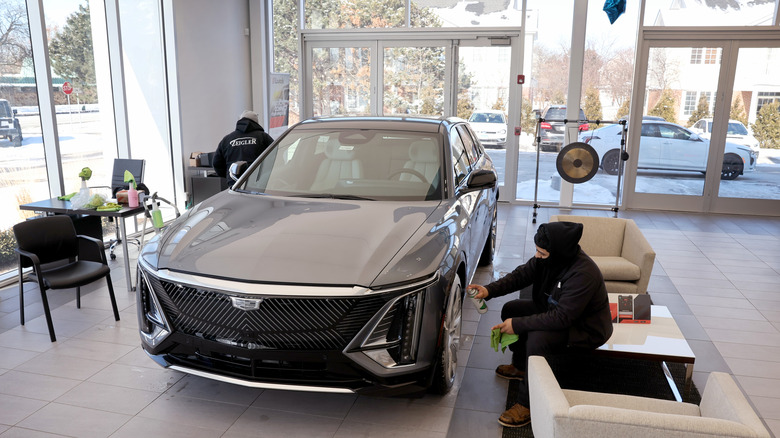
So are gas-powered cars dead, and EVs are taking over? Not quite. As Ivan Drury, Edmunds' Senior Director of Insights, told CNBC, gas prices may be a lot higher than they were before Trump started this war, but two months of data doesn't tell us much about what will happen in the future. It's possible that some buyers are just reacting to higher gas prices in the short term, and these numbers will shift back to normal in a few months. But, as Drury told CNBC, "At six months, you're going to start dragging in even more consumers who are just going to be over it, especially if we see that other costs are increasing too."
The good news is, Erin Keating, Cox Automotive's executive analyst and senior director of economic and industry insights, told CNBC that most people trading gas cars for EVs were already in the market for a new car, so we aren't quite in panic mode yet. As CNBC wrote:
"We know that interest rates are still pretty high," Keating said. ″If someone is driving a car right now that is perfectly fine, but is incrementally experiencing higher gas prices per month, they're still not going to say, 'Let me trade that car in for a brand new payment at a higher interest rate, just because I might save a few bucks on gas.'"
That makes this different from past gas price spikes, such as around 2008, Drury said.
"That's when we saw insane stuff," he said. "People getting rid of Suburbans for Honda Accords. That's not happening right now like that. We're not there yet."
We haven't reached the point of no return just yet, but if the U.S. fails to negotiate a real peace deal that allows free and safe passage through the Strait of Hormuz soon, and a return to oil-supply normalcy in the near future, EV sales could soar.