

This Diesel Engine Changed The Way Heavy Trucks Make Power
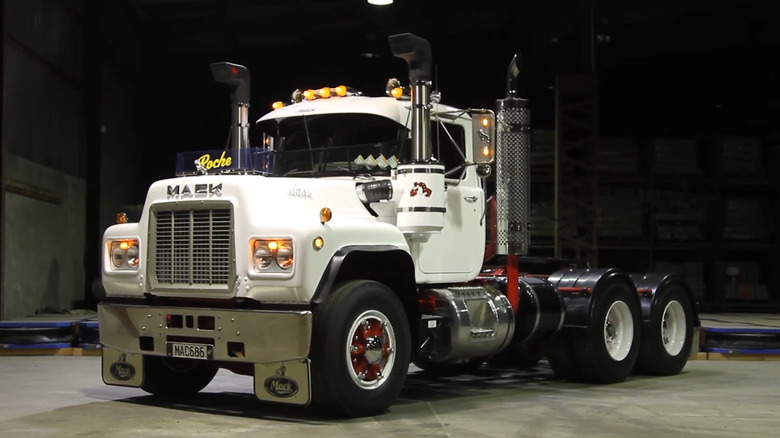
In the mid-sixties, Mack Trucks was dying from cash-flow issues (they are in trouble again, due to tariffs), a declining market share, and a less competitive engine lineup compared to Cummins and Detroit Diesel. Mack Trucks executives in Allentown, Pennsylvania, decided to bet the entire future of the company on an engine concept: The Maxidyne engine installed in the brand new Mack R-Model. This single engine didn't just save the company; it rewrote the rules of heavy-duty propulsion.
To understand why the Maxidyne was an engineering marvel, you have to look at how conventional diesels in the mid-1960s operated. A standard diesel engine generally made its peak torque in a relatively narrow rev range of between 1,600 and 1,800 rpm. If the truck hit a steep grade, and the engine speed dropped below that narrow window, performance dropped, and the driver had to downshift to prevent lugging. This characteristic is one of the reasons heavy trucks had 11, 13, or even 15-speed gearboxes. Some trucks even need 18-speed transmissions.
The Maxidyne blew that engine concept to pieces. Designated initially as the 11-liter straight six ENDT 675, it produced a seemingly modest 237 horsepower. But the real magic lay in the torque curve. While the competitors' engines suffocated at low revs, the Maxidyne achieved its peak torque of 906 pound-feet at just 1,200 rpm.
The constant-power revolution of the Maxidyne
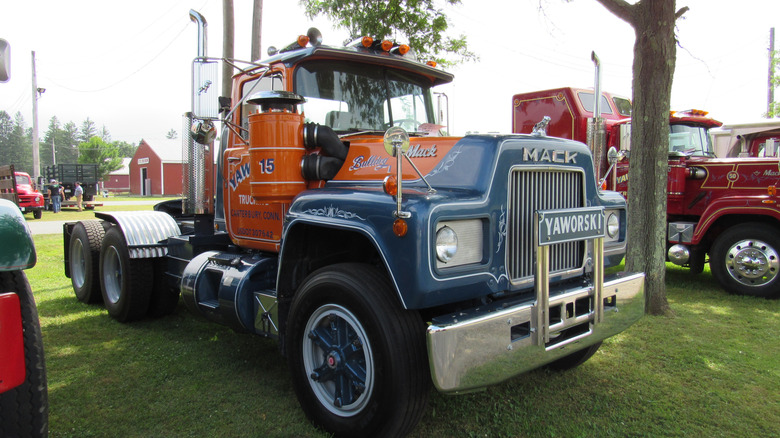
Besides offering an impressively low RPM peak torque, the Maxidyne delivered a staggering 52% torque rise, meaning at low RPM, it produced 52% higher torque than at its highest horsepower. This was in the era when standard truck engines had a torque rise of just 15 to 20%. The Maxidyne was built differently. As the Mack truck hit a hill and engine speed began to drop, the exhaust-driven turbocharger and a mechanical fuel injection control system went to work. Unlike conventional diesel engines, the Maxidyne increased both the fuel charge and air supply per stroke as the engine slowed down. The result was an essentially flat, constant horsepower output across a massive, usable operating band from 1,200 to 2100 rpm. It had a usable power band that was wider than that of the competition.
This broad power delivery allowed Mack to pull off a diabolical trick. Unlike the competition that used 10, 13, or even 15 gears, the Maxidyne engine was mated to a simple, rugged 5-speed Maxitorque transmission. Because the engine had so much low-end grunt, it only needed five widely spaced gears to get the work done. Truckers could drive a fully loaded Mack from a dead stop in fourth or fifth gear without riding the clutch or abusing the drivetrain. When a Maxidyne-powered R-Model hit a grueling 6% highway grade, it didn't need to drop 5 gears and crawl up at 5 mph like a Cummins or Detroit Diesel. The driver simply stayed in fourth gear, let the revs drop to 1,200 rpm, and watched the truck conquer the hill at a steady 25 mph.
The Tip Turbine and intercooling breakthrough
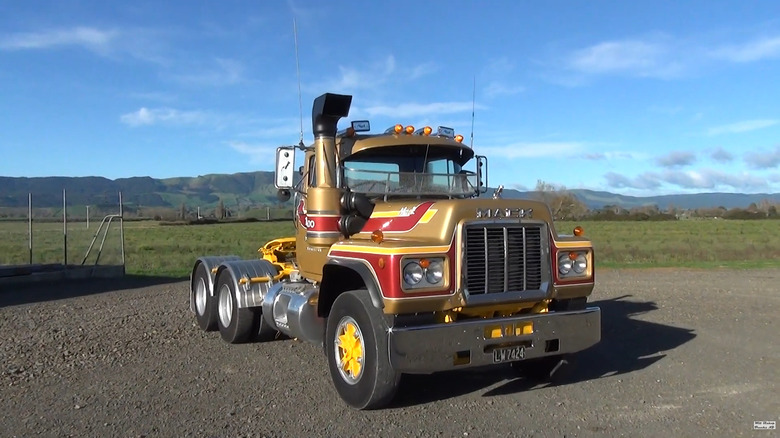
Cummins, Caterpillar, and Detroit Diesel realized their high-RPM, high-gear formula was fundamentally flawed, and they spent the next decade scrambling to build high-torque-rise copycats of the Mack Maxidyne. However, Mack wasn't done innovating, turning its attention to managing increased thermal and mechanical stresses from high torque at lower engine speeds.
In 1973, Mack is widely credited with introducing the world's first air-to-air intercooled highway truck engine series – the Maxidyne 300. To package this intercooler system without miles of giant plumbing around the engine, Mack's engineers devised a brilliant, self-contained system called the "Tip Turbine," applied to engines such as the legendary intercooled ENDT 676 "Cool Power" engine.
In a Tip Turbine, the turbocharger compresses air from the airbox as usual, but a small auxiliary pipe diverts a fraction of that compressed charge air to spin a compact, high-speed 66-blade turbine. The turbine was connected directly to a 10-blade fan that forced cool, ambient atmospheric air across the intercooler fins before venting it into the engine bay. This allowed the intercooler core to sit directly on top of the intake manifold, vastly shortening the intake path and improving response under load.
The system helped the 11-liter straight six churn out 285 to 315 horsepower and a massive 1,080 pound-feet of torque, competing with the performance of Mack's heavy 14-liter ENDT 865 V8. Later 4-valve iterations of the 300 series eventually pushed out an incredible 1,425 pound-feet of torque. During the 1980s, the Maxidyne family evolved into the E6, and the subsequent 11.9-liter EM7 launched its production run in 1989, which lasted 15 years. These engines were built like tanks, with mechanical hearts that simply refused to die. If you're interested in learning more about truck performance, here are 11 of the most powerful truck engines ever built.