

Crashed UPS Plane's Flight Crew's Final Words Extracted From A PDF And Made Public
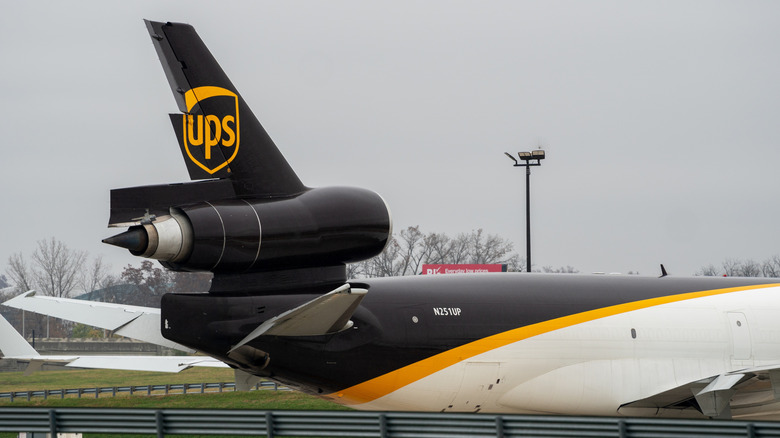
The National Transportation Safety Board continues to investigate the UPS cargo plane crash shortly after takeoff last year in Louisville, Kentucky. During a recent hearing, the National Transportation Safety Board seems to have accidentally released a PDF document that made it possible to recreate the cockpit voice recordings from the crash, reports CNN. Federal law prohibits the NTSB from releasing the raw cockpit voice recorder audio to the public, only transcripts of conversations directly related to the crash.
Among the 2,000 pages documents released to coincide with the hearing was a PDF file that contained a spectrogram of this audio, which is essentially a visual representation of the sound waves in the audio recording. It had apparently not occurred to the NTSB, particularly with the vast wealth of information contained in this docket, that this could be used to recreate cockpit audio for the last 30 seconds of the flight.
It did occur to Scott Manley, a popular YouTuber who makes videos about space, science, and aviation. In a now-deleted Twitter post, he questioned whether the spectrogram should have been included in the docket for this very reason. Whether that post inspired people to try or they figured it out on their own, they did this successfully, and the cockpit audio from the crash was made public. We will not be linking to the recording or the spectrogram it came from.
How is this possible?
Manley goes into detail in this video about how and why this came to be, but we'll summarize here. Cockpit voice recorders not only record the pilots' conversations, but any other sounds in the cockpit, such as alarms and warnings. In the case of UPS flight 2976, it recorded a high-pitched ringing sound that started shortly after the MD-11 rotated for takeoff and continued until the recording ended. To identify what this sound was, engineers recorded sound bites of various cockpit sounds from another MD-11, then compared the spectrograms of these sounds to the recording from the cockpit to find a match. These spectrograms were only ever intended to assist with this investigation, not to release the pilots' final moments to the public.
"It's deeply troubling that emerging technology can be used to extract CVR audio from visualized data we share to help the public understand the circumstances of an accident," said NTSB Chairwoman Jennifer Homendy in a Twitter post. However, this is not new technology as she claims. Modern tools do make it easier and more accessible, but digital signal processing has existed for decades, such as the Griffin-Lim algorithm first published in 1984. The real issue is that the NTSB did not consider this possibility, or it may not have released the spectrogram of the cockpit voice recorder in the first place.
"The NTSB docket system is temporarily unavailable as we examine the scope of the issue and evaluate solutions," according to the NTSB Newsroom. "We hope to restore access to the docket system as soon as possible." It is likely the NTSB is looking for similar spectrograms contained in its archives and scrubbing them from public access to avoid situations like this in the future.