

Concrete Vs Cement Driveways, Does One Last Longer Than The Other?
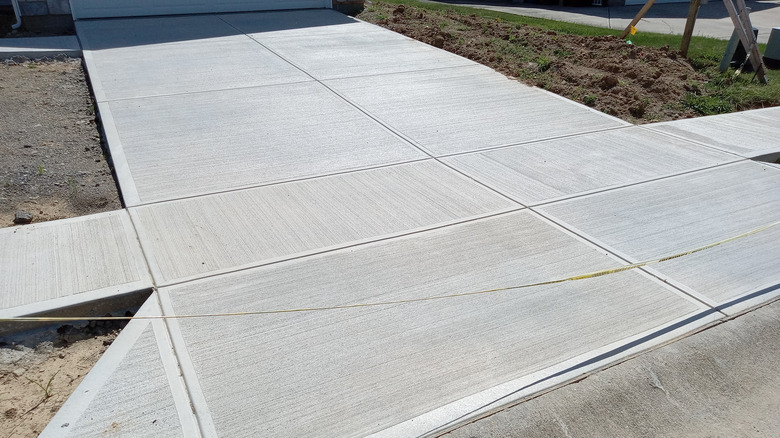
It's not uncommon to see people using the terms cement and concrete interchangeably, but the fact of the matter is, they're wrong. It's like using 'flour' or 'sugar' to describe a full cake, as cement is simply one of the key ingredients used to make concrete. One has the other in it, so at least there is some logic to the interchangeability of the terms. Sort of like how folk might also mix up all-terrain and all-season tires, or all-wheel drive and four-wheel drive.
The mixing up of these terms can be quite confusing, as if someone says they have a cement driveway, what they actually should be saying is that they have a concrete driveway. The latter can last decades, no problem, whereas the former wouldn't be suitable at all — cement is a binding agent, and should never be used on its own, not for a project the scale of a driveway. Naturally then, a concrete driveway would last considerably longer than a cement driveway, as the latter would simply crack and fail.
Instead, cement is more appropriate for smaller tasks, like repairing cracks in concrete structures. Knowing when to repair or replace a driveway can be tough, but cement could be used for repairing it, while concrete would be the wiser choice for replacing it.
Further explaining the differences between cement and concrete
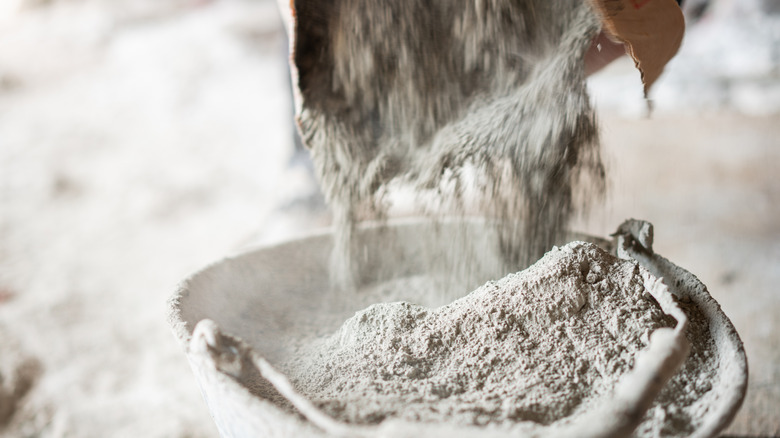
To delve further into the details, concrete is a mixture of ingredients — namely stone, sand, cement, and water — and cement is a separate thing. It's a powder, made by crushing and heating a wide range of materials, most notably limestone, before being ground.
On the other hand, the versatility of concrete is really quite astounding. It's the second-most used construction material in the modern world, playing second fiddle only to water, and use of the stuff can be traced back to Roman times. We might not make colosseums out of the stuff any more, but we do make ugly concrete walls that sit alongside the highway, for what it's worth.
Cement works excellently as a binding agent, and it's typically not something that ever gets used on its own. Especially not for something that needs to bear significant loads — like a driveway — because it lacks the strength and durability of concrete. It can, however, be used for making decorative details, repairing small cracks to larger structures, or indeed for totally different purposes, such as for creating mortar, by combining it with sand and water.