

The 5 Worst States For Drivers Underreporting Mileage On Car Insurance Applications
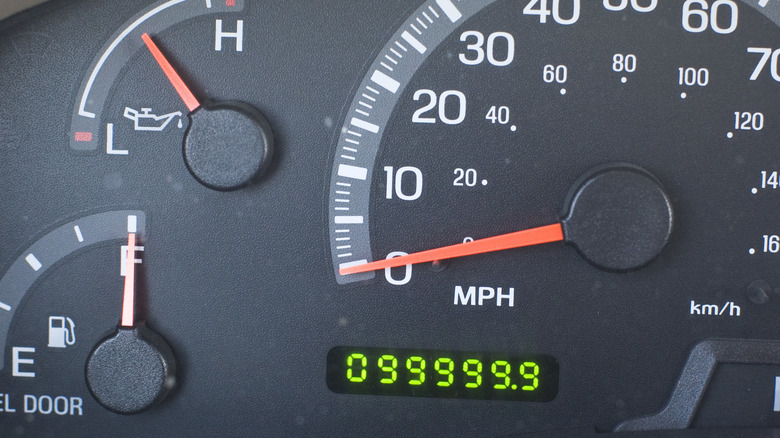
It's no secret that the cost of insurance has been soaring in recent years. In fact, the cost of almost everything motoring-related has increased — including regular gas prices hitting $4 nationwide, and the pricing of new cars remaining near $50,000. As a result of insurance price hikes, many drivers have resorted to cutting or dropping coverage, and perhaps that's why so many are underreporting their mileage, too.
According to data provided by Insurify, American motorists are underreporting their annual mileage to insurers, and not by a small margin either. While the Federal Highway Administration (FHWA) has data from 2021 to show drivers were covering around 13,500 miles per annum on average, Insurify's findings show drivers are instead reporting they only cover 7,589 miles per annum instead.
Digging into the data, it's clear to see that the issue isn't necessarily nationwide. Smaller and more affluent areas, such as Washington D.C., reported far more accurately, whereas larger, rural areas with higher rates of poverty were the main culprits of underreporting. Here's a closer look at the top 5 states for underreporting, along with a deeper dive into why that might be.
Wyoming underreported mileage by a whopping 73%
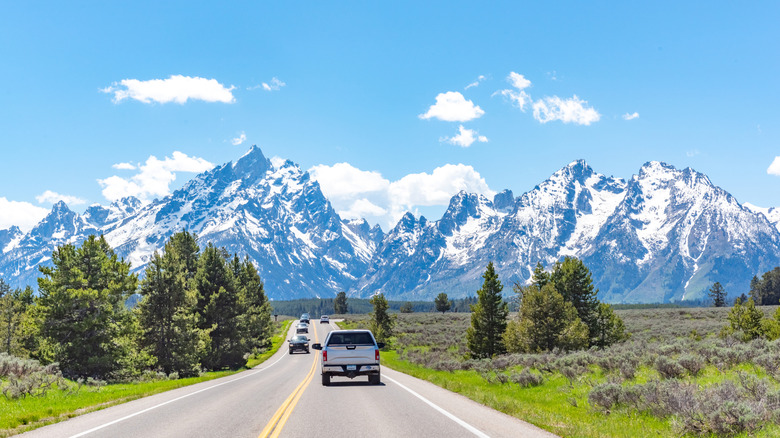
Getting the figures slightly wrong is understandable. Estimating mileage can be tricky, as work can change, family members can move further away, the kids could relocate to a different school, or a new favorite store or restaurant could pop up. There are countless reasons for having a tricky time estimating mileage, but none explain the monumental gulf between the predicted and actual mileage of Wyoming residents.
Insurify tells us that the self-reported mileage of drivers in Wyoming sat at an average of just 6,969, whereas the FHWA reports these drivers were actually covering an average of 25,779 miles each year. That's a gap of 18,810 miles, which is roughly equivalent to 2.5 years of self-reported mileage.
Unlike most states on this list, Wyoming doesn't suffer from a higher-than-average poverty rate above 10.6%. However, Wyoming is particularly vast and rural. It's America's 10th-largest state, but it has the second-lowest population density. In turn, there is the potential that drivers aren't calculating their mileage with the consideration that non-commute trips can be longer than they realize. Wyoming isn't the outlier here due to behavior type; most states are underreporting, but it is the outlier in terms of scale, with geography being a possible culprit.
Drivers in Missouri are also laughably inaccurate
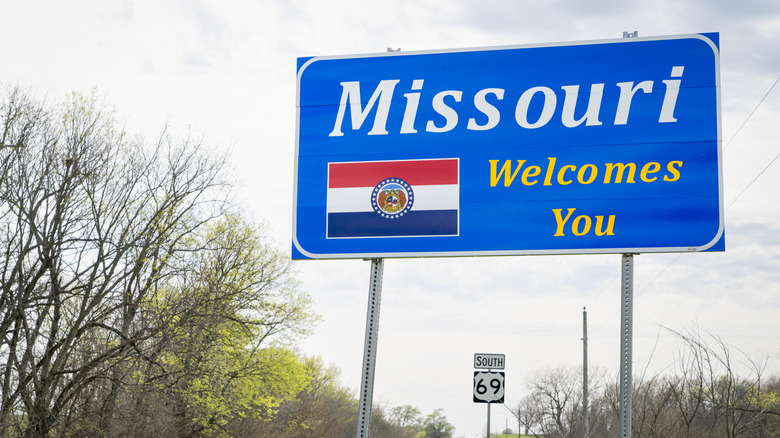
While no other state is topping Wyoming's misreporting percentage, Missouri residents are hardly accurate, reporting 58.7% lower than what the FHWA has found to be the true figure. Insurify's data says the average reported figure from residents is 7,699 miles per annum, whereas the FHWA shows 18,664 to be the true figure. Interestingly, the average annual cost of a full-coverage insurance premium in Missouri is $1,879, so this higher figure could hold the answer as to why drivers are underreporting.
Unlike in Wyoming, the poverty rate of Missouri is higher than the national average of 10.6%, sitting at 12.3%. The national average for a policy that's between 5,000 and 7,999 miles is $2,064, whereas the cost of a policy that's based on 15,000+ miles is $2,220. So, Missouri drivers may well be saving upwards of $150 by underreporting. One future consideration, though, is that insurance companies may begin tracking driver behavior like mileage more closely using telematics.
New Mexico drivers are underreporting despite lower average premiums

Both New Mexico and Missouri are underreporting mileage by 58.7%. Missouri drivers report 7,699 miles but drive 18,664 on average, while New Mexico residents report 7,497 miles despite covering an average of 18,158.
However, New Mexico drivers appear to be getting a sweeter deal, paying $1,669 on average annually, which is $210 lower than in Missouri. Insurify cites New Mexico's low population density as a credible reason why premiums are more affordable here. Still, those in the state's urban areas, like Albuquerque, are likely to miss out on greater savings, due to higher crime and traffic rates.
So, with lower than typical premiums already, why are New Mexico drivers underreporting by such a huge margin? Perhaps it's because policy rates jumped significantly in 2024. Further, New Mexico sees a shocking 24.1% of its drivers go uninsured, which translates to higher premiums for those who do pay.
There's more. Not only is New Mexico one of the most expensive states to own a car, but at 16.4%, New Mexico's poverty rate is also far higher than the national average.
Mississippi sees drivers underreporting by more than 50%
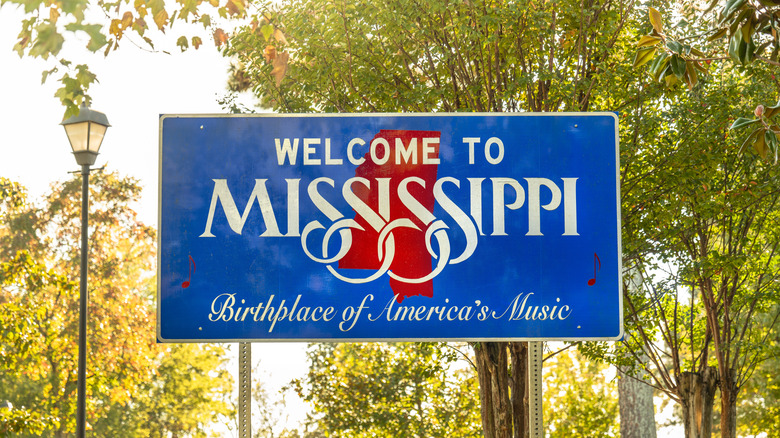
Drivers in Mississippi are covering over 20,000 miles every single year on average, according to the FHWA, despite only reporting 8,700 miles to their insurance companies. That's a disparity of 56.7%. Mississippi is a lot like some of the other states covered above, but it's less of an extreme example. Policies are cheaper than the national average, but only by a few dollars, and while the population density is low and the state is rural, the stats aren't as wild as in some other states, like Wyoming.
However, certain factors are enough to send mileages way north of driver predictions. Consider that over 50% of Mississippi's doctors practice in just 4 urban areas, when 54% of the population is rural. Drivers could make numerous lengthy trips throughout the year for healthcare not fully reflected in mileage estimates. Many citizens also live in food deserts, which means the nearest supermarket is over 10 miles away, potentially muddying practical mileage calculations. It's no wonder the FHWA reports that Mississippi drivers cover over 20,000 miles per year.
Drivers from North Dakota are reinforcing a pattern among states underreporting
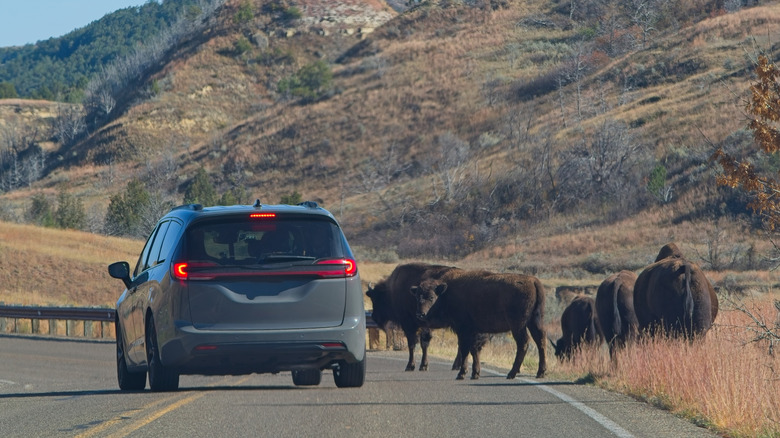
Aside from the über-rural outlier that is Wyoming, many states with higher-than-average mileage underreporting rank close to each other in the percentage difference between FHWA and self-reported mileage. Case in point, drivers in North Dakota predicted they would cover 7,333 miles on average each year, as opposed to their actual average mileage of 16,838. The percentage difference here is 56.4%, similar to Missouri, New Mexico, and Mississippi. Again, North Dakota is also highly rural with a relatively low population density and a poverty rate that's slightly greater than the national average, too.
North Dakota appears to reinforce the broader pattern in other states that underreport annual mileage. This pattern suggests that underreporting is more typical of drivers who live in rural settings — finding it difficult to predict accurate mileage each year due to both longer and less routine travel — with above-average poverty rates playing a secondary role.