

IndyCars Running Bonkers Powertrains May Sound Awesome, But Making Racing Relevant To The Road Remains Much More Important
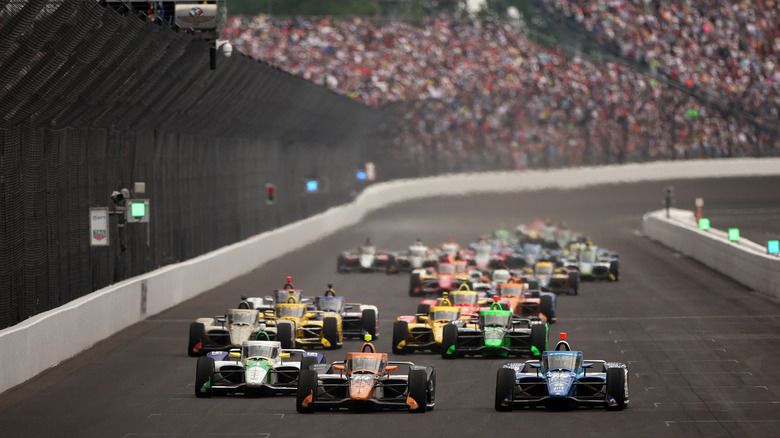
One of the most frustrating things about becoming an adult is learning that problems are generally a lot more complicated than your hormone-flooded teen brain would have preferred. In fact, the people who work directly with those problems tend to know what they're doing and have probably thought through all the reasons our genius ideas probably wouldn't work. For example, maybe if electrification is here to stay, IndyCar could spice things up with some fan service in the form of something bonkers, like a ridiculous new kind of engine? I posited the idea of creating a 1.0-liter V12, for instance. That would be awesome, right? Not necessarily, at least according to Honda Racing President David Salters.
Fans would love a wild engine with a double-digit cylinder count, of course, but I asked him to walk me through their thinking on future powertrains and explain the downsides of going all-in on fan service with something way less practical. Sadly, the actual words that came out of my mouth weren't quite that eloquent, but that's why no one pays me to talk. Thankfully, I still got an answer, and what do you know, one of the first problems is money, even for Indycar. As Salters put it, "someone's got to pay for this," and money "doesn't fall out of the sky."
Which is true. In racing, money usually falls into a giant incinerator, and then you cross your fingers hoping there's a mostly competitive car hiding somewhere in the ashes of what many people would have considered a large fortune. And while you may assume every racing team has some ultra-wealthy owner cutting fat checks, even the ones that do don't infinite money. Because of that, making sure teams can keep racing and the series stays financially solvent make pie-in-the-sky ideas too risky to consider. Especially when you think about how many people's paychecks are on the line. "We're here to entertain the fans. We're here to compete. But also, every May, we have to balance the books. It's no different than you have to do at home."
Even if you assume increased ticket sales would make up for the cost of IndyCar going all-in on fan service with its powertrains, according to Salters, there's another issue every racing series still has to contend with, and that's why it even exists in the first place. Racing is expensive, and winning never hurts, but in order to continue into the future with a clear vision for where it's going, every series still has to answer the question of, "What are we even doing here?" (My words there, by the way, not his.)
Why does IndyCar exist?
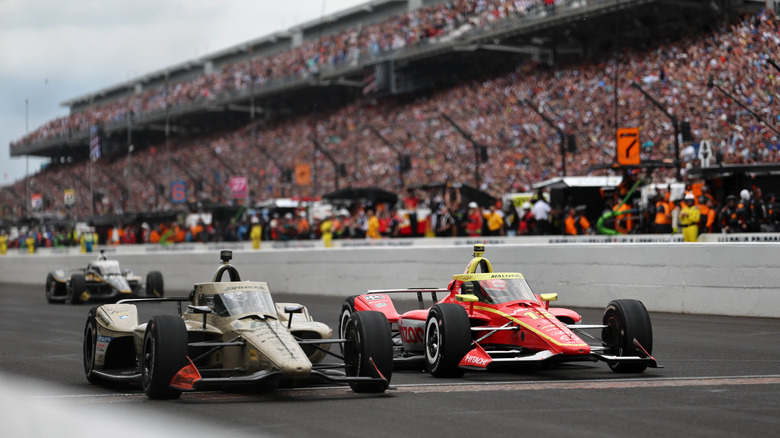
As fans and casual observers, it may feel like the point of racing is race day itself. For an engine-supplier like Honda and IndyCar as a whole, though, that's not necessarily the case. Beyond making sure the books balance, Salters said, "then you've got to justify your existence. Is that [idea] relevant?" In a world where there's no real use for something wild like a small-displacement V12 outside of racing, why invest in developing an engine like at all? Any use you could think of in a road car would be better served by a cheaper engine with significantly fewer parts.
"It's got to be relevant," Salters continued, "because again, we're also trying to develop relevant technology here." Presumably, that means making powertrain choices that engine suppliers believe will eventually benefit their road cars, whether in the form of more advanced tech, smaller components, more durable components, and so much else. Sadly, in answering the question the way he did, Salters bordered on confirming that Honda has no plans to develop a V12-powered supercar in the near future, but that's also a bit like me confirming Gronk and I didn't do karaoke together after the race. It didn't have to be confirmed to be assumed.
Still, IndyCar isn't all about Excel spreadsheets, accounting, and making sure the 2047 Honda Odyssey handles better than it should. At its core, Salters said "it's got to be entertaining." Even with hybrid powertrains stuffed into cars with single-digit numbers of cylinders. However, if you've skipped IndyCar because it didn't sound exciting enough on paper, or the engines didn't sound amazing enough in videos, having just been at the Indy 500, I can promise you it's already plenty entertaining. I mean, they drive race cars at speeds north of 200 mph burning a fuel I'm sure everyone involved would prefer I don't call legal moonshine.
Sorry, IndyCar. You run the Indy 500 in a state that's 98% corn, and I don't know anything else about the guy, but I can tell you what my half-uncle's biological grandfather would have called a race fuel that's pure ethanol. And if you told him we were racing cars north of 230 mph on good, old-fashioned white lightning, I bet he would have said that sounds like a kick-ass time. Which is the correct take, because even in 2026, race cars burning moonshine kicks so much ass.