

We Were Meant To Get A Saab Hot Hatch, Instead They Gave Us A Rebadged Subaru
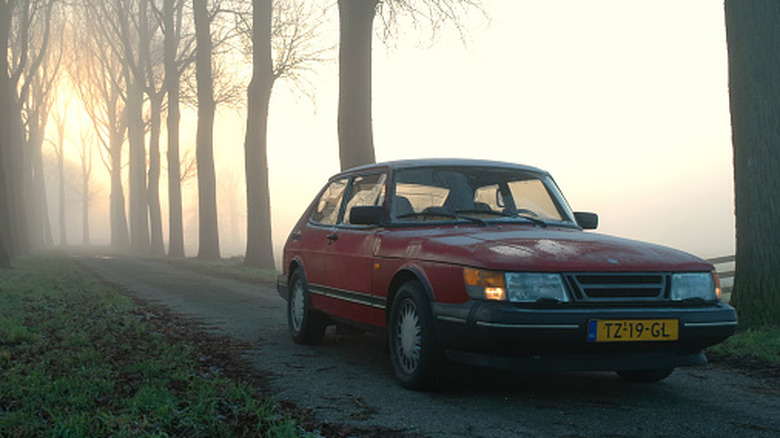
This sick and twisted earth has been spinning on in space for ten long years without the once mighty Saab Automobile AB. The Swedish automaker is, to this day, among the pantheon of all-time great enthusiast brands. You don't necessarily have to be a Saab enthusiast to buy a Saab, but owning it for a while will make you a Saab enthusiast. There's just something about the brand that inspires Trollhättan zealotry.
General Motors purchased half of Saab in 1989, and took an option to purchase the other 50% at the turn of the millennium. With an influx of GM cash in the early 2000s, Saab was looking to return to its roots with a compact hatchback, an upscale small car to compete with BMW's 1-series and Audi's A3. Amazingly, even when the brand was completely owned by General Motors, it was still proudly waving its freak car brand flag, and the fans followed even if sales didn't. Saab floated the idea of a 9-1 to General Motors, and that got the ball rolling.
GM had also purchased a 20% stake in Fuji Heavy Industries, the parent company of Subaru, another oddball automaker with an ardent fanbase. Big GM sat the two little weirdos in a room and told them to get along. Saab envisioned a grand plan of developing its own car using Subaru's Impreza platform. The plan was to take advantage of Subaru's turbocharged boxer four-cylinder engines and the WRX model's sporty chassis tuning, but with signature Saab design cues like the wraparound windshield, clamshell hood, and signature "hockey stick" c-pillar treatment. That bold vision of a new Saab hatch was picked clean by General Motors bean counters. What's the point in doing expensive brand value plays when you can cheap out and do the bare minimum instead?
What could have been?
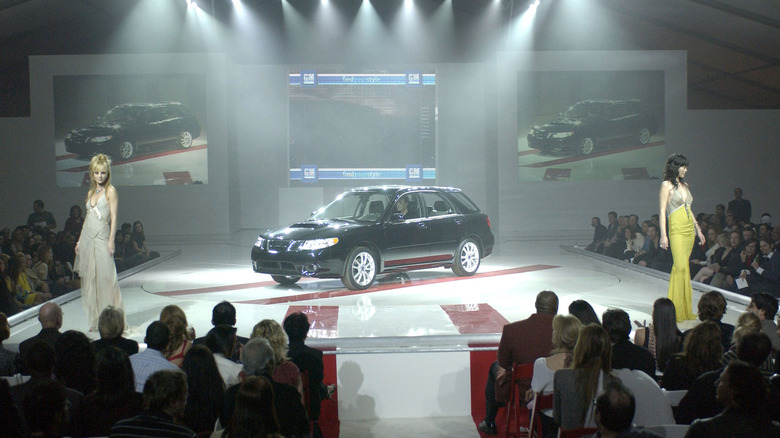
Rather than a proper throwback to Saab's glory days of old, the brand got a half-hearted Subaru rebadge with practically no effort. If that's not representative of early-2000s General Motors product decision-making, I'm not sure what is. Look, that's not to say that the Subaru wasn't a perfectly acceptable car at the time, and Saab's minor changes to it made it arguably a better one, but it felt much more like a trim level for Subaru than a whole new model for Saab. The jovially nicknamed "Saabaru" was exclusively built for the North American market, another misstep under GM's tutelage.
Dubbed the Saab 9-2X, the new Japanese-built Swedish-branded America-bound model received a redesigned front and rear fascia, slightly more interior insulation, Saab-specific seats for improved IIHS safety ratings, and unique steering and suspension tuning. Everything that is difficult to change from model to model—bodywork, glass, interior layout, and drivetrain—was all Subaru parts. It did have the distinction of being the first all-wheel drive car that Saab had ever offered, which is something, I guess.
The 9-2X made its way to market for the 2005 model year, and despite some praise from the press for its refinement of the Subaru platform, it didn't connect with buyers. Not only was it nearly identical to the Impreza upon which it was based, but the 9-2X was significantly more expensive. A model with a more powerful turbocharged engine was made for 2006, but even that didn't make the 9-2 last. In October of 2005 GM decided to pull the plug on the entire Subaru partnership, liquidate its short-lived Fuji Heavy investment (selling to Toyota), and disband the project. Just over 10,000 examples of the 9-2X were sold, and the short-lived boondoggle cost General Motors a whole lot more than if they'd just invested in a quality Saab product from the beginning.