

How To Buy A Used Hybrid Without Getting Burned: Battery Health, Inspection Checklist, And Warning Signs
People buy used hybrids for an obvious reason: they're a strong value play. If you actually use them as hybrids, you get significantly better fuel economy than an equivalent gas car. Plus, you avoid the steep depreciation hit that comes with buying new. Consumer Reports notes that hybrids average 15% fewer problems than gas-only cars, which makes them genuinely compelling on a reliability basis, not just a fuel-cost one.
With the ever-worsening cost-of-living crisis, used plug-in hybrids are an unexpected solution to both rising gas and car prices. That's a real benefit worth remembering. However, hybrids come with two complex systems under one hood — an internal combustion engine and an electrified drivetrain. The things that can go wrong in a used hybrid are things a standard pre-purchase inspection can easily miss. Battery issues, dying inverters, fried cabling — none of it shows up on just a visual once-over.
The stakes are high. A replacement hybrid battery pack can run anywhere from $1,000 to over $6,000 depending on the car — and that's before labor. That can be a nasty surprise on a car you thought was a good deal. So, yes, a good used hybrid is a smart buy, if you know what to look for. Here's how to buy a used hybrid without getting burned.
Battery health is everything

The high-voltage battery is the make-or-break component in any used hybrid. It's one of the most expensive single parts on the car. Don't let a seller or a dealership skip past it with a reassuring shrug. What you're after is a State of Health (SoH) reading: a percentage that tells you how much capacity the pack retains relative to when it was new. It's a very similar story with buying a high-mileage EV. A battery at 85% SoH or above is generally considered healthy.
Below that, expect a meaningful drop in range economy and, eventually, in the car's resale value. Professional pre-purchase inspections with a quantified SoH report typically run $200 to $400 — relatively cheap insurance against a pack replacement that can easily cost 10 times that. It is also recommended to ask the dealership to plug in a decent diagnostic tool for a detailed report.
A 2025 ADAC study analyzing 28,500 SoH measurements across six manufacturers found Mercedes packs degrade less than average. At the same time, Mitsubishi plug-in hybrids showed quicker aging even at lower mileage counts. As a rough benchmark for what's decent: 88% SoH at around 62,000 miles, and 80% at 124,000 miles. A reading below those numbers is likely to be a compromise in the long run.
The good thing: hybrid battery warranties are longer than many buyers realize. Under federal rules, automakers must cover hybrid batteries for at least eight years or 100,000 miles, while the District of Columbia, California, and nine other states extend that protection to 10 years or 150,000 miles. A used hybrid within that window carries significantly lower risk. Regardless, if the seller can't produce an SoH reading and the warranty is expired, price the car accordingly.
A pre-purchase inspection
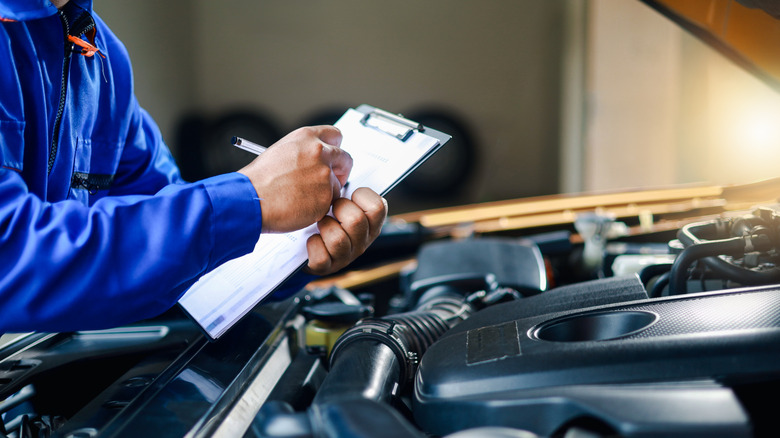
Inspecting a hybrid takes additional training and experience because you're dealing with a car that carries a huge amount of voltage, plus electric motors and other components not found on conventional vehicles. Understandably, not every mechanic can reliably do this. Find one who specifically works on hybrids — most who do likely advertise it.
Beyond confirming the warranty status you already checked, look for oil change regularity. Also look at brake history because regenerative braking does most of the work on a hybrid, meaning that if the car has had too many brake jobs in its records, that could be a sign the car was driven like it was stolen. Unlike a regular car, hybrids run dedicated cooling loops for the electrical systems separate from the combustion engine.
Although automakers may claim that these systems do not need service for the life of the vehicle, that is not always the case. So, make sure to check it. While you're busy checking, also go through gearbox history — some transmissions that shipped as "sealed for life" have since been quietly revised to require changes. During the test drive, let the car run long enough for the gas engine to kick in, then listen carefully for any roughness or hesitation as it hands off to electric power.
Overall, although a hybrid relies on two means of propulsion, it still uses most of the same parts you'd find in a typical gasoline car — so make sure to do the regular rounds as well. Bringing an OBD-II scanner can also help you identify any fault codes that may be lurking. It can't tell you everything, but it can tell you a lot.
Warning signs to keep an eye out for
Buying a used car without doing your homework tends to follow a familiar script: Someone skips the due diligence, and pays for it later. Watch out for a dealer who presents a plug-in hybrid with a fully charged battery and keeps it in EV mode only. If you are never able or allowed to engage the combustion engine, it can be a sign something is wrong with the car or the dealer.
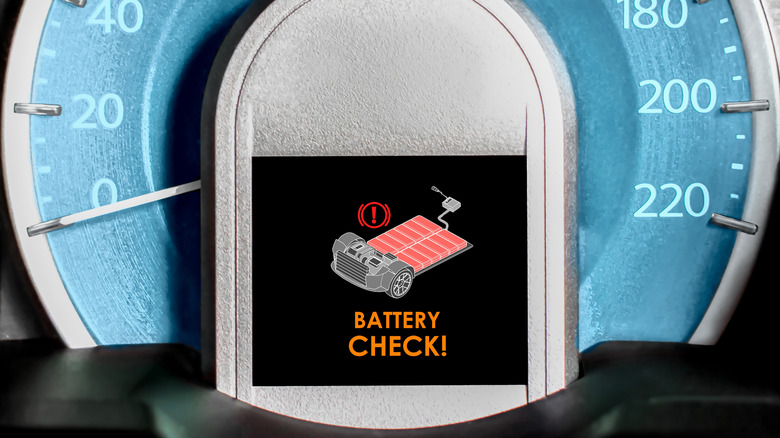
Warning lights are also a big one. If you come across issues such as hybrid system alerts, check engine lights, more investigation is required. Sadly, some dealers use gadgets to clear codes off the vehicles they sell — and even if your OBD-II scan comes back clean, a recently reset system is a major red flag that the dealer should not be trusted.
Having no service history is also something to keep an eye on. If you are able to, make sure to pull service records through the VIN. Cars hate water, and hybrid and EVs hate water even more. Batteries can corrode, shock hazards are possible, and the car can even become a fire hazard. If you come across mold, a rusty under-seat area, or weird electrical smells, don't touch it with a 10-foot pole.
Although recalls happen and are to be expected for all cars on the road, hybrids can be even trickier. Therefore, make sure to check for any open recalls at the National Highway Traffic Safety Administration. Also ask the dealership for receipts. Having no paper can mean something is wrong, and on a hybrid, that's not a gamble worth taking.