

9 Brilliantly Quirky Car Communities Worth Knowing About
There's no denying that a well-modified, properly preserved, or insanely fast car can speak for itself with respect to attracting attention or demanding interest, but the people responsible for such creations and philosophies will always be the true life force behind our love for them. We are sorely reminded of this every once in a while when we lose people like Kyle Loftis or Ken Block. They and many others were deep enthusiasts and visionaries who fostered a shocking amount of positivity to promote and uplift not just the motorsports they loved, but the people within those groups.
It speaks to a larger discussion about what car culture really is. One could argue that the term "culture" is all you need as a descriptor. Culture is people. And in America, especially, it's easy to get narrow-minded, focusing only on the best things about your local car communities. Seasoned enthusiasts have likely been exposed to just about every automotive community there is — JDM drift culture, drag racing, rally, rock crawling, track builds, showcars, American muscle, Autobahn missiles, and others — but there's always more.
Across the world, and even within the States, there are vibrant, fascinating, and important car cultures that are more than deserving of additional eyes. Most of you will have heard of or been intimately involved in at least one of these, and this is not a complete list of cool and quirky car communities by any means, but the few we've featured here are sure to provide some newfound knowledge for that encyclopedia in your brain.
Jeepneys in the Philippines
For essentially the entire first half of the 20th century, the Philippines was an American territory. The U.S., for several reasons, decided that annexing the island-laden country would be strategically useful in terms of trade and possible future conflict with countries like Germany and Japan. Lo and behold, World War II comes around, and the Philippines is a key location for American military bases, and even some decisive battles between the U.S. and Japan. Sadly, many of the Philippines' major urban areas were stricken by the war, leaving many Filipinos without infrastructure or means of transport.
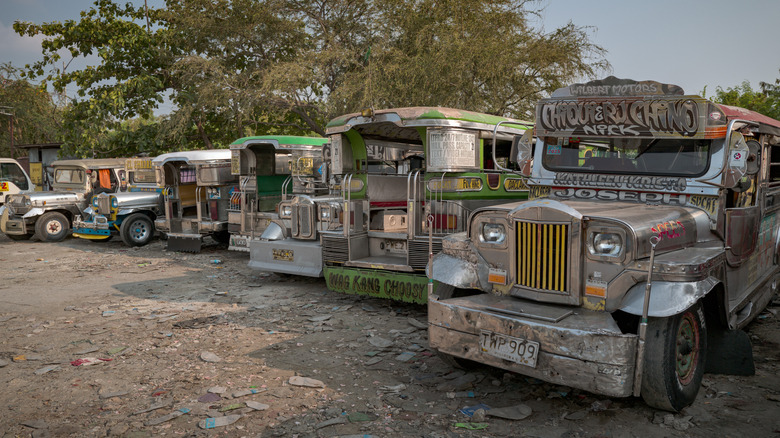
What was left behind, however, were countless American military Jeeps. So, in the name of creativity and necessity, many of these Jeeps were modified into large public transport vehicles, or buses of sorts. They utilized the Jeep's front-end and running gear and built sizeable passenger cabins on extended frames in the rear, usually with parallel bench seats on either side. The "Jeepney" was born. It was a critical tool that helped Filipinos rebuild their country, which had been all but involuntarily thrust into a war between imperialist world powers. Now, more than 80 years after World War II, jeepneys have continued to serve the Philippines, picking up and dropping off passengers on routes both in the city and the provinces.
As you can see above, jeepneys are both transportation and art installations. Decorated with wild graphics, lettering, and intricate paint schemes, the average Jeepney uses bulletproof engines (the 3.3-liter Isuzu four-cylinder is popular) and a whole lot of ingenuity. There are dedicated manufacturers producing hundreds per year, and the vehicles themselves are often owner-operated, leading to a robust debate over the government promoting new, expensive-to-maintain electric buses for the metro areas of the Philippines.
Donks
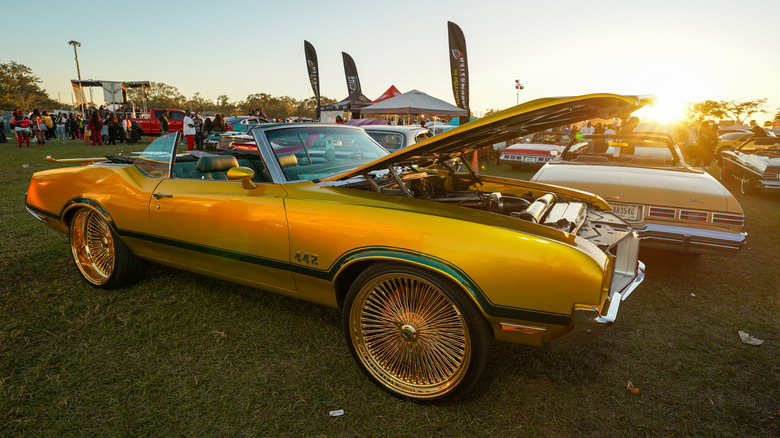
Back in the day, a set of 22-inch wheels on a car that most certainly didn't need them was the ultimate sign of status. Hardcore performance enthusiasts in 2026 may think it's a piece of car culture that needs to end, but the donk community couldn't care less what you think. Donk culture rose up in 1990s South Florida, particularly in Miami. The origin of the colloquial term is unknown. Educated guesses come down to how these modified cars resembled donkeys, or that the old Impala logo looked somewhat like a donkey.
But while the etymology is slightly unclear, the original meaning as it relates to automobiles was very strict. In its heyday, a donk was a 1971-1976 Chevrolet Caprice or Impala, which may lend some credibility to the Impala logo theory of the word's origin. These full-size Chevys would sport detailed paint jobs, ultra-luxury interiors, and of course, gigantic wheels. The general rule of donks is that 26 inches is the minimum. Yes, the minimum. And 30 or more is even better.
Today's donk community has adapted to new styles and tastes. Whereas the first generation of donks may have seen extravagant motif-based customization with candy bar or soda themes, the donk of the modern comes in more understated builds. Still sporting big wheels, the newer donk may have concours-level restoration in the paint and trim department, but hides a cheeky crate motor under the hood. It may not be your cup of tea, but the level of craftsmanship, community, and history behind donks is more than enough to earn a spot in this piece.
Mini trucks
The 1970s may have brought forth the end of the muscle car era, but the regulation-inspired mantra of smaller, lighter, and more fuel-efficient vehicles gave us another fascinating, and far more niche community — mini trucks. Think of vehicles such as the Nissan Hardbody, Mazda B-Series trucks you probably forgot about, Datsun 720, Chevy LUV, Ford Courier, Dodge D50, and later offerings like the Chevy S10, Ford Ranger, and more. The Americans were behind the curve on this trend, only bringing their own mini trucks to market in response to the success of the Japanese stuff already out there. But the result was a new class of vehicle most folks in the States had never been allowed to play with.
The community of minitruckin', as it is often called, with all its flair and added creativity, began on the West Coast in the 1980s and 1990s. And don't worry, the telltale signs of a tampered-with mini truck were very apparent. Inspired heavily by the lowrider community, they had slammed suspension, often on airbags and hydraulics, bigger-than-stock wheels, custom body panels, bed hydraulics, detailed and flashy paint jobs, custom interiors, fender flares, and endless other opportunities to stand out.
Like any enthusiast car, each mini truck is an extension of the driver behind the wheel, and meant to be shared with other appreciative minds. And yes, the community itself is not quite as prominent anymore (if it were 1994, mini trucks probably wouldn't be on this list), but it still thrives in its own right. The previously out-of-business Minitruckin' Magazine is back up and running now, and mini truck events and enthusiasts are still all over the U.S., keeping the culture alive.
Hypermiling
While traditional performance-oriented car communities burn gas like they have their own personal crude oil well, the hypermiling community represents the exact opposite. It's essentially an acute obsession with miles-per-gallon — doing anything and everything to improve your car's efficiency and beat the EPA estimates as well as your own personal high score.
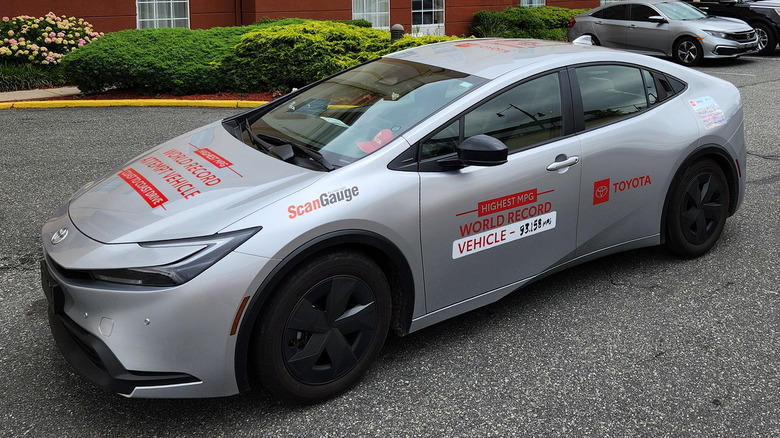
The earliest form of this idea came from wartime gas rationing during World War II and efficiency-conscious drivers during the 1970s fuel crisis, but the hypermiling community as we know it today draws its origins from early-2000s internet forums about fuel-efficient vehicles and practices. The forum most point to as the true flashpoint is CleanMPG.com, founded by Wayne Gerdes (he set a U.S. coast-to-coast MPG world record in 2024, driving the Prius pictured above, averaging just over 93 MPG). As vehicles like hybrids began to take the industry by storm, the hypermiling community grew alongside it, developing techniques and strategies to squeeze every last inch out of the fuel tank.
Hypermilers might use methods such as making sure they're keeping up with their car's maintenance schedule, eliminating unnecessary weight, monitoring traffic and wind conditions, and keeping the windows shut with no A/C. However, some more unique — and sometimes dangerous — techniques are also used (don't do these) like over-inflating tires to decrease rolling resistance, running in a semi-truck's draft, parking at the highest elevated point of a lot to decrease the amount of gas you use when leaving, and even driving on the painted white line of the shoulder to limit rolling resistance on one side (that's real). Some say hypermiling is just another version of driving like a jackass, but we'll let you decide for yourself.
Red Devils in Panama
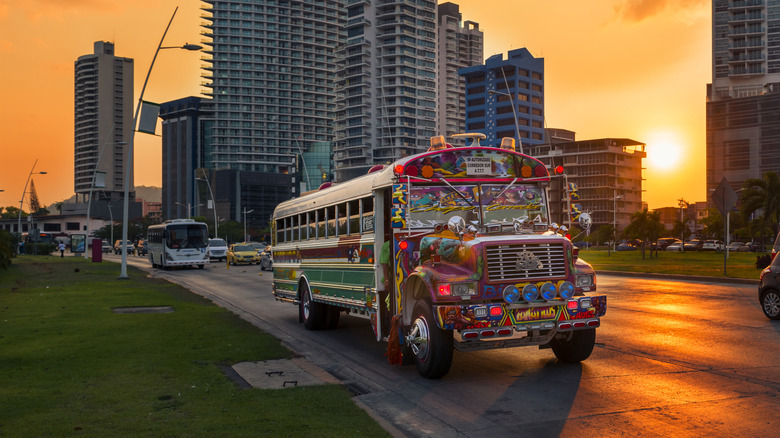
Surprise, surprise: many other automotive cultures have been affected by international politics and war. Case in point, the Red Devil school buses in Panama. During the 1940s, Panama was another one of those "strategically significant" locations for the Allied powers, and with that global interest came many new people and locals looking to capitalize on the opportunities this new age brought. One such opportunity was the fact that during wartime, Panama's personal travel was heavily limited, leaving public transportation as a crucial area for development.
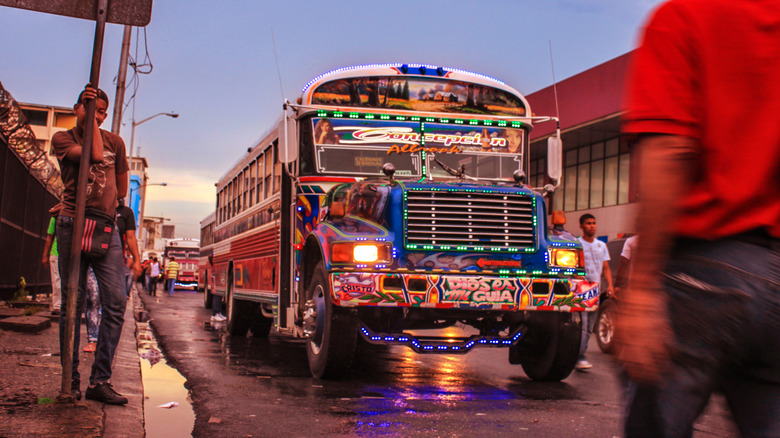
This led to Panamanian folks importing American yellow school buses, customizing them, and transforming them into city-going transport for those frequenting the growing metro area. In a similar vein to the jeepneys in the Philippines, the Red Devil buses (the phrase is said to come from Spanish colonial dances), while still providing transportation, are adorned with art, loud music, bright lights, and anything to grab attention. Many Red Devil themes center around pop culture, whether that be famous singers, movies, actors, or characters. Just like the spectacles they displayed, the artists who created the visuals came from diverse backgrounds, many from other Caribbean countries.
The average Red Devil also had its fair share of religious symbolism, particularly at the cockpit, where a maximalist exhibition of spiritual and sacred items lined the dash and trim. Some are even built into drag buses and showcased at a yearly party event in the capital (Panama City) where they roll coal and sprint down the quarter-mile for onlookers to appreciate. Like the Jeepney, inner-city politics have tried to rid the streets of what many local leaders believe are dangerous and antiquated forms of transport, and while they've been limited to an extent, they continue to survive in modern Panama.
Japanese Bōsōzoku
Bōsōzoku begins with the motorcycle, which in post-war Japan was a critical form of transportation the country was continuing to evolve. The cool thing about bikes was that they were cheap, and young people in particular saw them as a means for freedom and rebellion. By the 1970s, the rise of Bōsōzoku biker gangs became a reality. With some influence from Western alternative culture, the loud and chaotic young folks organized into strict hierarchical groups, with firm codes and creeds, protecting each other and claiming territory. The chief sidekick was, of course, their two-wheeled chariots, modified with long, loud exhaust pipes, high-back seats, custom body panels, affiliation flags, and more.
By the 1980s, tens of thousands of young people were involved in this movement, which included unique personal fashion of all kinds, and even gang violence and police involvement. This whole concept deserves its own documentary, but the short of it is that this style, especially the vehicle customization, bled into car culture. While the gang element is largely gone by now, Bōsōzoku cars in Japan, often called "Zokusha," are still prevalent, with enthusiasts modifying their vehicles through outrageous body kits, wheels, and exhaust tips taller than Shaq.
Several sub-genres of Zokusha have emerged over time since the 1980s and 1990s. The "Kyusha" style is all about maintaining vintage Japanese cars with tasteful additions, while "Shakotan" is akin to the stance community — getting those body panels slammed on the street as best you can. And then there's "Grachan," which refers to the "Grand Championship" group 5 racecars of the 1970s that flaunt motorsport-inspired modifications like box flares, liveries, and huge wings.
Formula Off Road in Iceland (and tractor racing)
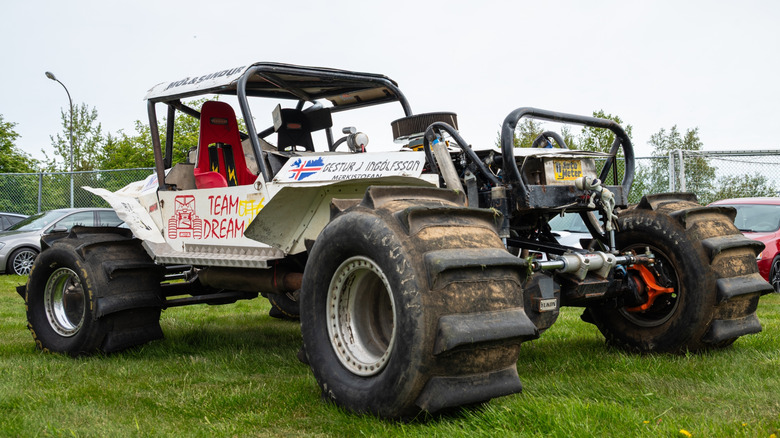
Even though Iceland's paved roads and the iconic Ring Road highway have developed significantly over the last half-century, much of Iceland's paths remain gravel or dirt. It makes sense, then, that when you're building a car culture at the edge of the Arctic, much of it centers on off-road vehicles. Arguably, the crown jewel of Iceland's rugged car culture is Formula Off Road, which began in the 1960s and evolved through the involvement of rescue teams showcasing their badass vehicles for fundraising.
Formula Off Road has now become a full-on sport, with multiple classes competing for bragging rights. The pinnacle, though, is in the "Unlimited" class, which features caged buggy-style trucks powered by honkin' V8s and scraping through time trials of mud, dirt, gravel, and elevation change. There is also the "Modified" class, which requires the competition vehicles to resemble the production cars they are based on, and the "Street Legal Class" that often showcases folks' personal 4x4s that are capable of handling both extreme terrain and a government inspection.
Icelandic car culture is vast, but because we're talking off-road stuff, we also wanted to mention tractor racing. It is held at similar venues and circuits to Formula Off Road, but tractor racing is much more of a community event than an all-out competitive brawl. Drivers will decorate their tractors with signs and flags, and with the proper safety gear, traverse mud bogs and hills to see who can finish the fastest — or finish at all. If that's not your style, you might also find dirt drag racing, traditional rally racing, and even drifting events held throughout this sparsely populated country.
Spinning in South Africa
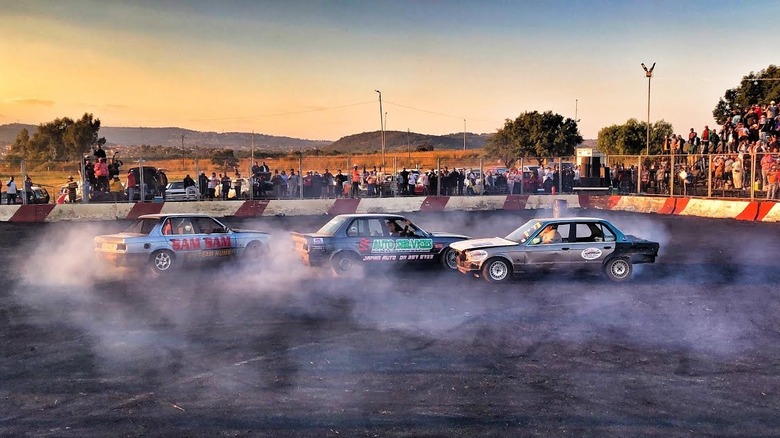
Much like a deceased Italian mobster receives a grand display of pageantry at their funeral, the underground organized crime scene in Soweto, a township of Johannesburg, South Africa, does the same — with cars. It began during the apartheid era in the 1980s, where someone would get in a rear-wheel drive car and "spin," or do donuts, as a tribute to the departed. The practice was used both for late organized crime members and typical community events alike.
Spinning is less of a drift event and more of a performance art. Drivers and even passengers will hang out of windows and sunroofs in acrobatic ways, all while shredding tires and drifting through a parking lot or purpose-built course. And the car of choice, well, it's a familiar face — the BMW E30. They're rear-wheel drive, easy to take apart and modify, and small, which we would assume helps with doing a bunch of tight donuts within a limited amount of space.
Spinning events are a genuine spectacle. Courses will vary from location to location, but you'll often see an open area of pavement, possibly bordered in a basic large shape, with a few obstacles or barrels to showcase car control. Body panels fly, smoke fills the air, and drivers even get out of their cars, pinning the throttle down before leaving, allowing their E30 to take on a mind of its own on the course. In recent times, this unique motorsport, or "gusheshe" as it's called locally, has grown in influence and even gained Red Bull backing and sponsorship for driver/performers like Sam Sam Thubane.
Raggare in Sweden
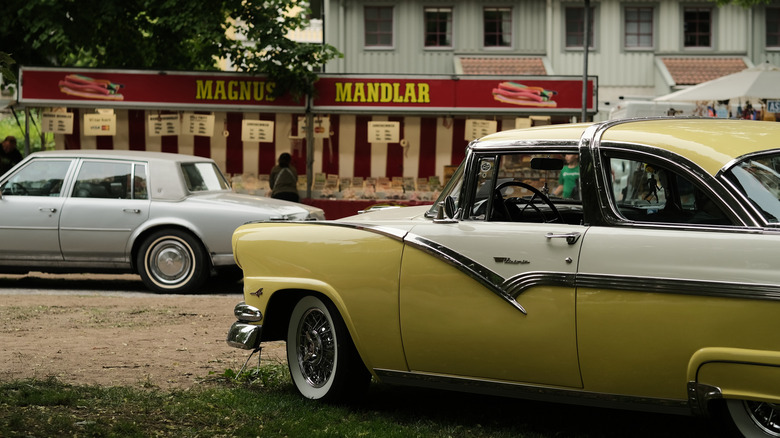
The term "raggare" is derived from the Swedish word "ragga," meaning to pick up girls, but the raggare folks are not just smooth talkers. This Swedish subculture is all about the appreciation for mid-century American music, fashion, and obviously cars. Many other countries had this same fascination with the rockabilly, greaser aesthetic (there's a huge community just like it in Japan, as well), but the Swedish raggare style inexplicably stuck around and continues to exist in the modern day.
After the 1950s and 1960s, American cars took a drastic turn towards fuel efficiency, changing their appearances, performance, and baseline philosophies altogether, so many of these older "golden age" cruisers and would-be hot rods were sent elsewhere. One such "elsewhere" happened to be in Sweden, where enthusiasts saw them as yet another fascination to behold. That interest in American cars and pop culture created this phenomenon we know today.
So what do they do, exactly? Well, just like a group of young folks in America might in previous decades, they cruise, listen to rock, punk, and disco music, drink beer, and hang out with their friends, all while embodying the raggare with outfits and hairstyles to match. Is it any different from the trends of today that are inspired by various global communities and cultures? Maybe, but you'd have to go to Sweden and ask what they think.