

Propane Gas Is Cleaner And Cheaper, So Why Don't More Engines Use It?
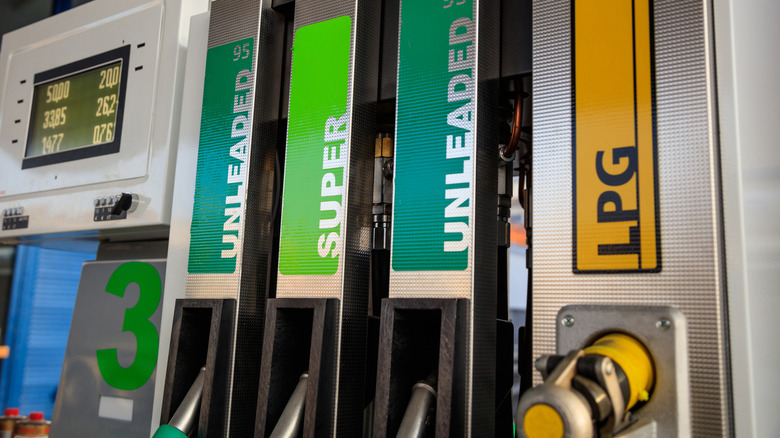
Gasoline prices probably aren't coming down to pre-war levels anytime soon, and diesel prices are going up even faster than gas. The thing is, though, there's a readily available fuel in the United States that's less expensive than either, cleaner than both, and still rarely used for cars and trucks. We're talking about propane — sort of. Actual propane in this country is generally a gas produced when refining natural gas or crude oil. However, folks often refer to liquified natural gas (LPG) as propane, because it's mostly that hydrocarbon but liquified, pressurized, and mixed with small amounts of other gases like butane. To be clear, that means that the propane we're discussing here is technically LPG.
Of course, while all the benefits remain, so does our question. And the answer is simple and familiar. Although the country has an abundant supply of LPG overall, it doesn't have an easy way to get the fuel to the vehicles that need it. Consider: There are only about 1,238 public locations in the U.S. where you can fill up with LPG, which compares to more than 160,000 gas stations and almost 70,000 EV stations — those, in turn, offer approximately 196,000 individual charging ports.
Now, you do get less bang for your buck with LPG. Each gallon contains 27% less energy than a gallon of gasoline, meaning you'll get 20% fewer miles per gallon when you replace gas with LPG. Additionally, the cost of converting a regular engine to run on LPG can climb into the thousands of dollars.
Vehicles with LPG engines: the fleet factor
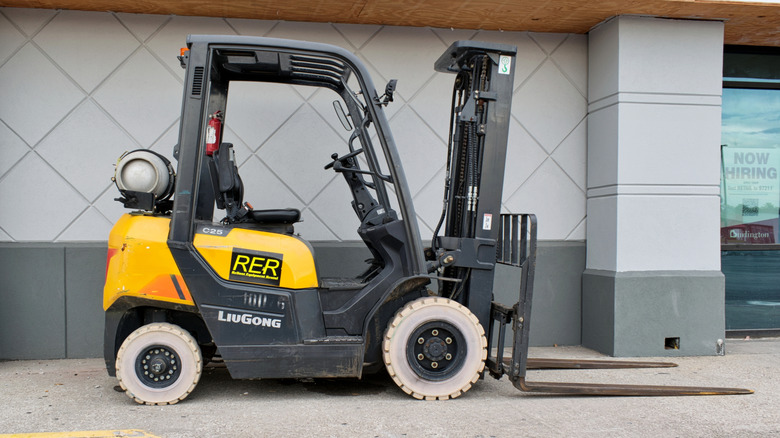
All those drawbacks haven't stopped propane from catching on with fleets, which often don't have to rely on public fueling stations — helping them avoid one of the biggest drawbacks. As a result, the U.S. Department of Energy says that many of the roughly 60,000 vehicles running on LPG in this country are in fleets, and that doesn't include the hundreds of thousands of forklifts using the fuel.
It certainly helps that the national retail average for a gallon of gasoline when this article was written was $4.55, with autogas – another name for LPG — coming in below $2 in many regions. We still have to factor in the fuels' different energy densities, though. Remember how we said that LPG is down 27% in this measure? Well, doing the math on prices shows that LPG is roughly 56% cheaper, more than making up for the drop in efficiency.
Relying on propane makes a huge difference in terms of emissions as well. For instance, using propane instead of gasoline can cut greenhouse-gas emissions by 13%. In comparison to diesel engines, like those often found in fleet trucks, propane advocates claim that vehicles running on LPG results in 36% fewer NOx emissions and 70% fewer sulfur emissions. Additionally, diesel engines are well known for releasing particulate emissions, while propane releases very few when burnt.
Speaking of things burning, you don't have to be too concerned with the woman who blew up her minivan with a propane tank. Vehicles with propane systems aren't really rolling firebombs — at least not if they've been properly engineered to meet the Liquefied Petroleum Gas Code of the National Fire Protection Agency.