

Gas Prices Aren't Coming Down To Pre-War Levels Anytime Soon
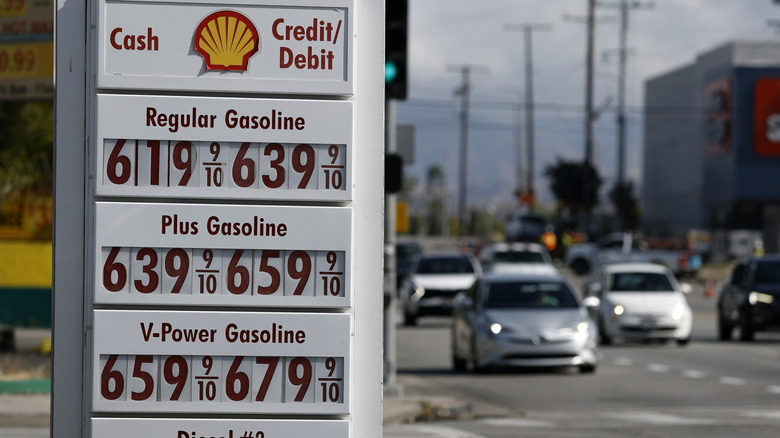
It's difficult to tell whether the US is closing in on an end to this war or is about to "destroy Iran." Though, the possibility of things coming to a head this week is about as good as any other week since the start of this conflict and any "agreement" comes off as a temporary way to keep markets floating over the weekend. But if a miracle did happen today and things were resolved, Axios reports there's still a long road ahead before we see any sort of real relief, or those sweet sub-$3.00 per gallon prices at the pump.
It's not just the war; an unfortunate series of events last week shut down major refineries in the American midwest, putting a squeeze on gas supply in the region and, subsequently, drivers' wallets. But it's the U.S.-Israel war in Iran that will keep prices particularly high. AAA notes that national average gas prices continued to rise and hit an average of $4.55 Thursday, up $0.25 from the week before, even with crude oil prices dipping below $100 a barrel. The dwindling global supply of gas is thanks to the bottleneck happening in the Strait of Hormuz, but opening up the strait won't immediately solve the U.S.'s gas problem.
It comes down to the three Rs: Reopen, replenish, rebuild

With 20 percent of the global fuel supply passing through the strait, every nation has had make some massive adjustments to meet local fuel demands. Some of that displacement is being offset by the U.S. which has been setting records exporting oil to Europe, Africa, and Australia. Asia is already struggling with jet fuel, and China is pushing for peace, but peace won't solve the problem for a while.
Once (and if) Iran and the US come to an agreement, analysts told Axios there would be a phased reopening of the strait, which in a best-case scenario might take 30 days. Once that's established and oil shipments can finally work through the strait, nations will likely begin to replenish diminished reserves or stock their newly created reserves in hopes to avoid a situation like we experienced this year.
There's also the little issue of rebuilding all the oil production facilities that the U.S. and Israel bombed to smithereens. In the interim, GasBuddy's Patrick De Haan, head of petroleum analysis, told Axios that prices could come down a third of the current jump in the next one to three months. Prices could drop another third in 3-6 months time, with pre-war gas prices arriving early to mid 2027.
All of this still depends on whether any peace agreement actually holds between the two nations. Otherwise, we're not just looking at higher gas prices for the foreseeable future, but could be, dare I say it, staring down a gas crisis.