

Why You're Probably Required To Have Liability Auto Insurance But Not Full Coverage
If you've ever shopped for car insurance, you might have wondered why the law tells you what minimum coverage you must carry but leaves the rest up to you. The answer comes down to who the government is protecting — and who else may require something more. Besides having cringey mascots, insurance companies have a knack for bundling several types of coverage into one policy, so it's important that you do your research to determine whether you need more than the minimum protection.
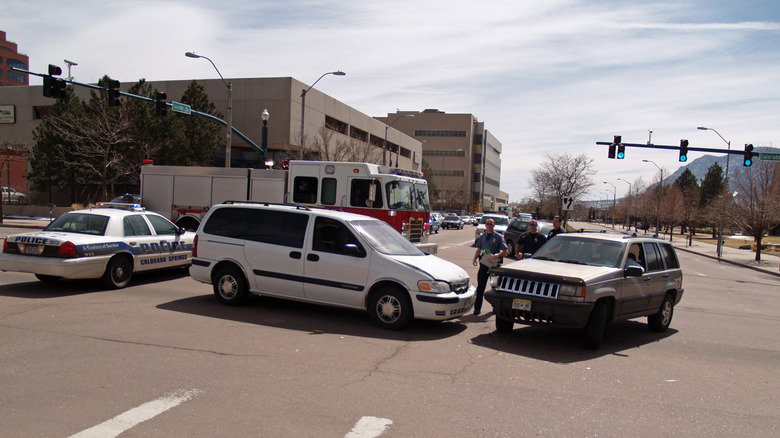
Liability insurance aims to protect other drivers, passengers, and property owners from the financial burdens of your mistakes on the road — that's why nearly every state requires it. Bodily injury liability helps cover another person's medical expenses if you cause an accident, while property damage liability helps pay the costs of damage you do to someone else's vehicle or property.
The government has a clear public interest in making sure that, if you hit someone, there's money available to help them. What happens to your own car is considered your personal responsibility. New Hampshire is the notable exception — it's the only state that doesn't require drivers to carry liability insurance, though drivers there must still be able to prove they can cover damages if they cause an accident.
One point of confusion in the insurance conversation is the concept "full coverage" itself. Full coverage is not, in fact, a real insurance offering — it's an informal blanket phrase typically used to describe a policy that combines liability, collision, and comprehensive coverage.
Full coverage isn't actually a thing
Collision coverage helps to cover the costs of your vehicle's repair – or replacement if the insurance company considers your car totaled — after an accident with another car or object. Comprehensive insurance covers non-collision events, including theft and weather damage. Neither is required by state law, since neither directly protects people not at fault for the accident.
Lenders for financing may require full coverage insurance. If you finance or lease your car, the bank or leasing company possesses a financial stake in your vehicle until it's paid off. Lenders want to make sure their investment is protected, so they'll typically require you to carry both collision and comprehensive coverage as a condition in the loan. Once the car is bought outright, the requirement no longer exists, and plenty of drivers with older, paid-off vehicles choose to drop those coverages if the cost outweighs the potential payout. Your vehicle's make also influences just how much the coverage will cost, an additional caveat to consider. For reference, these are the car brands that Consumer Reports says are the cheapest to insure.
Even if you're not legally required to carry any additional coverage besides liability, it could make financial sense to invest in full coverage. If your car is totaled in an accident you caused, liability alone won't pay a dime toward replacing it. Consider the math: Compare what you'd pay annually for comprehensive and collision coverage against what you'd potentially lose if you were to replace your car out of pocket. The state sets the floor to protect everyone on the road. What you build on top of that is between you and your financial situation.