

Inline Vs. V Engines: Engineering, Packaging, Smoothness, And Other Differences
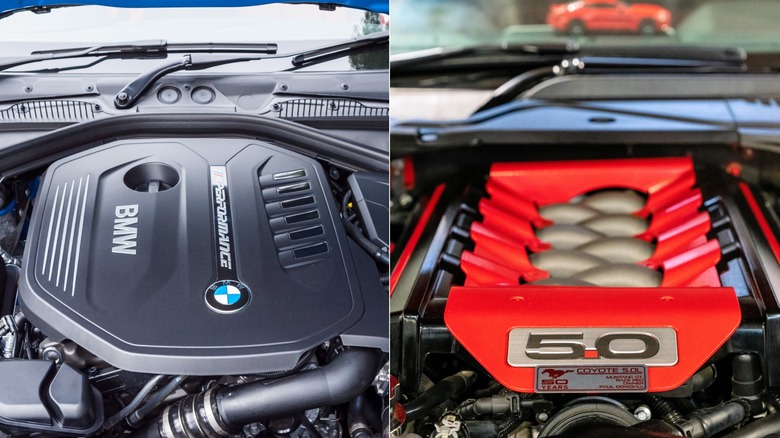
Displacement and cylinder count are one of the main factors that separate one engine from another. Everyone knows a 2.0-liter four-cylinder and a 6.2-liter V8 are not playing the same game. However, the layout of an engine — the way its cylinders are arranged inside the block — often plays an even greater role in how that engine feels, sounds, and propels the vehicle it lives in.
Take BMW's M division as a case study. If you are a fan of the new M3 or M4, you are already acquainted with the twin-turbocharged S58 inline-six — one of the best six-cylinder engines out there. On the other hand, if you prefer the M5 or some of the larger M SUVs, you know the V8: larger, angrier, thirstier for fuel, and built for a different kind of drama entirely. Although the badge is the same, these two layouts are underpinned by completely different engineering philosophies. Here are the differences between an inline and a V engine, and why the layout matters more than most people realize.
The different cylinder arrangement in inline and V engines
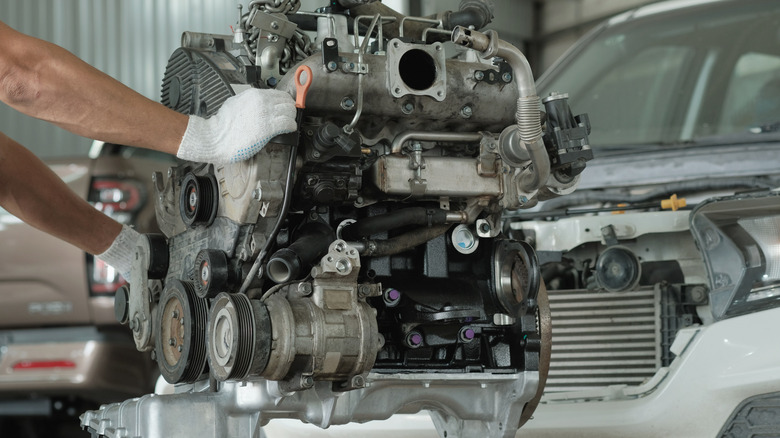
At the base level, the most fundamental difference between an inline and a V engine comes down to how the cylinders are arranged inside the block. In an inline engine, all cylinders sit in a single straight row on top of one crankshaft. That straightforward arrangement means one cylinder head, one set of camshafts, and one exhaust manifold. A relatively simple path from combustion to power delivery. Everything is right there in a line, which makes the engine platform easier to design, cheaper to build, and highly modular.
On the other hand, a V engine takes those same cylinders and splits them into two separate banks, angled away from each other to form a V shape. That immediately doubles a lot of things: There are now two cylinder heads, two sets of camshafts, two exhaust manifolds, and a more complicated timing arrangement. More parts mean more potential failure points due to the added complexity. This usually results in higher manufacturing and servicing costs. The V layout also creates balancing challenges that the inline does not have in the same way. When two banks of cylinders are firing at angles to each other, the rotating and reciprocating forces inside the engine become harder to cancel out — which is why V-shaped engines can't use just any angle.
Engineers often have to add balancing shafts to smooth things out, which adds even more complexity to an already complicated package. Because of all of this, the inline engine wins on engineering simplicity. The V engine trades that simplicity for a more compact footprint, and the ability to package more cylinders in a shorter block — and that compactness has real consequences for how the engine fits inside the bay.
The packaging and size differences between inline and V engines
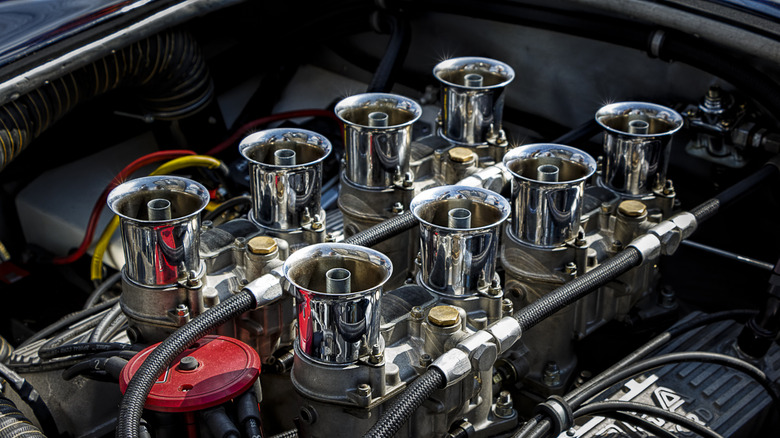
The inline engine is narrow but long. That length is manageable with four cylinders, but as the cylinder count grows, it can create problems when it comes to packaging. An inline-six is usually long enough that mounting it transversely can be difficult. This means it almost always has to run longitudinally, which limits its applications.
With a V engine, by folding the cylinders into two banks, engineers cut the engine's length nearly in half. These packaging factors allow V engines to pack in more cylinders and more size. For example, compared to an inline-six, a V6 can be mounted in either direction – longitudinally or transversely. This is especially useful for a front-wheel-drive vehicle that features more components in the front.
That compactness, however, comes with a spatial tradeoff of its own. The V-layout engine is wider, and the valley between its two cylinder banks, while useful for packaging turbos in some applications, also means there is less room on either side of the engine bay for ancillary components. In other words, this can make it more difficult to change the spark plugs or the fuel injectors.
The inline engine, being narrow, leaves more usable space on either side of the block, which is one reason turbocharged inline engines tend to be easier to work on. Inline engines are also highly modular — automakers can usually use the same block architecture and simply subtract or cast more cylinders, allowing the engines to use many of the same parts, rather than engineering an entirely new engine from scratch. This is one of the key reasons more automakers are now making new inline-six engines.
The Inline-6
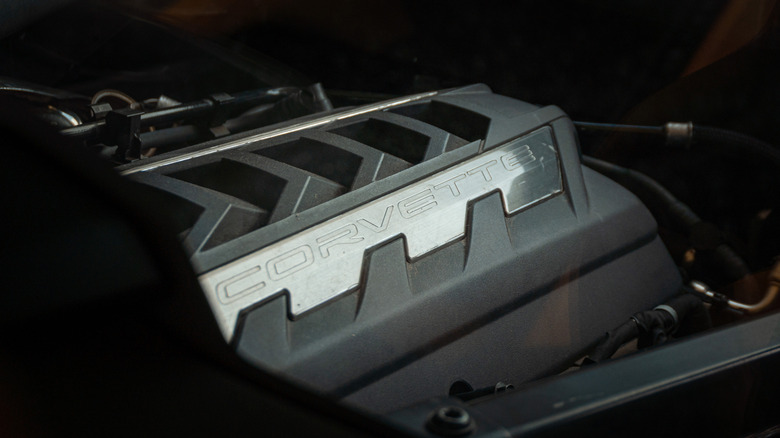
The smoothness of an engine comes down to how well it manages the forces generated by pistons moving up and down during combustion. When those forces cancel cleanly, the engine runs without vibration. For example, the inline-six is famously balanced. First of all, it has a natural advantage over a V6 because all six cylinders sit in a single row, so the pistons can be paired symmetrically. Specifically, cylinders one and six, two and five, and three and four all move together in pairs. The upward force of one piston is directly cancelled by the downward force of its counterpart. Second, a standard inline-six fires every 120 degrees of crankshaft rotation, producing evenly spaced power pulses. It is inherently balanced without needing any extra hardware.
When looking at a V6, because it is basically two inline three-cylinders joined together, side-to-side vibrations need to be accounted for. Managing all of this requires counterweights, specific bank angles, and, in many cases, additional engine balancing shafts. The V8 fares better than a V6 because it is typically angled at 90 degrees and has an even number of cylinders on each side. That said, it still relies on engineering intervention rather than natural geometry. The V12 is the exception — it's essentially two six-cylinder engines joined together, which is why it rivals the straight-six in refinement. However, that smoothness comes at the cost of immense size and more parts.
The differences in sound profile and character

The inline-six has a distinct sonic character rooted in its mechanical layout. Because all six exhaust ports sit on the same side of the engine, the exhaust exits in an uninterrupted, smooth, and evenly spaced sequence. The result is a linear, almost turbine-like sound that builds with the revs — the kind of thing BMW has spent decades engineering its M cars around and Nissan immortalized with the RB26.
The V engine sounds different for the same reason it runs differently. A cross-plane V8 fires in a sequence of left, right, left, left, right, left, right, right — and that irregularity is exactly what creates the signature burble that has become one of the most recognizable sounds in automotive culture. That said, not all V8s sound the same — the reason why flat-plane crank V8 engines sound so distinctive is that their perfectly alternating firing order makes them scream rather than burble.
The V6 sits between these two extremes. Its two banks of three cylinders still create an inherently irregular pulse pattern, giving it a character that is distinctly different from both the inline-six and the V8. Many V6 engines have a reputation for not sounding very joyful, but Ferrari's 296 GTB proves what the layout is capable of when the bank angle and firing order are optimized. Its 120-degree flat-plane V6 produces a sound close enough to a V12 that Ferrari engineers reportedly call it a "piccolo V12" internally. All of this means that, with the right approach and engineering wizardry, you can overcome the inherent characteristics of a specific engine layout to a degree.