

How To Fix Unsightly Concrete Cracks Like A DIY Master
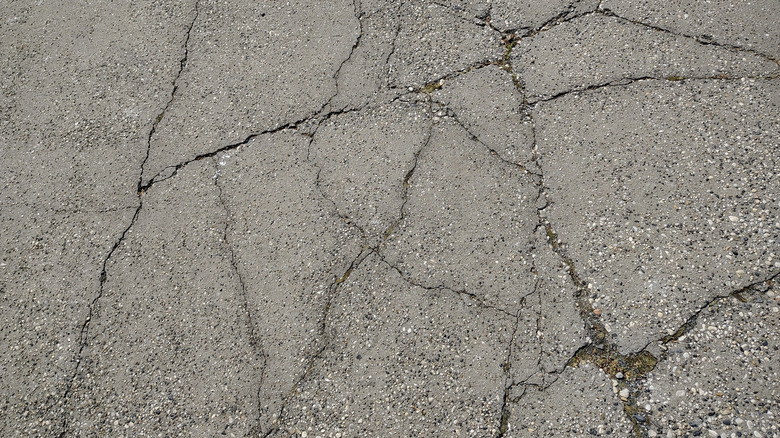
So, you've got cracks in your concrete driveway or walkway. The good news is that you don't need to panic. Some hairline cracking is normal as the concrete settles and shifts. Cracks that are less than ⅛ of an inch wide can be left alone. Just keep an eye on them to make sure they don't get worse. If you don't want to constantly get out your measuring tools, one test you can do is to put two quarters together, with the heads sides facing each other, over the crack. If the crack is narrower than the two quarters, you're good. If it's wider than that, then it's time to seal.
The process for fixing cracks is mostly the same whether the crack is small (⅛ to ¼ inch) or a little bigger (¼ to ½ inch). It starts with a thorough cleaning followed by careful filling of the crack, then allowing time for it to dry. The difference lies in the kind of filler that is used. That's because, with smaller cracks, you can simply seal them so that they don't get bigger. With the larger cracks, you'll actually be adding cement patching compound, which isn't as complicated as it may sound. These things you can do yourself.
If the crack is ½ inch or wider, you're probably going to need professional help. The same goes for cases where one side of the crack is higher than the other side. Those outcomes indicate structural issues that are best addressed by a pro. Of course, at a certain point, you may need to replace the concrete rather than repair it.
How to fix small cracks
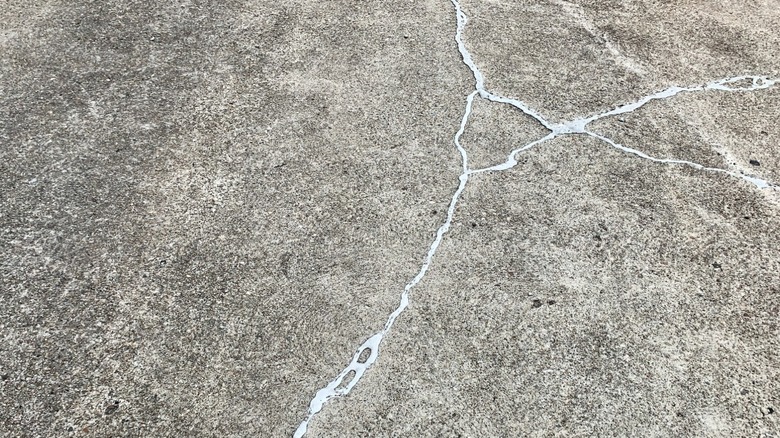
Technically for cracks thinner than ¼ inch, you're really just sealing the cracks instead of repairing the concrete. They aren't going to cause major problems at that size, but you still don't want dirt, water, bugs, leaves, or other nasty things to get in there and make the cracks wider. The goal here to keep the crack from becoming structural instead of cosmetic.
The first thing you'll want to do is clean everything, including the crack and the surrounding area. You can do this with a wire brush or a shop vacuum to clean out any loose debris that might be in there. You'll also want to break away any bits of past concrete patches and pull out all weeds. Once that's done, you can start applying the filler.
The thing to remember is that concrete moves, especially in extreme temperatures. Cold weather can harm its structural strength and hot weather can cause it to buckle. That means you'll want to choose a filler that's flexible, which will keep it stuck to the concrete regardless of weather. Make sure it's waterproof, as well, since you don't want water seeping inside the crack. You can apply the filler with a caulk gun, then use a trowel or putty knife to smooth and level the filler. When you've finished sealing it, cover the filled crack and keep it dry for the next 24 hours.
How to fix big cracks
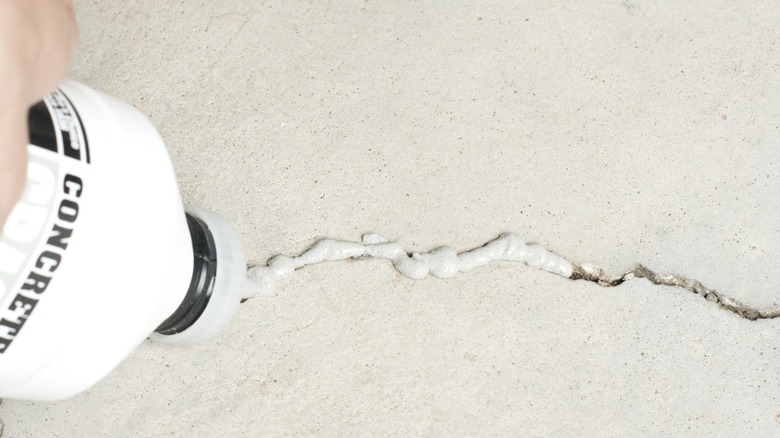
With cracks wider than ¼ inch, we're now talking about minor repair work. Once again, start with cleaning the crack and the surrounding area. Chisel away some of the base of the crack so that it's wider than the opening; you might have to angle your chisel to do this. Make sure to remove all debris and water from inside and around the crack. This can be done using a brush, a wet/dry vac, a leaf blower, or a combination of those tools.
For filler on these bigger cracks, you're going to want to use a concrete patching compound. You can buy pre-mixed compound, but you can also mix it on your own after putting the compound into a bucket and pouring in some water (the container should say how much to use). You can attach a paddle mixer to a drill to get this done; just make sure to turn the mixer slowly. Before adding the filler to the crack, you might want to insert a concrete backer rod. This makes the repair more consistent, and you won't have to use as much filler. Use a trowel or putty knife to apply the filler, pushing it all in well enough to remove any air bubbles. Allow enough time for the compound to dry.
As you can see, even if they're decently wide, it's not hard to fix minor cracks in your driveway. Still, the process does require quite a bit of extra work and vigilance. If you're getting tired of keeping up with concrete maintenance, you might want to consider replacing it with recycled asphalt instead.