

The First Car With A Backup Camera Was This 1950s Concept
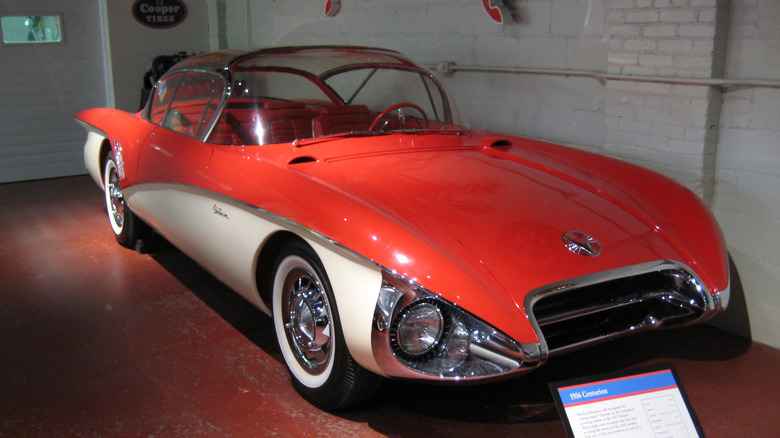
From its stunning "bubble top" roof made of clear plastic to its space-age tailfins, the 1956 Buick Centurion XP-301 concept was a bold move for the brand that practically invented the idea of concept cars with the 1938 Y-Job. But while the Centurion debuted as a Buick dream car at the 1956 Motorama, one of its innovations would go on to have a massive impact on real-world driving several decades later — the backup camera.
Setting a precedent for cars without rear windows, the Centurion ditched its rearview mirror entirely — along with most of its cargo room — by mounting a relatively small television-style camera lens in the space traditional cars usually reserved for the trunk. The setup would then stream live video to a 4-by-6-inch monitor located in the center of the dashboard, which is right about where the first modern touchscreens appeared. In fact, Buick also gets the credit (or blame) for the first touchscreen in a production car, which debuted in the 1986 Riviera. As for the Centurion's radio, it was built into a chrome-capped tube-like piece projecting from the dash. And the wheel itself helped modernize automotive controls with a rotary gear selector in the center. That said, how beneficial rotary shifters really are remains an open question.
The first rearview cameras for production vehicles, though, wouldn't be in a Buick — or any other domestically branded car. Japanese automakers would bring that technology to public roads a quarter-century after the Centurion premiered, and it would be almost the same amount of time before the systems were mandated on most cars in the United States.
These were the first production cars with rearview cameras
Fast forward to the early 1990s, and we find Toyota hard at work on its Lexus brand, which had been introduced in 1989 to take on names such as Mercedes-Benz and BMW. In 1991, specifically, that meant the introduction of the SC coupes. These rides were uniquely tailored-made for American preferences at Toyota's Calty design center in California, but the brand also wanted to bring a variant of the new Lexus coupe back to its home market in Japan in the form of the Toyota Soarer GT (the automaker didn't sell its Lexus-branded vehicles in Japan until 2005). It was in this Japan-only 1991 Soarer GT that Toyota chose to pioneer its rearview-camera system.
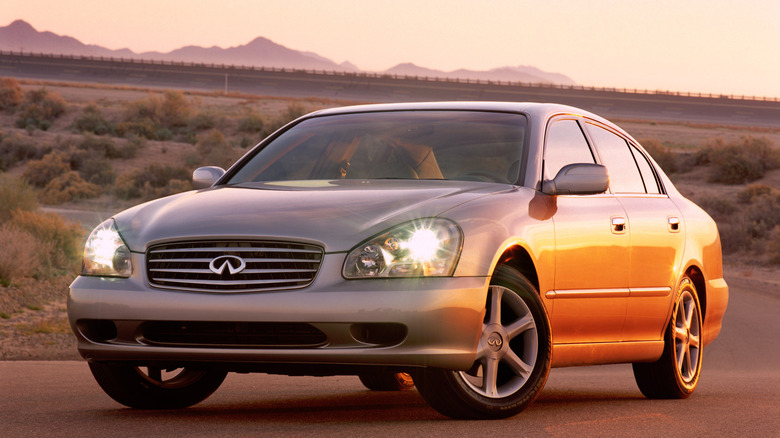
Indeed, the JDM Soarer GT offered several high-tech goodies unavailable in American Lexus models at the time, including not only a backup camera, but also GPS navigation and a TV receiver built into the dashboard. Meanwhile, the first car to offer a rearview camera in the United States wouldn't arrive until more than a decade later. That honor belongs to the 2002 Infiniti Q45.
Rearview cameras have proven to be highly effective, too. According to KidsAndCars.org, reporting on the 2025 American Academy of Pediatrics National Conference & Exhibition, "severe" injuries to children from back-over incidents have been reduced by almost 50% since automakers were forced to start installing backup cameras eight years ago. Meanwhile, the number of publicly reported child deaths due to such incidents has fallen by 78% in the same span.