

Michelin Revolutionized Radial Tires, But This Guy Invented Them 30 Years Earlier
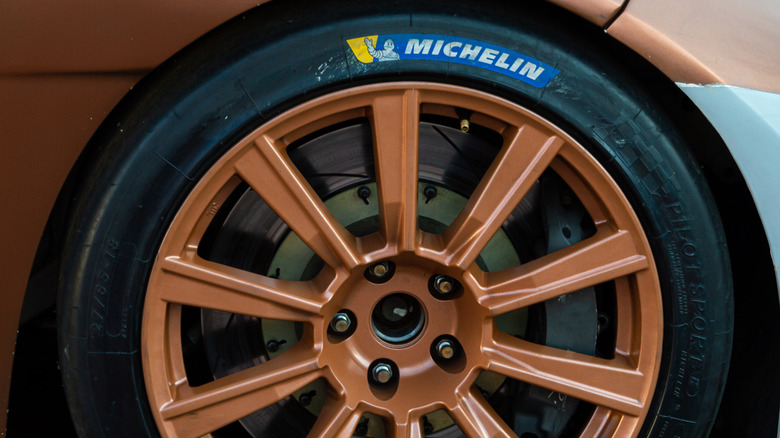
It wasn't all bells and whistles for drivers of vintage cars. Early automobiles were prone to breaking down, and the roads were unforgiving in some places before the Federal Highway Act of 1921 kick-started the zenith of paved American roads and highways, which gave birth to U.S. interstate highways and some of the oldest roads in America. Scottish inventor John Dunlop patented the first pneumatic tire in 1888, leading to the establishment of the Dunlop Rubber Company with W.H. Du Cros and the production of tires for cars.
However, those were bias-ply tires that were okay on good roads but nasty over bumps. Bias-ply tires were also miserable on wet roads, had weaker sidewalls that made them vulnerable to punctures, and could only muster about 12,000 miles before giving up the ghost. The situation led French tiremaker Michelin to develop an innovative tire concept, affectionately called the fly trap, derived from the new tire's sidewall construction, which consisted of radially arranged steel wires.
Michelin filed a patent in 1946 for its innovative radial tire design, but some were way ahead of Michelin in conceptualizing radial tires. In 1913, Gray and Sloper of the British company Palmer Cord Tyres invented the radial tire design. However, Arthur Savage and his San Diego-based Savage Tire Company were 30 years ahead of Michelin after filing a patent for a radial car tire in 1915. Sources also claim that Savage's tire factory employed as many as 2,000 workers during its heyday, giving him a substantial head start in both innovation and production capacity. However, Michelin takes credit for the radial tire because Arthur Savage sold and left the tire business not long after patenting the radial tire.
Arthur Savage was a man of many endeavors
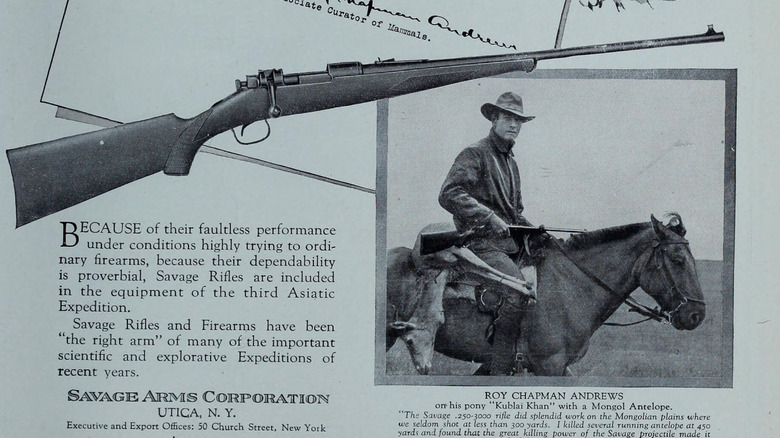
Before diving deep into improving outdated tire design and construction methods, Jamaican-born British inventor and businessman Arthur Savage lived in the Australian Outback, made his mark in the cattle industry, designed torpedoes, and invented a rifle, all before turning 35. By 1894, Savage established the Savage Repeating Arms Company in Utica, New York, and produced some of the most desirable rifles, including the Model 1899, now considered to be among the best hunting rifles in existence.
Savage also made Thompson submachine guns and other firearms for the British military during World War II. By 1905, he divested from the Savage Arms company, moved to California to grow oranges, and relocated to San Diego not long after, before patenting the radial tire in 1915 (the application was granted in 1916). Archives from the Library of Congress state that the Savage Tire Company "was one of the earliest and largest in San Diego." It was also where Savage produced the first puncture-proof pneumatic tire for cars. The company also made inner tubes for car tires.
Maybe Arthur Savage grew weary of making tires, because he sold his tire company in 1919 to, once again, pursue other endeavors. He partnered with his son in a new firearms company (which failed). Next, he tried drilling for oil and then shifted to tiles, bricks, and ceramics, before developing terminal cancer by 1938. Arthur Savage died from a self-inflicted pistol wound at 81 years old. As for the Savage Tire Company, the sprawling facility was converted into a brewery by 1934.
Radial tires were the future, and Michelin was on point
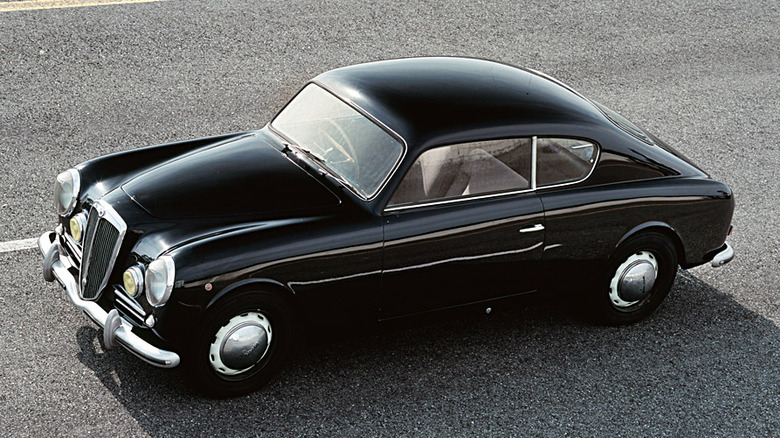
Several years after Arthur Savage died, Michelin caught on with radial tires and further enhanced its initial Michelin X radial tire concept, creating a production tire that's stronger, more comfortable, offers better wet grip, and is more economical, highlighting the glaring differences between bias-ply and radial tires. To prove to the world that radial tires were riding the future wave of faster, comfier, and more economical cars, Lancia debuted the breathtakingly gorgeous Aurelia B20 in 1951, which commemorated the first-ever production car to leave the factory with standard Michelin radial tires.
As if that's not enough, Michelin partnered with Lancia to conquer the 1951 24 Hours of Le Mans, where the car won the 2.0-liter class victory and finished 12th overall. Michelin also patented its radial tires for trucks in 1952, and it earned another patent in 1959 for industrial tires. Michelin has consistently been at the top of the charts for making the best tires for any car, truck, or SUV, and the tiremaker is now the proud owner of many tire brands, including BFGoodrich, Corsa, and Achilles.
The funny thing is, American tire companies were slow to react to the growing acceptance of radial tires. Over 98% of tires made in the U.S. in the 1970s were bias ply or belted bias ply, whereas 97% and 80% of tires made in France and Italy, respectively, were radial tires. The reason was head scratching, to be honest, because automakers were reluctant to invest and redesign existing suspension systems to accommodate radial tires.