

This Is What L Means On Your Automatic Transmission
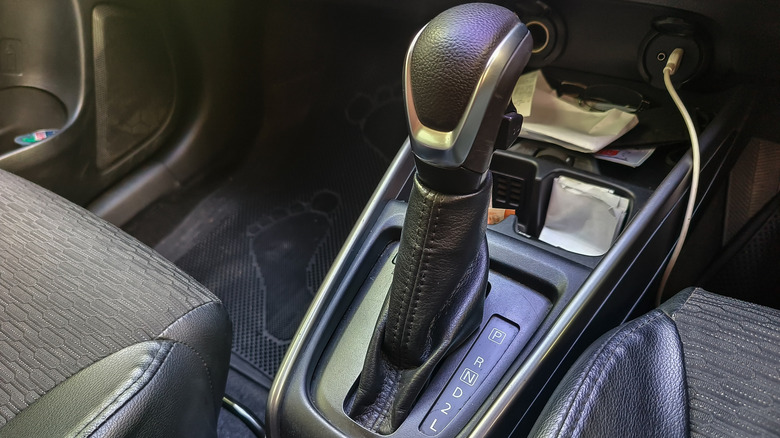
There has never been a shortage of weird gear selectors and shifters in cars, and while variety is the spice of life, this can often translate to confusion for some. From overdrive buttons, through modes like manual or sport — that's what "S" means on your gear shifter – there are plenty of variations, but at least those modes give an indication of what the driver can expect.
The simply titled "L" position, though, is a little less self-explanatory. Seen on everything from W123 Mercs through to the ever-popular PRNDL or "prindle" transmissions, the L requires a little more explanation. Fortunately, it's actually really simple: "L" just means low, as in low gear.
When "low" mode is selected, the car is essentially in drive, but restricted to low gears only. In older vehicles with only 4 or 5 speeds, this mode will likely restrict you to only first or second gear, whereas in modern cars with 9 or 10 speeds, it may also include third.
The point of this low gearing mode is to allow enhanced control of the vehicle in certain circumstances, such as when towing, or driving in adverse conditions. In a manual-equipped car, the driver has complete control, whereas an auto might shift up at awkward times. This mode essentially levels that playing field, placing the control back into the hand of the driver.
When to use your car's low gear mode
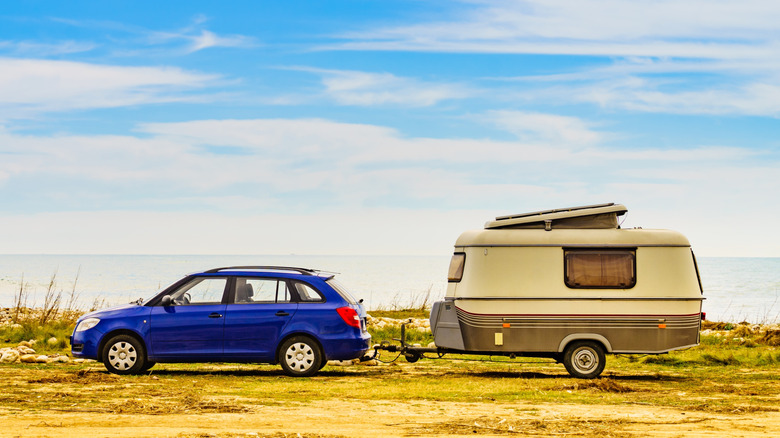
It's all well and good having a low-gear mode, but if drivers aren't aware of how or when to use it, then it may as well not exist. Low gears are really useful when towing. They allow the engine to deliver the torque that's needed to tow competently, which helps with setting off and approaching inclines, plus it stops excessive shifting too. The latter puts extra stress on the transmission, putting it through unnecessary wear and tear.
Even with nothing to tow, slotting the transmission into low can be helpful. It's great for tackling particularly steep inclines, keeping the transmission from shifting up so that the car can climb with relative ease and plentiful torque. Interestingly, low mode is also ideal for steep declines too, as in lower gears the vehicle will remain at slower speeds, and engine braking is more effective here too. As an extra benefit, this will also reduce brake pad wear too.
Finally, for when driving in wintery conditions, selecting "L" can help to keep speeds low and control at a maximum, especially in snow and ice when traction can easily break. An incredibly useful feature then, but still one that requires care when selecting.
Be mindful not to overuse the transmissions low mode
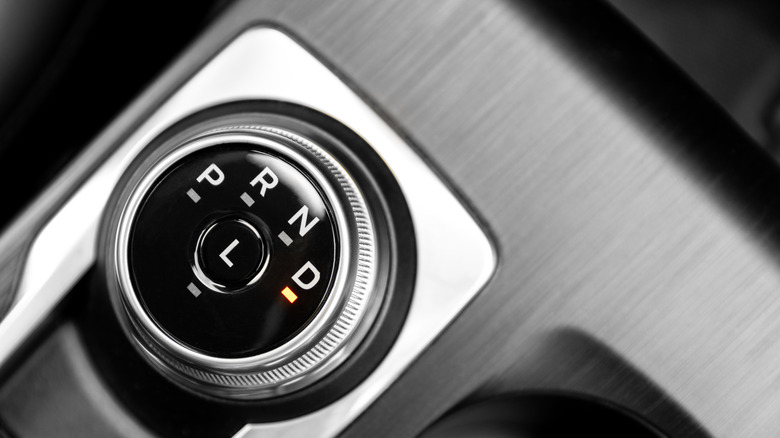
If the transmission's "L" mode has been selected for any of the above reasons, it is imperative that, once the towing, hill-tackling, or low-speed driving through adverse weather has been dealt with, the driver then places the transmission back into its typical driving mode. Even if you know another incline or decline is coming up soon, it's best to select drive again until the moment low gears are actually needed.
Driving in these low gears under otherwise normal driving conditions will cause the engine to spin at far higher revolutions that it typically would. This introduces extra stress and wear to both the engine and transmission, plus it will cause fuel economy to plummet. Plus, noise levels will soar too, if the engine's constantly sitting at high revs. Sure, overlooking switching back into "D" for 30 seconds isn't going to have any nasty side effects, but frequently completing a 30-minute commute back home in "L" might prove a little more troublesome, at least to the fuel consumption, if not necessarily the driveline's health.