

Here's How A Decade Of Toyota Depreciation Compares To Other Auto Brands
Depreciation is usually the biggest ownership cost for new cars. Take the case of an ordinary 2026 Toyota Camry LE. During its first five years of ownership, the loss of value will account for about one-third of what hits the owner's wallet. That's more than the cost of finance charges, fuel, or insurance. Yet, depreciation is relative and depends on the make and model.
Thanks to a strong reputation for dependability, Toyotas generally hold their value well. In a recent iSeeCars study, eight Toyota models occupied the top 20 spots for vehicles with the lowest depreciation — nine if you include the Lexus RC, which recently ended production. Subaru came next with four spots, but more on that brand later.
To get a better idea of how Toyota's 10-year depreciation holds up against other brands, we explored CarEdge's depreciation comparison tool. The process also included reviewing 5-year depreciation rates to get a clearer picture midway through the cycle. Along the way, Toyota outperforms all mainstream Japanese brands and its U.S. and South Korean counterparts. Even looking at individual models — Tacoma, Tundra, and RAV4 — Toyota stays ahead of category rivals.
Toyota outperforms mainstream brands in long-term depreciation
Looking only at industry benchmarks on CarEdge, Toyota comes out ahead over a 10-year ownership cycle. For example, across the board, Toyotas retain 64.90% of their original value after 5 years, compared to 52.4% for all makes. After a decade, the typical Toyota is worth 44.8% versus 32.7% for the average vehicle.
But how does Toyota compare to other Japanese brands? When reviewing value retention for Honda, Subaru, and Mazda, Toyota remains above the pack, but the gap tightens. At the 5-year mark, the others hover in the 60%–61% range (remember, Toyota is at almost 65%). In 10 years, retained values fall to about 40%–42% (and almost 45% for Toyota). Nissan's depreciation is worse than the industry average, with a 49.7% resale value after 5 years, dropping to 31.5% 5 years later. Just so no one feels left out, we included Mitsubishi in the mix. Its vehicles are worth 48.4% after half a decade and 33% after another 5 years. That's the same automaker that paused dealer shipments because of tariffs.
Toyota keeps its lead with brands from other countries. 5-year/10-year valuations are lower for Chevrolet (51.6%/34.2%), Ford (50.1%/32.9%), and Dodge (38.2%/27.9%). It's a similar story with the mainstream Korean automakers: Hyundai (52%/33.9%) and Kia (51.4%/32.8%). Interestingly, the average retained values for Chevy, Ford, Hyundai, and Kia mirror the industry averages.
Top Toyota vehicles for lowest depreciation
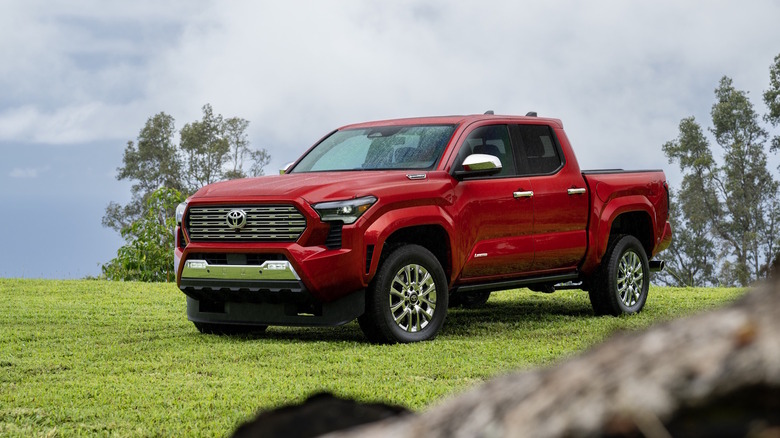
Averages only go so far. So, looking at specific Toyota models can provide insights into why this brand outperforms rivals in depreciation. The logical starting point is the Tacoma, which has the best resale value of any new car. CarEdge's forecast says that the Tacoma will be worth 78.4% of its original value after 5 years, with the Ford Ranger following at 71.6%. The Chevrolet Colorado sits at 51.9%, almost on par with the industry average. The Tacoma continues to stand out after a decade, retaining 65.9% of its original value. Meanwhile, the Colorado (42.7%) and Ranger (36.1%) plunge even more sharply.
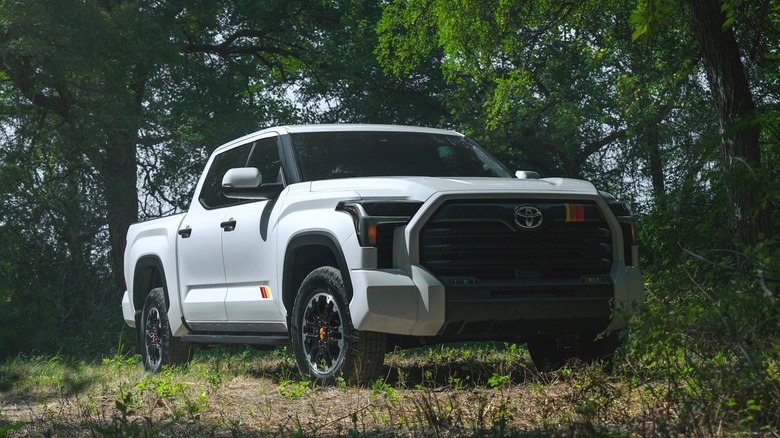
Moving on to larger trucks, the Toyota Tundra also depreciates more slowly than the competition. Half-decade and decade retained values are 74% and 56.2%, respectively. On the domestic side, the Chevrolet Silverado 1500 is worth 56.9% after 5 years, with a 39% resale value at 10 years. The Ford F-150's retained value slides to 50.5% at 5 years and 36.1% after 10.
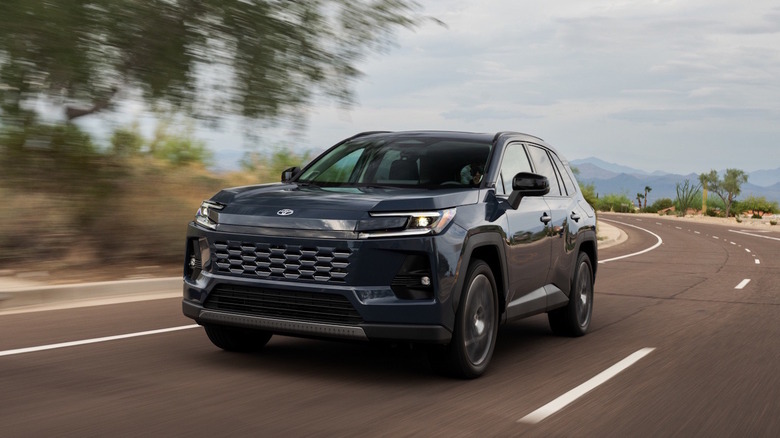
Yet no look at depreciation is complete without including the RAV4 and its archrivals. Toyota continues to lead with a 5-year resale value of 72.5% for its best-selling model. However, the Honda CR-V comes close at 71% over the same period. The Subaru Forester sits at 64.7% compared to 61% for the Mazda CX-5. After 10 years, the RAV4 still leads with a 49% resale value. Yet, the CX-5 (46.7%) and CR-V (46.3%) come much closer. Curiously, the Forester falls to a 38.6% after a decade.