

Why Are 1989 Corvette ZR-1s Worth So Much More Than Other C4 ZR-1s?
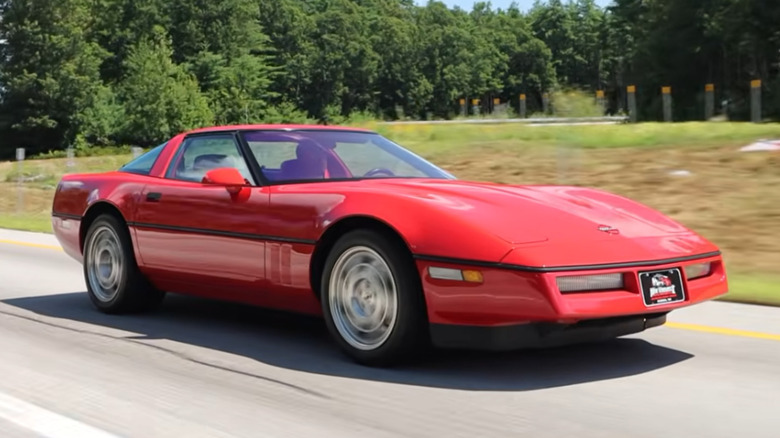
Low production numbers don't always lead to high prices on the used market, but they certainly seem to have done the job for the 1989 Chevrolet Corvette ZR-1. Now, to be clear, this super Corvette was indeed scheduled to go on sale in 1989, but Chevrolet suddenly halted production and decided to wait until 1990 to introduce the King of the Hill. It's not 100% clear what led to the delay, either. Car and Driver, for one, reported rumors of extended engine development due to overheating issues. The engines had come from a surprising source, too: They were made by Mercury Marine, a company that went from building outboard motors to Corvette ZR-1 V8s.
In the end, the number of '89 ZR-1s built for the public ended up being exactly zero. But 84 pre-production versions had come down the assembly line for internal testing and external press reviews. A few of those prototypes that ended up in public hands, and they now command the kind of cash other C4 ZR-1s can't match. For instance, when GM decided to auction rides from its Heritage Fleet in 2009, three 1989 ZR-1s sold for more than $150,000, including one that went home with a bid of $198,000, according to Sports Car Market. Meanwhile, the average auction price for a C4 ZR-1 is about $38,000 today, and clean examples like this 1991 Chevy Corvette ZR-1 are priced at $33,500. That said, rarity is not the only thing the 1989 ZR-1 has going for it. This was a game-changer for the Bowtie brand, putting the Corvette on a path to becoming the record-breaking supercar we know and love today.
The heart of the matter
The fourth-generation Corvette debuted in 1984 with a proverbial clean-sheet design. That allowed engineers the leeway they needed to overhaul the car's aerodynamics, develop a new unibody-style frame, and drastically reduce curb weight by increasing how much aluminum was used. On the skid pad, that all helped the C4 pull 0.9 g (with the optional Z51 pack installed), which was the highest mark Car and Driver had ever recorded for a mass-produced car at the time — and significantly better than more expensive rivals from Porsche and Ferrari.
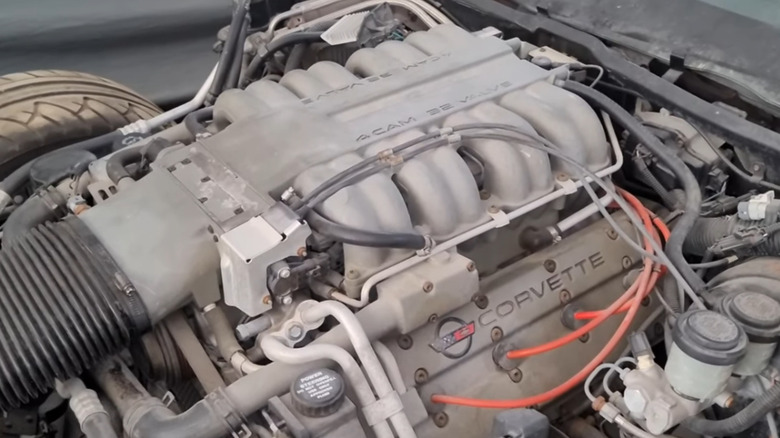
What Chevrolet wasn't able to do for 1984, however, was up the ante for horsepower. That's where Mercury Marine — and Lotus — come into the picture. The original plan was for the ZR-1 to borrow just the cylinder heads from a then-in-development Lotus V-8, then pair those with Chevy's own 350-cid small-block. General Motors owned a controlling stake in Lotus Engineering back then, making the process a lot simpler. When it became apparent that that wouldn't work, and GM would have to develop a whole new block, it outsourced the project solely to Mercury Marine — the differences between marine vs. automotive engines didn't seem to matter to GM at the time.
By the time that engine was ready for production in the 1990 ZR-1, it could pump out 375 horsepower and 370 pound-feet of torque. Mated to one of the world's first six-speed manual transmissions in a mass-market car, the results included a 0-to-60 mph time of 4.5 seconds, quarter-mile runs at 12.8 seconds at 111 mph, and a maximum speed 175 mph according to Car and Driver's testing.