

GM's LS7 V8: The Corvette Engine That Defied Small-Block Limits
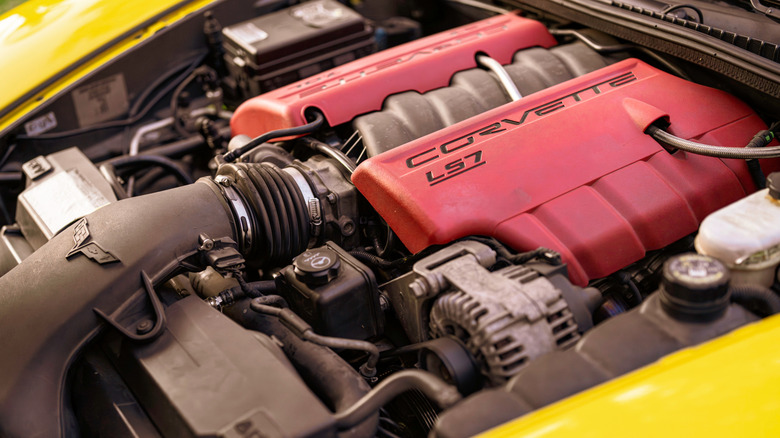
In the history of Chevrolet V-8s, the 427-cubic-inch displacement has always belonged to the big-block — the kind of engine that defined factory muscle in the late 1960s and sat on an entirely different architecture from the compact small-block family. However, when General Motors built the LS7 in the early 2000s – the biggest small-block V-8 ever – it quietly redefined what this engine platform could be.
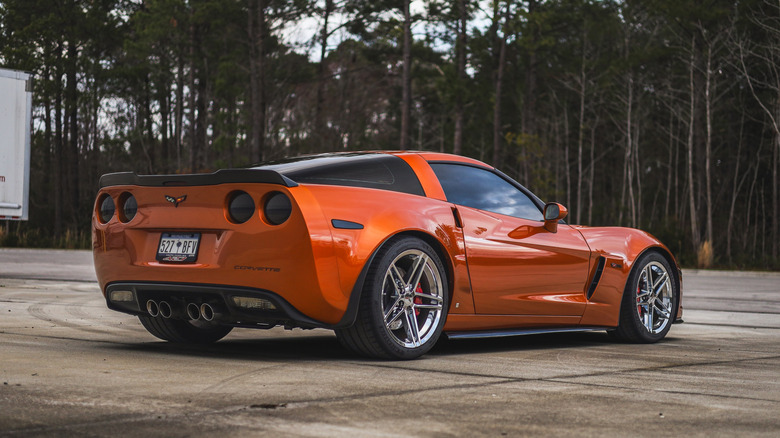
The LS7 is a naturally aspirated 7.0-liter (427-cubic-inch) V-8 hand-built on GM's Gen IV small-block architecture and sharing its basic DNA with the family of compact, lightweight V-8s that GM has been refining since 1955. Built between 2006 and 2015, the it served as the standard engine in the C6 Corvette Z06 and the fifth-generation Camaro Z/28.
The LS7 pushes out 505 hp and 470 lb-ft of torque in the C6 Corvette Z06 and 481 lb-ft in the Camaro Z/28 — and it does so in a package compact and light enough to fit inside an aluminum-framed sports car. The name carries history, too: it was previously used for a high-performance 454-cubic-inch big-block intended for General Motors' sporty cars in the 1970s — a version that sadly never made production. The modern LS7 finally delivered on that promise, hailed by many as one of the best GM engines ever built.
Why the LS7 is a different kind of small-block
The term "small-block" refers to the physical size of the block. A 4.40-inch bore spacing and a compact layout have been the hallmarks of the Chevy small-block for decades, and the LS7 respects those dimensions entirely. Inside, however, it was an entirely different story. To squeeze 7 liters into this more compact footprint, GM bored the cylinders out to 4.125 inches and pressed in steel liners to handle the stress.
The block gained six-bolt main caps in addition to deck-plate honing, a racing-grade machining process that ensured bore geometry tight enough to support an 11.0:1 compression ratio without forced induction. The rotating assembly was pushed further still. Lightweight titanium connecting rods and a forged 4140 steel crank balanced to handle 7,000 rpm gave the LS7 a supercar redline your average daily driver can't match.
Above that sat fully CNC-machined cylinder heads derived from those featured in Corvette Racing's Le Mans program, with titanium intake valves, sodium-filled exhaust valves, and a race-spec dry-sump oiling system that keeps things well lubricated under immense G forces. The entire engine was assembled by a single builder, by hand, at GM's Performance Build Center in Wixom, Michigan.
LS7 tunability and reliability
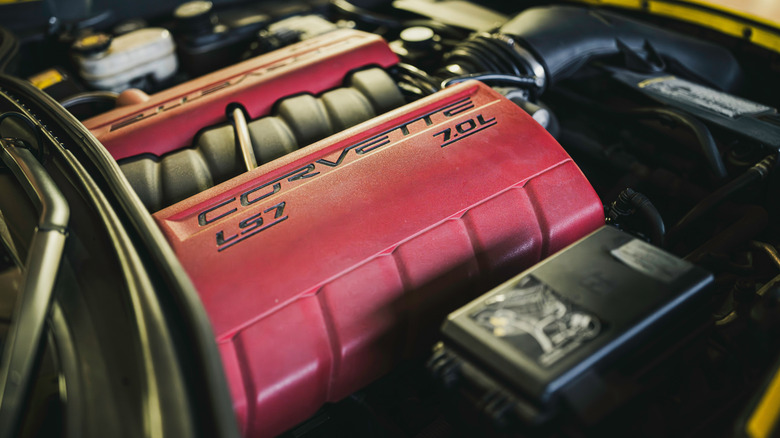
Probably the most discussed weakness of the LS7 is the valve guide wear issue tied to cylinder head design. A 12-degree valve angle, longer-than-usual valve stems, and a higher 1.8:1 rocker ratio all combined to place greater side loads on the guides. GM acknowledged a machining error happened at its head supplier and covered affected vehicles under powertrain warranty. For anyone buying a used LS7 today, asking "have the heads been done?" is standard due diligence.
The block and crankshaft are considered capable of up to 1,000 horsepower while the titanium rods hold roughly 850 hp. That bottom-end strength, wrapped in a compact small-block package, is exactly why tuners and engine swappers treat the LS7 as a foundation rather than a finished product. A cam swap is among the most common first moves, and with the right internal upgrades, the platform responds well to forced induction.
The LS7's linear power delivery and a 7,000-rpm redline made it into a visceral experience modern-day downsized turbocharged engines can't match, as we found in our review of the Camaro Z/28. Still, GM's performance strategy changed not long after, and that was the reason why it was discontinued. Even today, crate examples still fetch anywhere from $18,000 to $20,000, or beyond. The modern 7.0-liter LS7 remains one of the best engines our readers have ever driven, and probably one of the last of its kind.