

Is There A Best Time Of Year To Buy Tires? That Depends What's In Your Shopping Cart

Timing matters when buying tires, as taking advantage of the best deals all has to do with the changing seasons and the increasing likelihood of getting rebates and discount bundles from tire shops and manufacturers. That's why spring, particularly between March and April, is typically one of the best times to save money on all-season and summer tires.
A couple of important things are happening in spring that influence tire prices. First off, sellers and retailers are moving their old winter inventory to make room for new stock. In addition, car owners in colder climates are switching from their battered winter rubber to the best all-season tires or performance tires. As a result, retailers and manufacturers regularly offer discounts, rebates, and special offers to entice buyers already in the shop.
This makes spring one of the most consistent times of the year to save big on new tires, especially on tires for warmer weather or performance driving, such as all-season tires, summer tires, and high-performance rubber. Of course, not all drivers are shopping for summer tires, and the set already on your car won't wait patiently until the best deals drop. Here's how to plan for the biggest sales of the year while still making sure you have a safe and reliable set of tires on your vehicle.
Buying snow tires in the fall and during the holidays will save you money
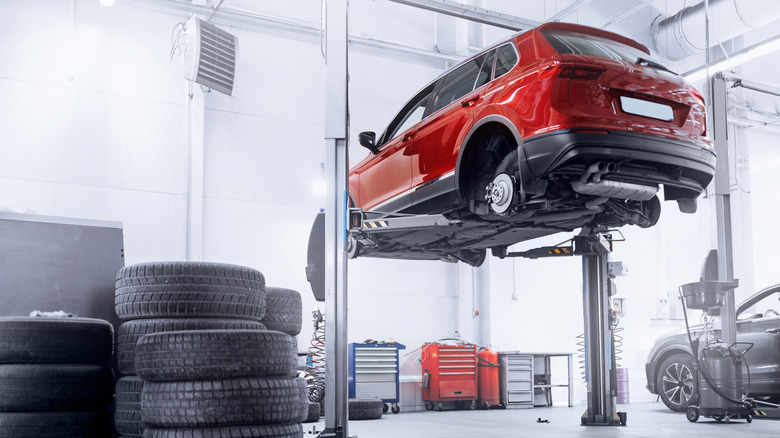
If you are looking for tires that will keep you on the road as temperatures drop, timing your next snow tire purchase in the fall (between October and November) is a good way to get discounted prices on top-notch winter rubber. Similar to how retailers are moving old inventory in the spring, sellers are stocking up on cold-weather tires during fall, typically right up to the time when drivers are preparing their vehicles for winter driving.
The spring and fall seasons are the best times to take advantage of discounted prices on season-specific tires, but the holidays are also great for anyone who can wait for some potential blockbuster deals. Labor Day, Black Friday, and Cyber Monday, for instance, are times when heavily discounted promotions are on the table. Since Black Friday and Cyber Monday line up with the fall and winter changeover, you might even end up finding some nice deals on winter tires.
Meanwhile, Memorial Day in late May is a great time for tire discounts if you missed buying new tires at the beginning of spring. Early summer is when car owners are gearing up for road trips, and it's the perfect holiday to take advantage of sale prices on summer tires and all-season rubber. December is also a great time to take advantage of year-end discounts, as retailers are often eager to get rid of old stock in preparation for the new year.
The best time to shop for new tires is before needing one badly
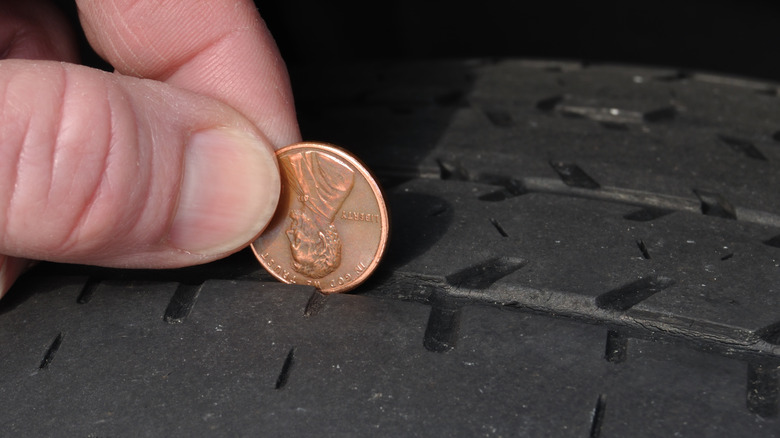
Taking advantage of seasonal and holiday discounts is all well and good, but the most important time to shop for new tires is before you desperately need a new set — preferably when your car's tires have worn down to about 4/32 of an inch. This means you should start looking for deals well before the treads are worn or have reached below the 2/32 of an inch replacement threshold, preferably timing your purchases in the spring, fall, or during one of the many national holidays.
Delaying the inevitable is costly and dangerous, since worn-out tread will affect your car's gas mileage and increase stopping distances by a worrying 43 percent on wet roads. What does that 43 percent look like? On some vehicles it can be equivalent to about 87 feet, roughly equal to the length of a semi-truck. Worn rubber and balding tread are more prone to punctures, cuts, and road damage, and the likelihood of a tire-related crash increases as the treads wear out.
As always, the secret to making the most of your existing tires is to check the air pressure at least once a month. In fact, the NHTSA points out that proper inflation can extend the tread life by around 4,700 miles and save up to 11 cents per gallon on gas. Finally, make it a habit to rotate your tires every 5,000 to 7,000 miles to encourage even tread wear.