

Why Choosing Aluminum Or Cast-Iron Duramax Heads Isn't As Simple As Lightweight Vs. Rugged
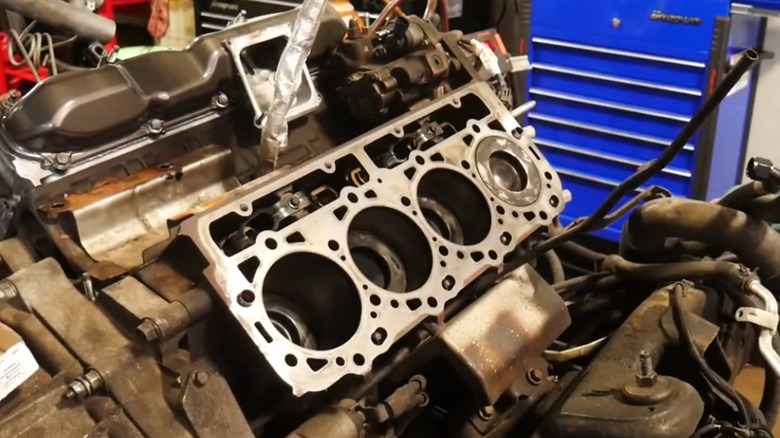
General Motors' turbocharged 6.6-liter Duramax diesel V-8 is engineered to stand up to hard work in heavy-duty truck applications, but it comes from the factory with a cast-iron block and aluminum cylinder heads. In fact, it's the first diesel in the U.S. to use aluminum cylinder heads instead of cast iron ones to help save weight. So, at least someone at GM thought that combination would be plenty capable for the real world. But owners occasionally opt for cast-iron heads instead, based on the specific application in which the engine is used.
The mighty Duramax diesel dates back to 2000, when Chevy switched from Detroit Diesel to Duramax engines. Since then, more than 3.5 million of these V-8s have been produced, earning a strong reputation for reliability and power. The first Duramax mills made 300 horsepower and 520 pound-feet of torque — an 85 hp and 80 lb-ft improvement over their 6.5-liter predecessor.
Today, owners can enjoy 470 hp and 975 lb-ft of torque from the version in the current heavy-duty Chevrolet Silverado, which includes the trail-ready Silverado HD ZR2 Bison. Note that the same engine has been and still is used in the Silverado HD's corporate cousin, the GMC Sierra HD.
The Duramax V-8 is extremely reliable
Continuous improvement has no doubt helped the Duramax stay at the top of its game, but it's also important to note just how innovative the engine was when it first debuted. For instance, it was the first to bring a high-pressure common-rail fuel-injection system to the segment, which allowed more fuel to get into the cylinders and atomize it better, breaking it up into tinier droplets that can spread out across more of the combustion chamber — but this is just the main difference between common rail and mechanical injection diesels.
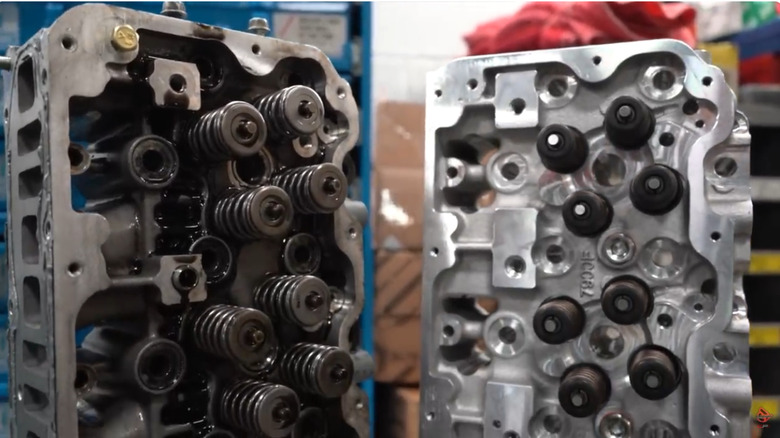
The Duramax's aluminum heads weigh about 40 pounds each, while comparable cast-iron options are closer to 100 pounds. It's also worth pointing out that GM engineers did opt for forged-steel rocker arms in those heads to boost durability, and the exact aluminum alloy used for the heads is known for its strength and enhanced mechanical performance. As a result, most drivers will find that the Duramax with its original aluminum heads can typically last for over 300,000-400,000 miles, as long as it remains limited to the factory power output numbers.
When to switch from aluminum to iron Duramax heads
It's when the Duramax faces the most extreme conditions, including running at extremely high temperatures, that the cylinder heads' aluminum construction becomes a factor. The basic issue, and the one that really propels some owners to swap in iron heads, is the differing thermal expansion rates of the two metals — specifically, how much they expand when heated. The bottom line is that the thermal expansion rate of A356 aluminum is more than twice that of cast iron.
When things get hot enough, the bottom surface of the heads expands more than the top surface of the block, increasing the risk of scraping against the gasket in between the two. The process is called "scrubbing," and if it happens often enough, it can completely wear through the gasket, causing compression issues, allowing coolant to mix with exhaust gases, leading to head gasket failure and eventually catastrophic engine failure. It's not something you can necessarily solve by simply choosing the right head gasket, either.
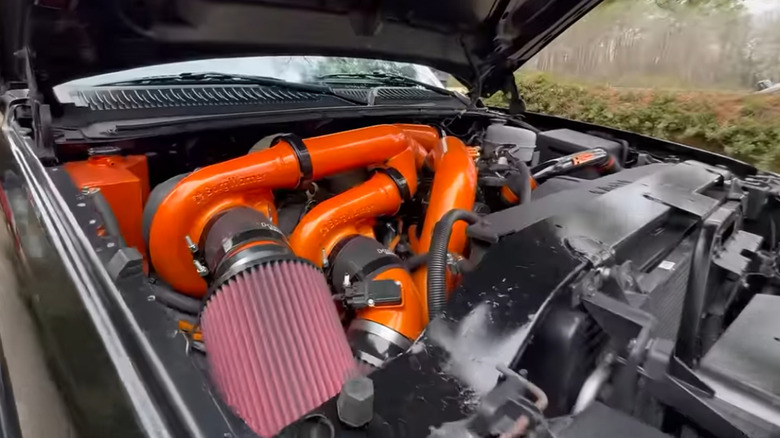
The Duramax's reliability is a testament that aluminum cylinder heads are fine when the Duramax is kept at or below GM's factory power outputs. However, if you're tuning the engine for maximum horses – some say anything above 500 horsepower at the rear wheels – cast-iron heads are the better bet.