

How Advertising Made You Think Chrysler's Rich Corinthian Leather Was Special
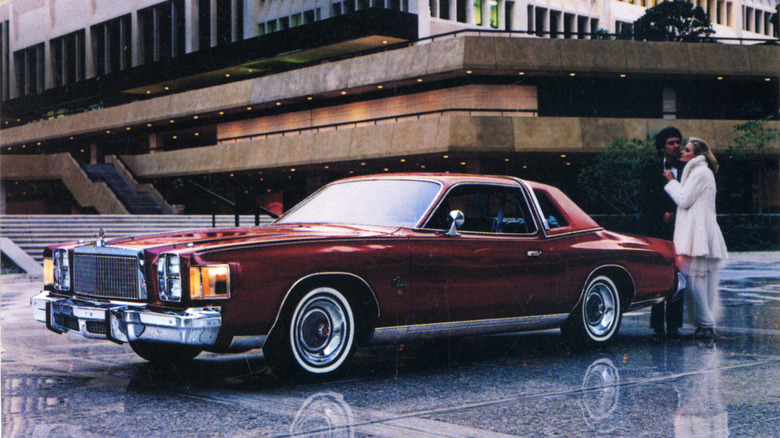
Since automakers have so many specific technologies, features, and options, they need cute names for each and every one of them. And since there are a ton of different automakers, all fighting to trademark their own pet names, they have to get creative to be unique — otherwise, there's overlap and different manufacturers might end up using the same names. One of the most successful marketing names of all time has to be "Corinthian Leather," coined for Chrysler in the '70s. The leather was used in various Chrysler models, and it wasn't anything special, but clever marketing made Americans believe otherwise. Never underestimate the power of American corporate marketing, especially in the case of car marketing, which can be its own special kind of silly.
So how did Chrysler come up with the name and how did it immediately embed itself in the hearts and minds of so many Americans? Was Corinthian leather actually from the ancient city of Corinth, in Greece? Of course not. Was it made in a similar style to how the Corinthians made leather? Also no. So what was it? Chrysler's Corinthian Leather was simply a decent-quality leather made by the Radel Leather Manufacturing Company in Newark, New Jersey. It was a name that harkened back to ancient Greece, so it sounded exotic, even if the product behind the name wasn't extraordinary at all.
A brilliant marketing team and a smooth voice can do wonders together
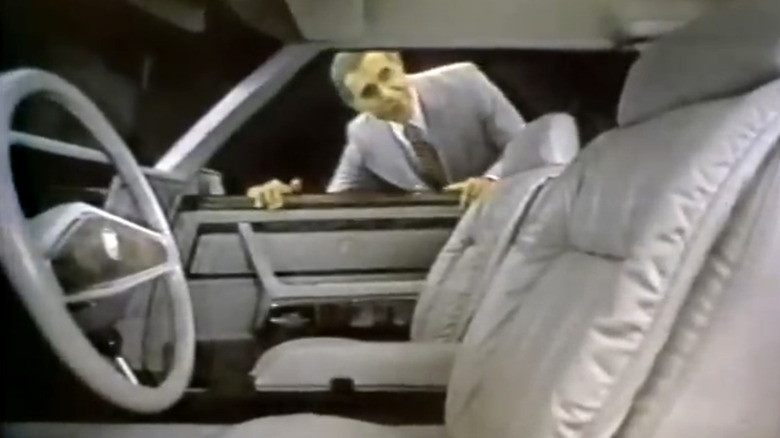
Despite Corinthian Leather being nothing but a term for Chrysler's leather seats, it was such an effective marketing campaign that it's still being used in pop culture to this day. It proved how the right name can make Americans think that their product is special, just by virtue of a special name, like Häagen-Dazs, a premium ice-cream company with a name that also means basically nothing. And, remember, this special leather came out in 1974, well before the advent of Google giving regular consumers the ability to double-check an OEM's naming convention.
To market its new leather to the masses, Chrysler hired Bozell, the famous marketing agency that was responsible for iconic campaigns like "Got Milk" and "Pork, the other white meat." Bozell and Chrysler came up with the name and, equally as important, the spokesperson: Ricardo Montalbán. With his acting fame, smooth voice, charming accent, and handsome but rugged good looks, Montalbán quickly became the face of "Corinthian Leather" and Chrysler as a whole. Their partnership lasted over a decade. The Montalbán/Chrysler duo became so iconic that, for a time, he was equally as well known for his car ads as he was for his acting, even if he drove nicer cars than whatever Chrysler had in their lineup at the time.
The ads were so successful, and the name so ingrained in America's perception of automotive luxury, that Chrysler could even admit that it meant nothing and it wouldn't change a damn thing. David Letterman once asked Montalbán about it on cable television, in front of millions of viewers. Montalbán said that Chrysler simply found a good leather and needed a name that sounded good coming from him. Letterman asked, "But does it mean anything?" Montalbán replied, "Nothing," with a laugh.
Corinthian Leather is part of the zeitgeist now, even if only as a meme
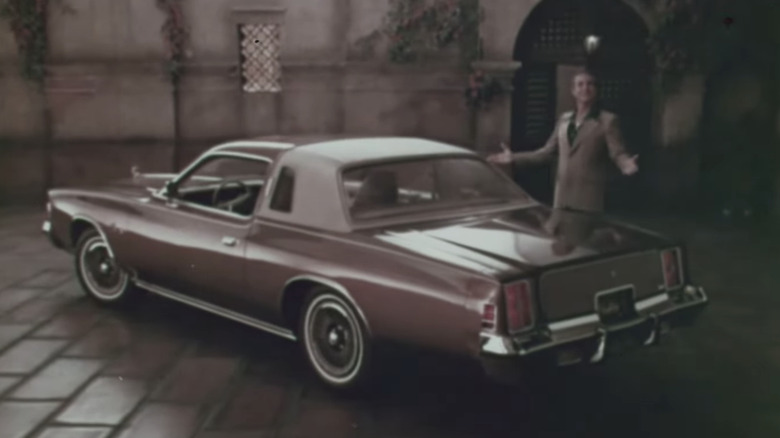
Even with Montalbán admitting that it meant nothing on one of the most-watched late-night talk shows in America, "Corinthian Leather" still became part of the American zeitgeist. The term has been synonymous with high-quality leather in TV, movies, and it's even been used in other companies' ads. Coca-Cola ran a commercial in 2003, in which someone yelled at a friend for stepping on their Corinthian Leather couch. A Sopranos character once tried selling Tony Soprano a jacket made from "fine Corinthian Leather." It even showed up in movies like Puss in Boots and Deadpool, as well as cartoons like Archer. Admittedly, that last one did so with its tongue firmly pressed into its cheek.
Chrysler mixed up the brand language a bit, adding adjectives like "fine," "rich," and "soft" when discussing Corinthian Leather. Having multiple adjectives most likely added variety to the lingo, so customers wouldn't get sick of hearing it, nor would it become overly repetitive.
While the term was only ever used for the Chrysler Cordoba, the brand did steal the fame from its catchphrase just a bit on one of its later models, the Chrysler New Yorker, in 1988. In the ad for the New Yorker, Montalbán is featured once again, sitting on a couch and saying, "Everyone asks: Corinthian Leather? Of course, why not the best?" rubbing the couch cushion.