

Here's How Car Magazines Tested Acceleration Before GPS (And Sometimes Still Do)
Car magazines test vehicles using a number of different metrics, with an acceleration run from zero to 60 mph being one of the most common. There are all sorts of speed tests and thorough automotive benchmarks, but the simple stuff is easier to digest. The general thought is that the particular speed metric of zero-to-60 acceleration represented how long it took for a vehicle to get up to the typical highway speeds back when folks first started reviewing cars. Even though 5 to 60 mph is usually a superior performance metric, we still use zero to 60 today. And the time it takes for a car to reach 60 mph remains an important factoid for shoppers, but the timing process has changed significantly.
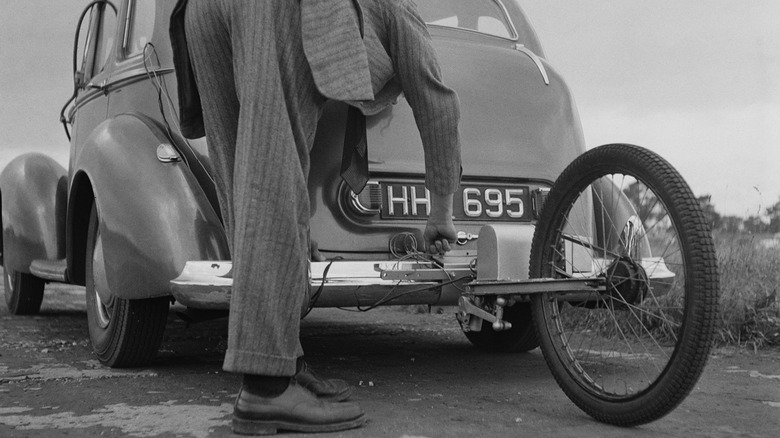
The starting point for measuring acceleration was the humble stopwatch: A typical test run in the analog era would involve two people, one driving the car and another ready to click the stopwatch when the speedometer touched 60 mph. By the 1950s, a fifth-wheel setup was being used for the measurements. This was an actual extra wheel, at first a bicycle-style wheel, that was mounted to the side or rear of the car with a swing-arm. The system worked by driving the vehicle past optical sensors on the side of the road, which would be able to recognize physical marking on the fifth wheel's rim as it went by.
It was the beginning of the electronic era that would see most magazines move away from fifth-wheel testing to more advanced technologies. That said, a number of companies do still offer fifth-wheel rigs for cases when GPS won't do, such as vehicle testing, where you might not be able to get a signal. For instance, if you're testing vehicles in one of the places that automakers freeze their lugnuts off during cold-weather vehicle evaluations, a GPS connection might not be available.
Saying farewell to the fifth-wheel rig
A major change in measuring car data came with the invention of the Correvit system in the 1980s. Mounted on the side of a vehicle, one component flashed a beam of light on the roadway while another used optical sensors to evaluate the blurring of the light on the passing pavement. Computer magic then turned the results into usable, highly accurate information. Indeed, some consider Correvit technology to be better than GPS for testing vehicle performance — partly because of how the tech works. If you're out of range of the various satellites used to measure GPS acceleration data, something that works directly on the vehicle you're testing, like the fifth-wheel or Correvit system, can serve as a backup.
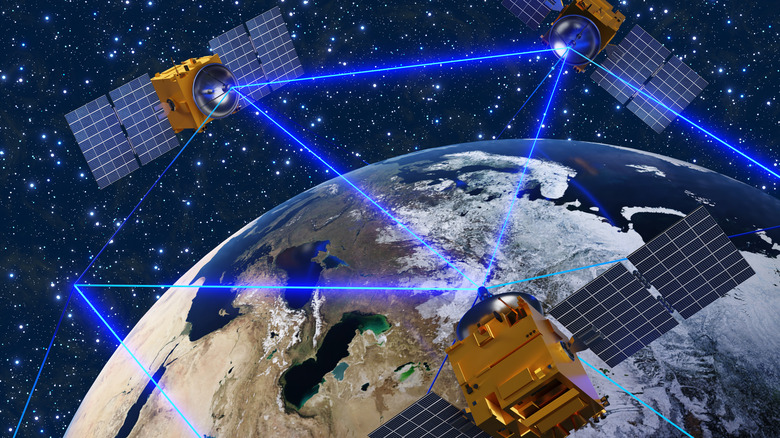
Relying on the web of Global Positioning Satellites in orbit around the earth, application of GPS technology for testing vehicles started in the early 1990s, with roof-mounted sensors from companies like Racelogic. The Racelogic VBOX is one of the most ubiquitous testing systems used today, in service at all sorts of magazines and online testing outlets. If you don't want to spring for a pricey Racelogic system (they can cost several thousand dollars), you can get your own cheap GPS phone-based tracker for around $20, though it's not likely to be as accurate.