

F1 Teams Unanimously Agree To Midseason Rules Tweaks
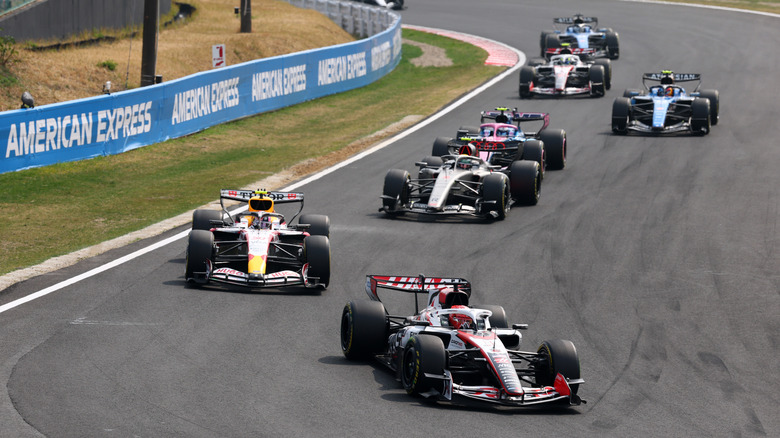
Formula 1's team principals and championship organizers voted unanimously on numerous rule revisions during a meeting on Monday. The slate of tweaks aims to reduce closing speeds between cars during races and promote flat-out driving in qualifying. The discontent over this season's new technical regulations reached a tipping point after Oliver Bearman's 50G crash during last month's Japanese Grand Prix. The powers that be in the F1 paddock promised change before the championship returned from a month-long hiatus, and change has arrived.
The changes set to debut at the next round in Miami are primarily focused on the MGU-K, the onboard electric motor. According to The Race, electric deployment will be limited to 250 kW (335 horsepower) outside of key acceleration zones. The limit will remain at 350 kW (469 hp) inside those zones. The maximum power available through Boost during races has also been capped at an additional 150 kW. The cars will be slower at the end of lengthy straights, but it will be more difficult for drivers to deplete their batteries.
The rulemakers also made it easier for drivers to replenish their energy stores. The cars will be able to harvest energy through superclipping more efficiently as the method's peak regenerative power has been increased from 250 kW to 350 kW. The change should also discourage lifting and coasting. In a similar vein, the per-lap qualifying recharge limit will be reduced from 8 MJ to 7 MJ.
New safeguards should mitigate the risk of race start crashes
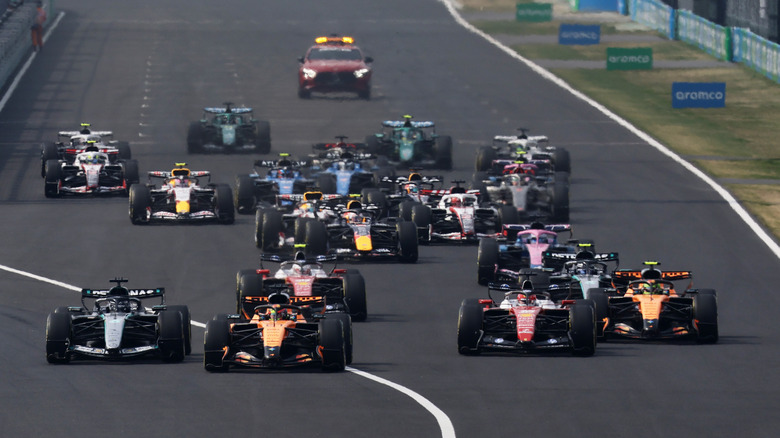
Alongside the high closing speeds, the dangers associated with race starts using the new power units were also addressed. A system was developed to identify when a car has an abnormally slow launch after releasing the clutch. Under those circumstances, the MGU-K will automatically deploy to mitigate the risk of collision. Also, the car's wing mirror and rear lights will flash to make it easier for other drivers to spot cars having bad launches. While rulemakers aimed to avoid giving a specific team a sporting advantage, it will certainly benefit drivers who have struggled with starts this season, like Kimi Antonelli.
F1 finally managed to implement a ruleset that promotes on-track overtaking after decades of failed attempts and flawed solutions such as DRS. However, the margin between a boosting car and a derating car was just too wide for the drivers. With only three races run, the wrinkles could've ironed themselves out with more development time to deliver more efficient power units. However, the drivers were on the verge of revolt, with Max Verstappen threatening to retire if nothing was done. When push comes to shove, F1 can't truly experiment anymore because one of the championship's many vested interests will threaten to derail everything.