

What The 3% Rule Means For Your Tires
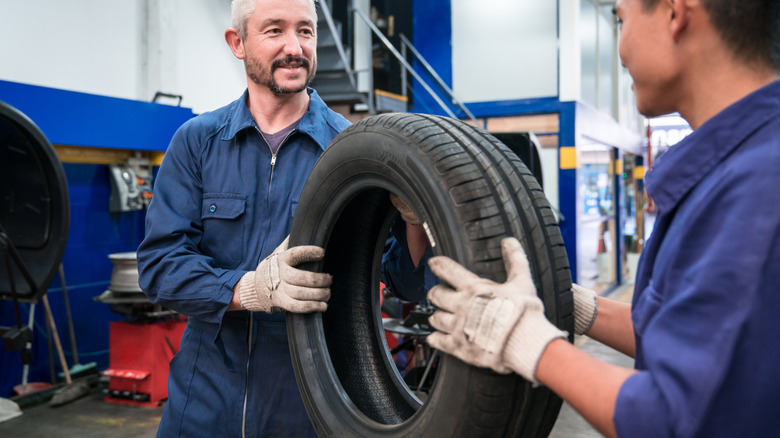
You wouldn't have to think about the 3% rule when replacing tires of the same size. But if you're looking to upsize on new wheels or downsize when buying the best winter tires, the rule applies. An industry standard for tire replacements, the 3% rule states that new tires should never be 3% larger or smaller in diameter than the factory-spec rubber.
To better understand this rule, let's use an example of a car rolling with 215/55/R17 stock tires. For the uninitiated, those numbers are just a few that you'll find embossed on the tire sidewall, and we need those numbers to compute the tire diameter.
Based on the example, we'll have to convert the tire width in millimeters (215) to inches by dividing it by 25.4. So, 215 / 25.4 = 8.46 inches. Next, multiply the result by the aspect ratio (55), which is the percentage of the sidewall height to the tire's width. So, 8.46 inches x 0.55 = 4.65 inches.
We can get the tire diameter by multiplying 4.65 by two and adding the wheel diameter. So, (4.65 x 2) + 17 = 26.3, which represents the stock tire diameter. In this case, 3% of the stock 26.3-inch diameter comes out to 0.789 inches.
To apply the 3% rule, simply deduct 0.789 from 26.3 to get the minimum diameter or add it to get the maximum threshold. This means the new tire should have a diameter between 25.511 and 27.089 inches when upgrading or downsizing, and there are important reasons for that. The good news is that there are online tire size calculators if the manual approach is not your thing.
What if I go beyond or under the 3% rule?
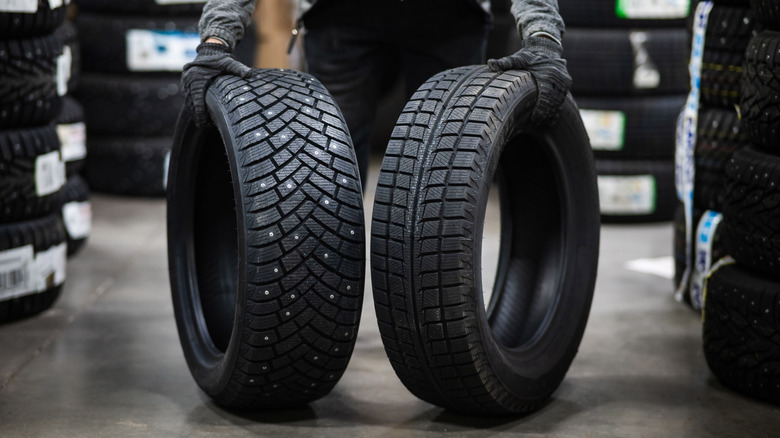
A 3% tire difference can seem minuscule, but even small changes to the tire's diameter can be detrimental to vehicle safety and performance. For instance, speedometer calibration relies on the circumference and revolutions per mile of the OEM tires. Even a slight 3% deviation might cause inaccurate speedometer or odometer readings.
Taller tires — or ones with a more than 3% deviation from stock — make fewer revolutions while covering more distance with each rotation, which may cause the speedo to show 80 mph when, in truth, you're going 84 mph, potentially earning you a speeding ticket. Meanwhile, going under the 3% rule will have similar issues. Smaller tires will cover less distance with the same number of rotations, which means the speedo will show a higher speed and the odometer will record more miles than the actual distance traveled.
Furthermore, deviating from the 3% rule could affect the anti-lock braking (ABS) and traction control systems. Those systems also rely on wheel-speed readings, and any inaccuracies may cause them to detect slipping and trigger the ABS warning light. While it's relatively safe to continue driving with the ABS light on, there's a danger of it malfunctioning when you need it most if the tires don't match factory specs.
The 3% rule also ensures good handling, ride comfort, and zero clearance issues that may cause the new tires to rub on the fenders, wheel wells, and suspension. In some cases, upgrading or downsizing the tires by more than 3% over the stock diameter might void the factory warranty of the transmission or driveline.
Is there a way around the 3% rule?
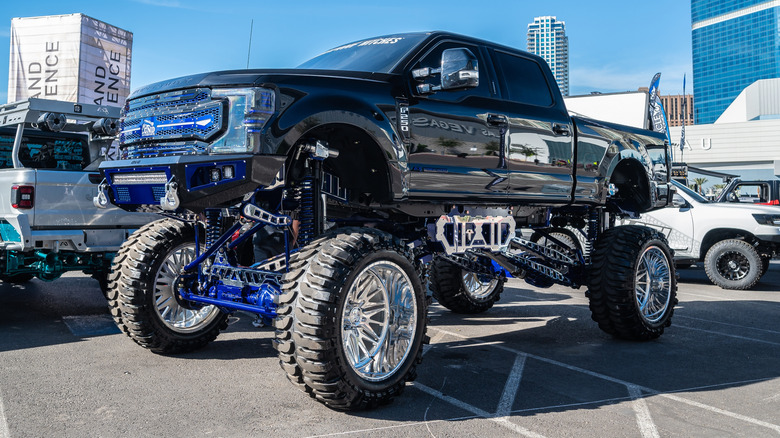
The 3% tire rule is not set in stone. Smaller compacts and midsize sedans are recommended to stay within the specified 3% parameters with their lower ride height and smaller wheel wells. On the other hand, pickup trucks and SUVs that ride higher have more clearance and can accommodate up to 5% or even 10% larger tires, especially after installing lift kits to raise the ride height.
If you insist on deviating from the 3% rule when upgrading to new wheels and tires, you must have the ECU recalibrated with a scanner or tuning module. What you're basically doing is telling the computer about the larger-diameter wheels and giving it a chance to correct the speedometer and odometer readings.
Always consider the 3% rule when upgrading to larger wheels, purchasing winter tires (that are narrower or skinnier than the stock all-season rubber), fitting wider performance tires with a different aspect ratio, or when plus-sizing tires.