

These 7 Brand New Motorcycles Still Haven't Made The Switch From Carbs To Fuel Injection
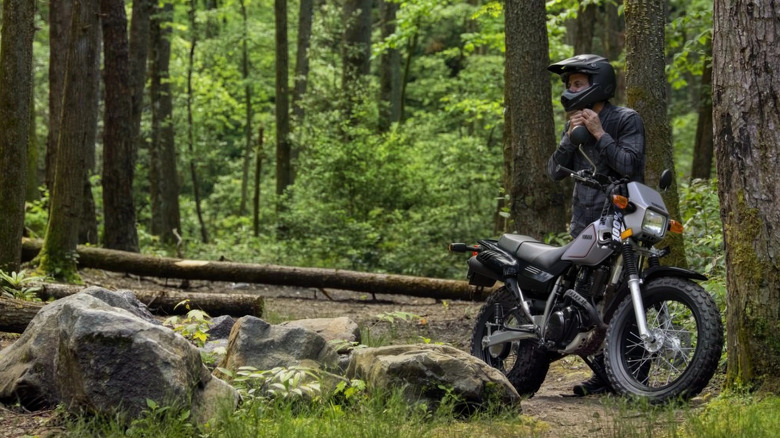
Motorcycle manufacturers have been trying to kill the carburetor for decades. Münch was the first to introduce fuel injection in the terrifyingly huge 1973 Mammoth TTS-E 1200, but that was a highly-limited bike, with only 130 ever produced. It took seven years for mainstream brands to catch up, with Kawasaki introducing the Z1000 Classic – the world's first mass-produced, fuel-injected bike — for its 1980 model year.
The benefits of fuel injection were evident from the beginning. The fuel-injected Z1000 Classic accelerated smoothly from low rpm, drank less fuel, and was ready for the stricter emission standards. Yes, it was also significantly more expensive at first, but the lower emissions helped the technology dominate the motorcycle industry by the 2000s.
Fast forward to today, though, and you can still find a few mutineers that are holding the line. We're talking about brand-new bikes, sold at showrooms, using simple mechanical parts and a vacuum to feed the engine with an air-fuel mixture for that responsive, old-school feel. These are bikes that you can repair with a screwdriver, rather than a laptop. These zero-mile time machines might not be here for much longer, though, so consider this article as a last call.
2026 Suzuki DR650S
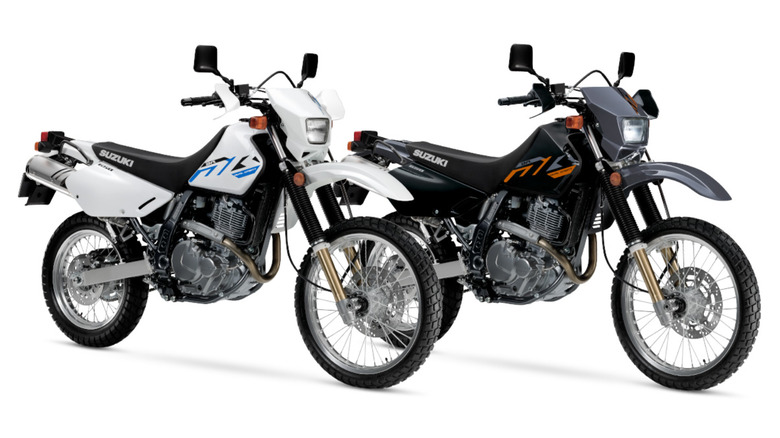
Craving an old-school ride, but one that wasn't thrashed, crashed or customized by a previous owner? The brand-new 2026 Suzuki DR650S doesn't just ride like a retro bike — it practically is one. Suzuki's popular dual sport has been in production for 30 years without significant mechanical changes, except ones made to improve reliability. Heck, it even looks like a 1990s bike. The high-clearance, tractor-like body and rectangular headlight really do serve as a reminder of the old days.
But of course, it's the carbureted engine that steals the show — for better or worse. The air- and oil-cooled 644cc single-cylinder engine produces 35.1 horsepower and 32.2 pound-feet of torque (as per Dirt Rider), making it horrifically underpowered in today's age. For comparison, the Aprilia Tuareg adventure bike produces 80 horsepower and 52 pound-feet of torque from its 660cc parallel-twin engine. But the Tuareg doesn't have a large Mikuni 40mm carburetor, or the single-cylinder, tractor-like thumping sound. Other adventure bikes might have speed, but the DR650S has old-school vibes.
In this case, those vibes fortunately aren't expensive. The DR650S costs $7,299 (without destination). The previously-mentioned Tuareg sits at $12,499. You'll also be one of the chosen few, as the DR650S hasn't been offered in Europe for over two decades due to stricter emission regulations — and Australia has also lost it recently. And yet, the DR650S continues to enjoy outstanding aftermarket support, so extracting more power from the thumping single-cylinder is a relatively straightforward affair.
2025 Honda XR650L
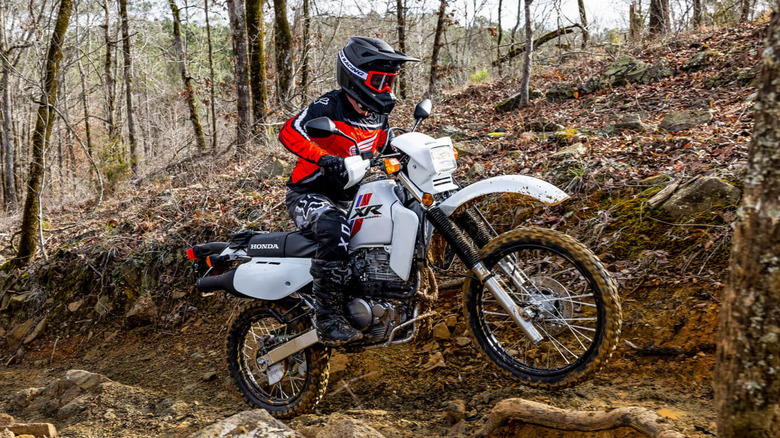
The Suzuki DR650S isn't the only dinosaur among dual-sport bikes. It actually has a direct rival and a visual doppelgänger in the Honda XR650L, which starts at an even lower $6,999. And this one is even older, dating back to 1993. That's the same year when Ducati started selling the Monster 900 – and that bike has been upgraded many times since, including limited editions like the 1999 Monster 900 Cromo. The Honda XR650L, on the other hand, has seen no upgrades from its debut. Yes, the brand that offers state-of-the-art dual-clutch transmissions still sells a carbureted motorcycle. Sure, the XR650L isn't sold as a 2026 model. But you can still find 2025 models at dealership, and they're as old-school as the Suzuki DR650S.
Honda's dual-sport motorcycle has a 644cc single-cylinder engine that produces 34.1 horsepower and 31.4 pound-feet of torque. That's a bit less power and torque than its closest rival, but the XR650L is also 11 pounds lighter. You might not be getting speed or the latest gadgets, but Honda's offering is a decently lightweight bike that's simple to maintain and repair. Naturally, the XR650L also enjoys excellent aftermarket support, allowing owners to easily perform upgrades to the carburetor, fuel tank, and suspension.
2026 Yamaha TW200
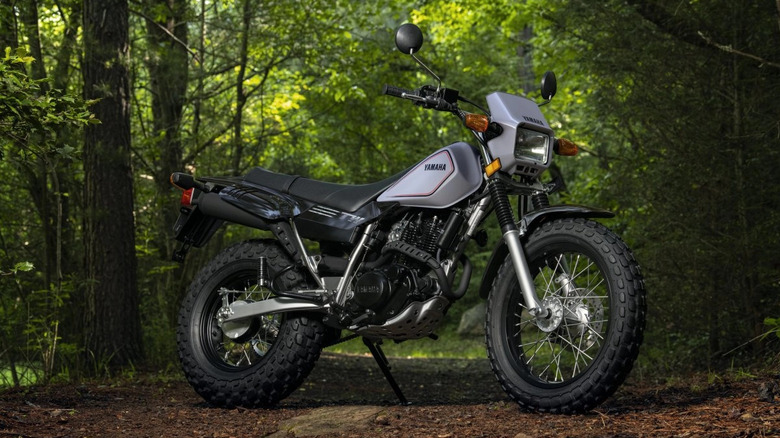
The Yamaha TW200 puts the longevity of the Honda XR650L and Suzuki DR650S to shame, as it was first introduced in 1987. That's almost four decades of no mechanical changes. The TW200 costs $4,999 today, so it's not only the oldest bike on sale, but also one of the cheapest. Crucially, it's a low entry point into off-road motorcycling, which might be the most fun you can have on two wheels.
The TW200 might also be better equipped for off-roading than most motorcycles, regardless of price. Yamaha's entry-level dual sport is almost like a two-wheeled quad, providing rideability on uneven terrains that few bikes can match. Notably, the massive 180/80-14 rear and 130/80-18 front tires provide immense traction on slippery surfaces. Gravel, dirt, mud, snow — you can throw everything at this old-schooler and it will chug along.
With a low curb weight of 278 pounds, the Yamaha TW200 should also be easy to handle for novice riders. It sure isn't going to get anywhere very quickly, though. Thanks to a tiny Mikuni 28mm carburetor, it produces just 16 horsepower and 11 pound-feet of torque. It won't even reach 70 mph, and will only cruise comfortably on the highway at under 55 mph. If you want a fast, street-legal dirt bike, look elsewhere. But if you just want to have some off-road fun on a budget, the TW200 absolutely delivers.
2026 Yamaha YZ250
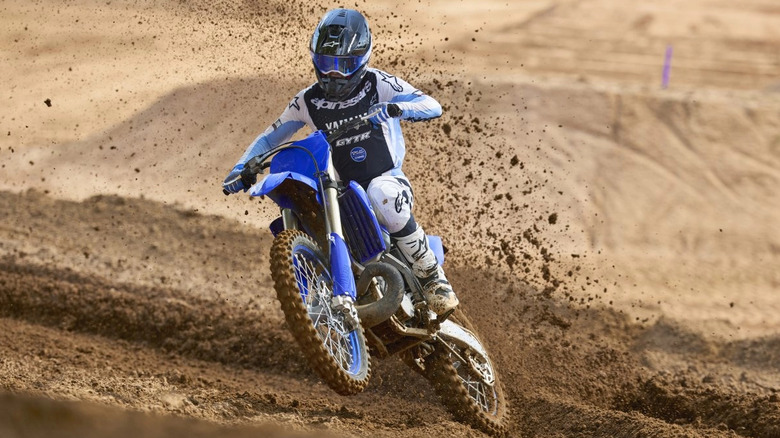
The YZ250 is one of the oldest-running and influential two-stroke motocross bikes in history. It dates back to 1974, though the last big revamp happened in 2005, when Yamaha equipped it with an aluminum frame. Since then, it has received a few suspension changes to keep it at the motocross summit, but its foundation remains the same. A huge selling point of the YZ250 is the unique 249cc two-stroke engine. It features a Hitachi Astemo Keihin PWK38S 38mm carburetor and produces 46 horsepower – not bad for an old-school machine. In fact, Yamaha also sells a fuel-injected, four-stroke model, called the YZ250F – and that produces just 42 horsepower.
As expected, the four-stroke has a wider power band, but it's also more expensive at $8,899. Meanwhile, the carbureted YZ250 starts at $8,099. It's not quite as old-school as some of the other bikes mentioned here, as it comes with a 48mm inverted front fork and a fully adjustable rear shock. Still, it's certainly old-school in other areas, especially with how it doesn't come with the YZ250F's rider assistance systems like traction control and launch control.
If you want a cheaper entry into the two-stroke motocross world, Yamaha also sells the $7,199 YZ125. This entry-level motocross machine has a 125cc engine, which even received an improved carburetor for 2026. Still, it's important to note that the YZ125 and YZ250 aren't street-legal bikes, though many owners have made the necessary modifications to ride them on public roads.
2026 Beta Xtrainer 300
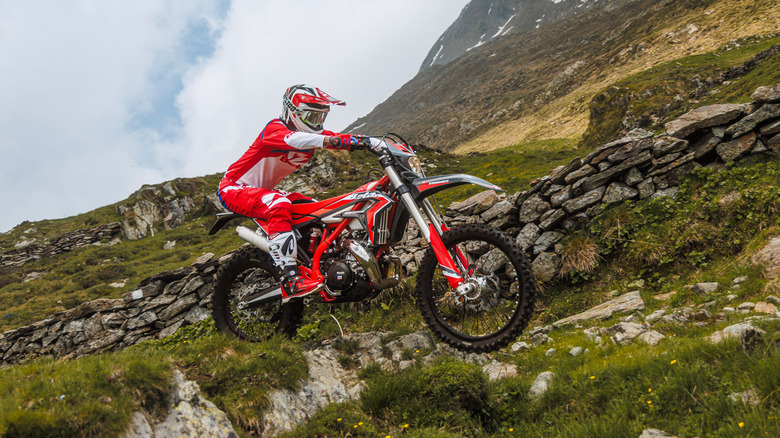
The Beta Xtrainer 300 is an off-road-ready enduro bike that also can't be found on the street. Unlike its Yamaha rivals, though, it comes with a headlight, which will come in handy when dusk falls. It's also compact and lightweight, with a 35.8-inch seat height for better maneuverability. There is an even more approachable 'Low Boy' model with a 34.6-inch seat height, aimed at beginners.
Apart from the seat, both Xtrainer 300s are nearly mechanically identical. They feature a 292cc two-stroke engine fed by a Keihin PWK 36mm carburetor. The single-cylinder unit produces 31.5 horsepower and 22.7 pound-feet of torque. Crucially, most of that torque is available from 3,000 rpm, which aids rideability in off-road scenarios.
The Xtrainer 300 utilizes Beta's molybdenum steel frame, which keeps the dry weight at relatively low 218 pounds. It also starts at $8,990 for both the regular and Low Boy models. That's quite affordable for all of the unique characteristics found in Beta's 300cc bike. On top of being comparable in performance to its trail-oriented rivals, it can also do longer sessions like an enduro.
2026 Sherco 125 SE Factory
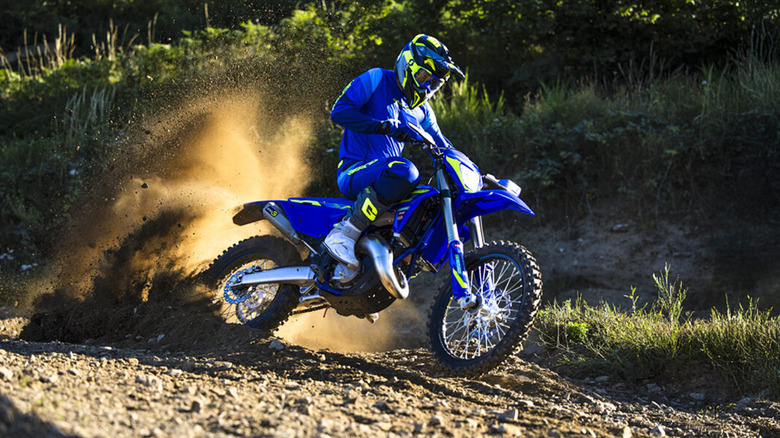
Sherco's two-stroke competition enduro bike has been updated for 2026. The competition bike maker has focused on reducing weight with a new Galfer rear brake disc, a lighter exhaust valve system, and a lighter front sprocket with circlip mounting. Weight reduction was necessary, as the previous model had 20 pounds over its closest rival, the Yamaha YZ125, mainly because of the electronic ignition and exhaust valve. But the old-school characteristics of the 125cc two-stroke engine were retained in the refreshed model. Sherco opted for a Keihin PWK 36 carburetor to feed the single-cylinder engine, which should provide the quick power delivery enduro bikers crave. In fact, the new electronic exhaust valve system was designed for increased responsiveness.
But Sherco didn't stop there. It also optimized the 125 SE Factory's chrome-molybdenum steel chassis for better handling. The six-speed transmission was also redesigned so it shifts better under load, while the new Oxia Lock-on grips provide better ergonomics and protection for the rider. Hydraulic Brembos take care of braking duties on both ends, while the Michelin Enduro tires ensure good traction on slippery terrain. But all these modern additions come at a price, and that's not helped by the fact that the Sherco 125 SE Factory is manufactured in Europe and only sold through third-party dealers in the U.S. Because of this, buyers will need to shell out a cool $9,890, which is significantly more expensive than Yamaha's YZ125.
2026 Kawasaki KX112
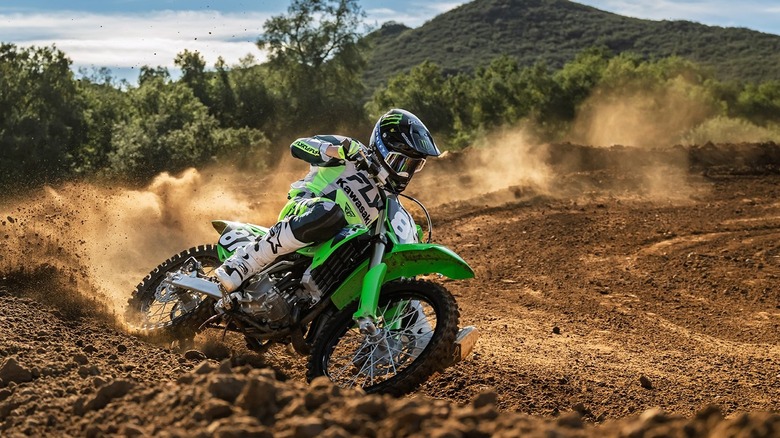
Young motocross riders can also still enjoy unaltered two-stroke purity, thanks to old-schoolers like the competition-only 2026 Kawasaki KX112. The brand's biggest youth motocross bike features a potent 112cc liquid-cooled single-cylinder engine with a PWK 28 semi-flat carburetor. To ensure excellent power delivery throughout the rev range, the KX112 also packs a special Kawasaki Integrated Power-valve System, further mixing old-school style with modernity.
According to Motocross Action Magazine, the two-stroke engine in the 2022 KX112 can produce 24.96 horsepower. Since the engine went relatively unchanged, that figure should still be true for the 2026 model. However, Kawasaki did make significant changes in other areas. Notably, the KX112 and its smaller sibling, the KX85, now feature a new rigid perimeter frame, which adds torsional rigidity. The suspension has also been upgraded, and the bike comes with bigger brakes and Dunlop Geomax MX34 tires for higher performance on the track. Furthermore, the aluminum ERGO-FIT handlebars increase comfort and adjustability, while also reducing weight.
The 2026 Kawasaki KX112 starts at $5,749 in the U.S. That's a fair price considering the unique characteristics of the bike. Its close rival, the Honda CRF150R, starts at $5,499 and also has a single-cylinder carbureted engine. However, it's a four-stroke unit, rather than a two-stroke. So, if you are into snappy power delivery, the KX112 is the one to get.