

5 Of The Best Folding E-Bikes, According To Consumer Reports
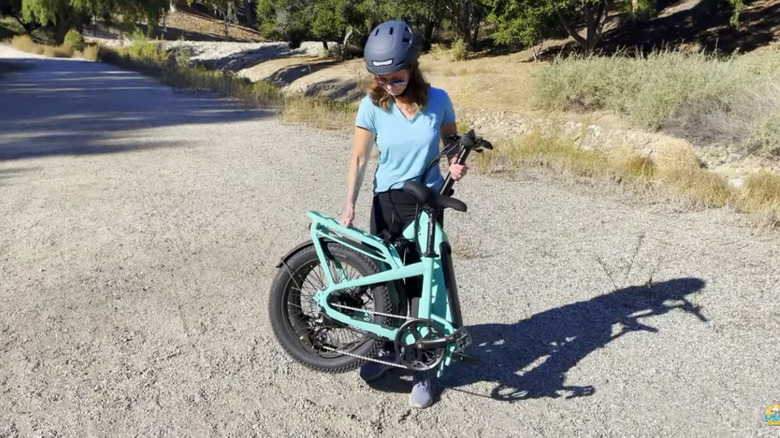
Affordable and convenient — especially when compared to cars — e-bikes are quickly becoming a popular choice for personal transportation. In the United States alone, the e-bike market was worth some $2 billion in 2025, and that's expected to more than double, to $4.3 billion, by 2035. And there are more and more companies selling e-bikes, so finding the best one to meet your needs is turning into a growing problem of its own.
The good news is that the folks at Consumer Reports are ready to help, thanks to the website's database of e-bike ratings — which had reached 74 models at the time this was written. Today, though, we look specifically at CR's choices for best foldable e-bikes. These can provide an added level of convenience due to their compact portability. For example, if you're taking an urban journey that involves riding the subway in some places, folding an e-bike into a smaller package makes it easier to bring along. Folding e-bikes can be easier to toss into your car's trunk, too, and they can take up less room if you're storing/charging in your home, apartment, or office.
Just remember as you're reading that CR says it only tests bikes that qualify as Class 1 or Class 2 e-bikes. Now, we covered what each e-bike class means in the past, but as a refresher, for a Class 1 e-bike, the electric motor only provides assistance when you're also pedaling and staying below 20 mph. Class 2 e-bikes have a similar speed limit for their electric assistance, but you don't have to pedal for the motor to operate. The untested Class 3 e-bikes work much like those from Class 1, but with a speed limit of 28 mph.
Blix Vika+ Flex
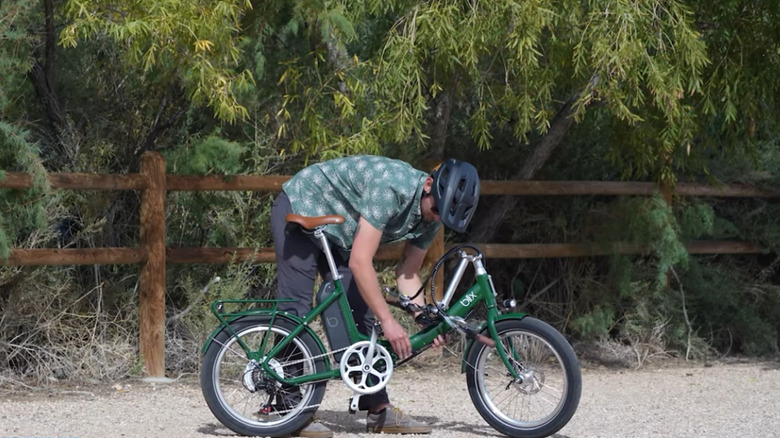
Blix, headquartered in Santa Cruz, Calif., has been building e-bikes since 2014 and currently offers a full lineup that includes the folding Vika+ Flex — featuring basics like a 500-watt electric motor providing an 18-mile range and a 614-Wh battery. As we'll see, those are roughly middle-of-the-pack numbers for CR's top 5 recommended folding e-bikes, but the relatively light weight of the Vika+ Flex – 54 pounds — gives it an important advantage in portability.
To be specific, of the top five Consumer Reports choices, based on CR's proprietary overall scores, the Vika+ Flex had the best individual score for the portability category. Which sounds pretty good until you realize that that exact rating for portability was roughly average. So, to be clear, not a single one of CR's five favorite folding bikes could really rise above the crowd when it comes to actually folding them to lug them around. Yet some non-recommended bikes were both lighter and rated as more portable than those in the top five.
The Vika+ Flex did have its high points, though. Like the rest of the CR leaders here, it had high scores for acceleration, helping riders keep up with city traffic, as well as for hill climbing, to give riders a break going up steep inclines. The bike's positive braking performance can also boost riders' confidence — albeit at a cost. The Blix Vika+ Flex was the most expensive of CR's first five folding e-bikes, with CR reporting a starting price of $1,899. If you're wondering where all the cheap e-bikes are, just keep reading.
Lectric XP 3.0
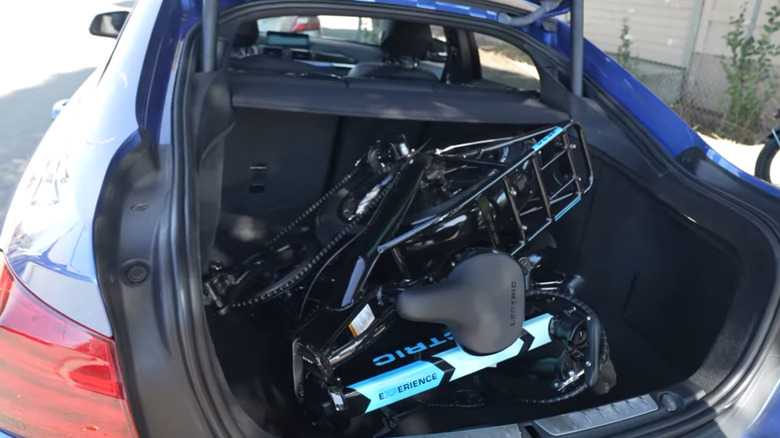
Lectric is one of the largest e-bike companies in North America, and its XP family is among the best-selling models in the U.S. Apparently for good reason: The Lectric XP 3.0 stands out as the CR "Smart Buy" of the group thanks to its ability to meet Consumer Reports' standards and still represent a "great value" to shoppers. After all, the XP 3.0 gives you pretty much the same grades as the Blix, but with slightly better results for unassisted cruising and a much lower MSRP of $1,215. In addition, the Lectric 3.0 is engineered for at least a modicum of trail use. The other folding e-bikes mentioned here are classified only as commuter bikes.
All that said, there's good news and bad news about the Lectric XP 3.0. On the one hand, buying a new one will be no easy task, as they're now out of production. On the other, it's been replaced in the Lectric lineup with the upgraded XP4. The new model has yet to be tested by CR, but Forbes, for one, named it the best folding e-bike overall for 2025. Moreover, compared to the XP 3.0, the XP4 offers a bigger motor (up to 750 watts), a bigger battery pack, a longer range, faster charging capability, and more. Even better, the XP4 can slightly reduce the entry fee to e-bike ownerships vs. its predecessor — backed by an MSRP of $1,078.
Himiway B3
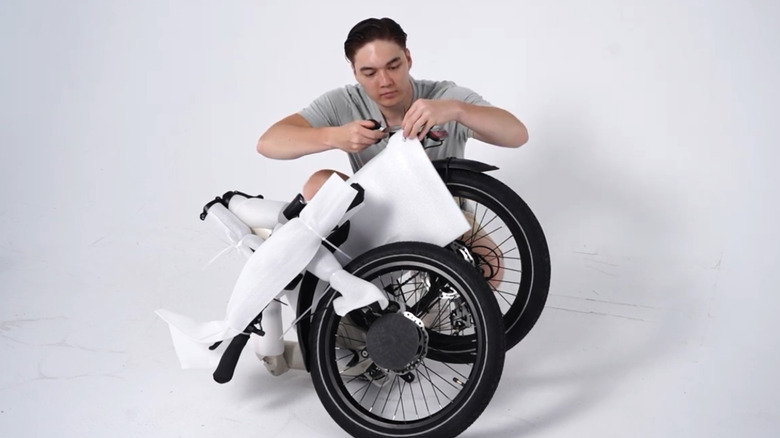
The Himiway B3 had the exact same overall score as the Lectric XP 3.0, but it had what CR called exceptional marks for not only acceleration and hill climbing — like the Blix and the Lectric — but also for braking and hill-climbing without electric assistance. Further, the B3's 23-mile all-electric range is tied for first among the CR top five folding e-bikes and tied for second among tested foldable models overall. Certainly helping matters is the bike's battery size of 720 Wh — the largest of the leading models mentioned here.
As for downsides, the Himiway's starting point of $1,700 is on the high side for folding e-bikes in the CR database, and the same can be said of its 67-pound weight. That, in turn, contributed to the B3's poor portability issues. But then again, since it bears repeating, the folding e-bikes that CR rated best overall did fairly badly in this category — with the Himiway B3 among those bringing up the rear. Another potential concern may be the B3's basic instrumentation, as it's lacking a trip computer — a feature found on the other four members of today's CR top five.
Nor can we avoid talking about Himiway's home base. While U.S. senators are crying to Trump about Chinese EVs, e-bikes originating in that country — like the Himiway B3 — are already here. Now, Himiway does have a U.S. dealership/service network and generally garners good reviews on TrustPilot, for instance, but we know not everyone is totally down with buying Chinese products.
Ride1Up Portola
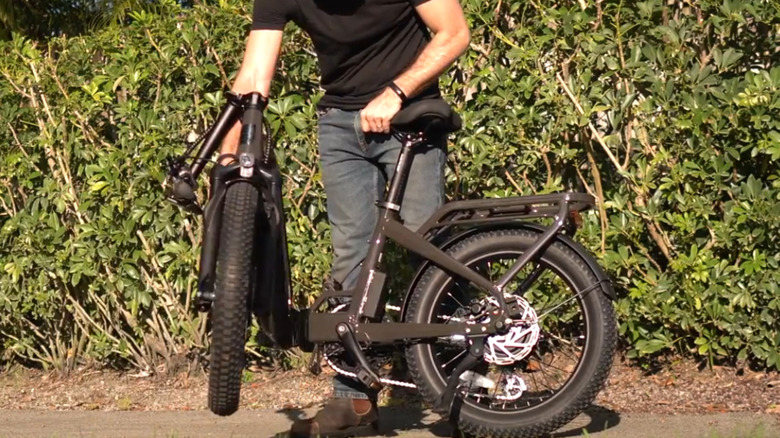
One thing we've learned covering Consumer Reports — whether it's looking at top truck and SUV tire picks or the car insurance companies best at settling claims — is that they can be kind of quirky when you dig into the details. For example, the Ride1Up Portola tied with the Himiway B3 in terms of overall scores despite the latter having noticeable price and feature advantages. So, along with a trip computer, which may not be that important, the Portola comes standard with hydraulic disc brakes, not the cable-pull setup used by the Himiway (and the Blix and Lectric). The benefit is that hydraulic stoppers tend to be more sensitive and easier to control than the more cheaply made cable-pull alternatives.
Also, even though the Portula has the same terrible score for portability as the B3, and it weighs a pound more, the former has a quick-release front wheel for an extra measure of convenience — something missing from all the other CR top five folding e-bikes. In fact, for some further context, only one folding e-bike of the 17 tested earned both a top score for portability and a recommended rating from CR: the $3,800 Brompton C-Line Explore that was $1,000 more expensive than the next costliest model in the ranking.
Meanwhile, budget shoppers should note that the Portula opens at $1,195, allowing them to enjoy plenty of bang for their buck as they enjoy the e-bike's 23-mile range, 750-watt electric motor, and 643-Wh battery.
Velotric Fold 1
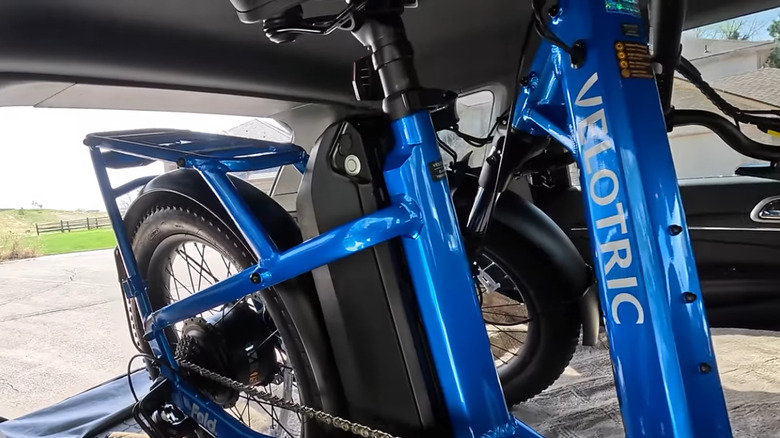
The Velotric Fold 1 is both the No. 1-rated folding e-bike in the Consumer Reports rankings and a prime example of how those ratings can be a little problematic at times. Right off the bat, the CR Best Electric Bike Buying Guide explicitly says that the website "has tested Class 1 and Class 2 e-bikes, but no Class 3 models." Yet — as CR suggests in the bike's individual overview — the Fold 1 has multiple driving modes, including one that essentially turns it into a Class 3 vehicle with a higher top speed and stricter requirements about who can drive it and where it can be driven.
Plus, like the other top folding e-bikes, the Fold 1 isn't all that portable despite the fact it can be folded in half. It did do better in this measure than the Ride1Up or Himiway, but the bottom line was still a subpar grade for a capability you'd think most folding-bike owners would put at the top of their shopping lists.
The good news? The Fold 1 was considered a relatively smart value for your money, even with its CR as-tested price of $1,500. Among its highlights were strong acceleration and hill-climbing capability from its 750-kW motor, along with top grades for unassisted cruising and braking. An aluminum cargo rack mounted over the rear wheel adds welcome functionality to the Fold 1. For what it's worth, the company itself was founded by Adam Zhang, who also co-founded Lime. You know, the same company whose e-bike Timothée Chamalet was caught riding to a movie premiere.