

If You Just Filled Up Your Tires With Air And The Light Stays On, This Might Be Why
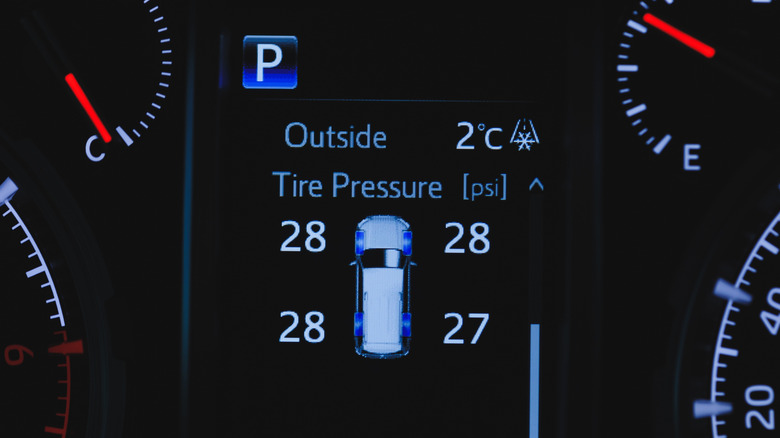
We hate to break it to you, but a Tire Pressure Monitoring System (TPMS) warning light that stays on even after you inflate your tires could be caused by many things. It might have to do with false inflation readings, undetected leaks, small punctures, and even tire damage. Refilling the tires with air and rechecking the air pressure using a pressure gauge might do the trick and turn off the TPMS light, or you might have to drive a block or two to help the TPMS recalibrate
On the other hand, overfilling the tires with air might not trigger the TPMS warning light at all (most TPMS sensors can only detect tire pressure loss of 25% or more below the factory specs), but it'll stiffen the ride unnecessarily and make it handle unpredictably.
Meanwhile, the onset of cold weather could inadvertently trigger the TPMS warning light as tires can lose a pound of air per square inch (psi) for every 10-degree Fahrenheit drop in temperature. It doesn't sound like much, but if the tires were lacking air to begin with, then a cold snap is enough to warn you of underinflated tires. The same happens when driving from higher altitudes to sea-level terrain, since doing so could register a 2 to 3 psi drop in air pressure.
Slow leaks could come from anywhere
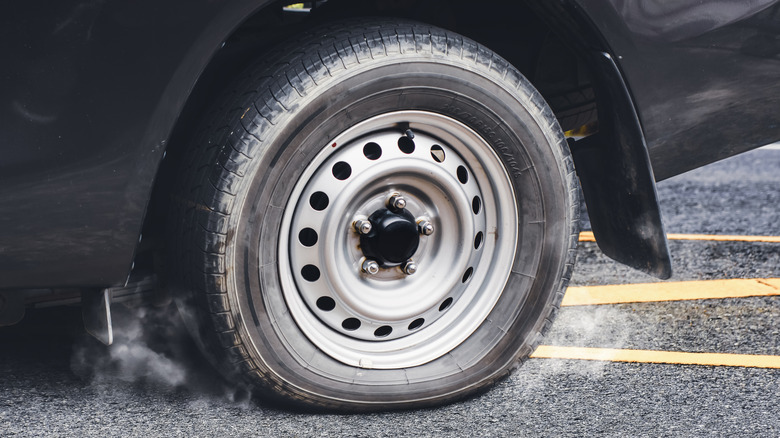
The TPMS warning light typically rears its ugly head when one or more tires are underinflated to 25% below the threshold. So you need to regularly check the tire pressure on all four wheels, since any of them could start losing air. If you managed to find out which tire or which side keeps losing air pressure, then you're probably dealing with tire damage of some sort. A legit puncture is sure to make your tire hiss and lose air, so check for nails, screws, wires, or anything on the tread surface, shoulders, and sidewalls that could puncture the rubber.
If so, bring the tire in for servicing, although you might have to get down and dirty with fitting a spare before doing so. Leaky tire valves and deteriorated valve stems could be the culprits for why tires keep losing air when there are no visible punctures, so grab a spray bottle with soapy water and spray around the valve stems and on the valve itself. If you find bubbling, you have found your leak. Trouble is, replacing tire valves is not for the uninitiated, so it's better to have a tire shop do it for you.
Sensor damage and balding tires can trigger TPMS lights
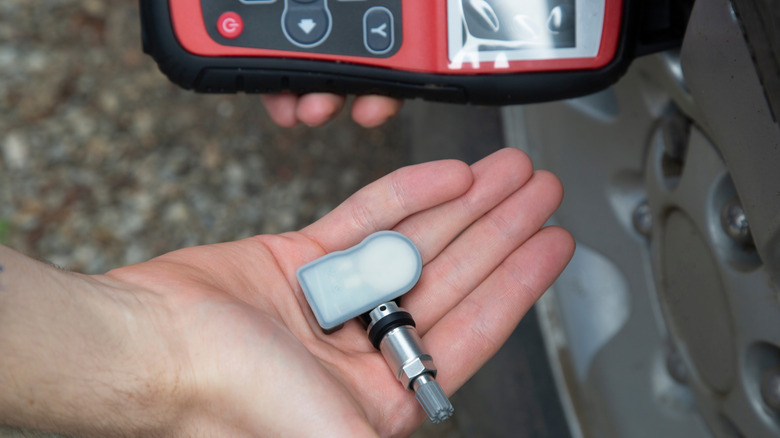
With the right air pressure and no leaks, an illuminated TPMS warning light could mean one or two things. If you're not dealing with sensor damage or low batteries (TPMS sensors have batteries, you know), then you probably need new tires. You don't need to replace the sensors in the wheels when replacing tires, but it's always worth checking or replacing the sensor batteries while you're at it.
Meanwhile, it's not unusual for the TPMS light to turn on when the tires are worn, damaged, or bald. Do the penny test and check if you can see Lincoln's entire head, indicating that the treads are below ²⁄₃₂ of an inch. Better yet, grab a tread depth gauge to get a more accurate measurement. At this point, it's a good idea to check for irregular tread wear, which could point to alignment issues or worn suspension parts.
The Tire Pressure Monitoring System is there to warn you of sudden pressure loss. However, just because it's there doesn't mean you don't have to do anything to ensure your tires are okay. Make it a habit to check and inflate them at least weekly or once a month, before towing or hauling cargo, and before taking a long trip. It's worth doing it before the TPMS warning light catches you off guard.