

5 EV Buying Tips I Had To Learn The Hard Way
If you hate feeling trapped in the endless cycle of some random world event blowing up your gas budget every few years, electric vehicles offer a tempting alternative. Sure, higher fuel prices can increase energy costs across the board, making it more expensive to charge your EV, but you should still save money overall. EV technology is advancing at a rapid pace, though, and what may have been good advice 10 years ago can be seriously dated.
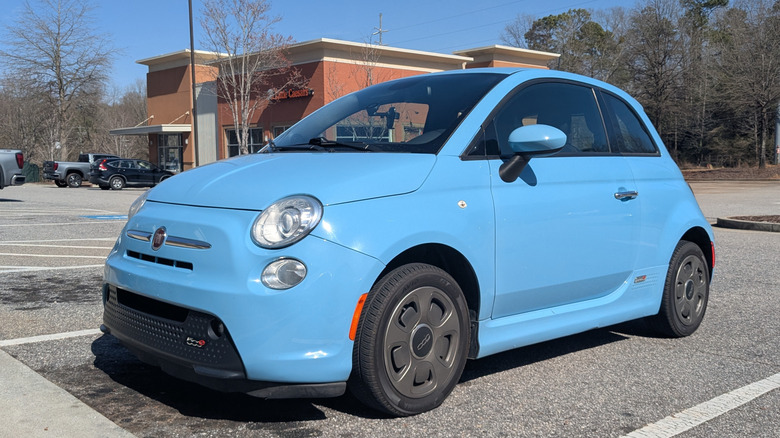
The good news is, you have me, a guy who bought his first EV eight years ago, and who also has a knack for screwing things up, even when they're supposed to be simple. I'm also in the middle of a two-year lease on a 2024 Fiat 500e with an official EPA-estimated range of 141 miles — tiny by modern standards. Oh, and did I mention I just moved to an ever-so-slightly less rural area in Georgia, and now I can't charge at home unless I want to risk a fire by running an extension cord out the window? And somehow, my EV ownership has worked out just fine, even with a recent road trip in the books.
With more Americans buying pre-owned EVs now that gas is expensive again, I wanted to share a few lessons I've learned over the years. Not as some out-of-touch influencer with an ideal life and too much money, living in a high-dollar EV paradise, but as a regular guy who lives in an apartment, can't afford to shop at Publix, and doesn't live anywhere close to California. Hopefully, this real-world advice feels a little more grounded and realistic.
Installing a home charger may not be necessary
As previously mentioned, I currently live in an apartment building without EV chargers, but even when I lived in houses or apartments where I could charge at home, I never once considered installing a Level 2 charger or wished I had one. Because I work from home, I just don't drive far enough to need Level 2 charging. Instead, I just used a good, old-fashioned wall outlet and the charging cable that came with the car. Whether that's the case for you or not depends, of course, on how far you drive every day and how much time you spend at home (gotta be home to charge at home).
Plug an EV into a wall outlet, and you'll get a little over 14 kWh of electricity out of that 120-volt socket if you leave it charging for 12 hours. Efficiency varies significantly from model to model, so I can't tell you exactly how many miles that will add to your range estimate, but in my car, that's something like 50 or 60 miles. Even in a rural area where driving distances are longer, that's still more than enough to visit my parents, run errands, and meet friends out later.
Of course, I also know working from home isn't an option for a lot of people, and many of those who do work from home (stay-at-home parents) can easily rack up 100 miles a day, just shuttling kids to and from their various activities. So, I'm not saying you definitely don't need to install a Level 2 charger in your garage. But I am saying to take a good look at how often you'd actually need that overnight range boost. Keep track of your mileage for a few weeks ahead of a new EV purchase, and decide whether it really is worth the cost and headache of installing a Level 2 charger.
App overload
Supercommuters, rideshare drivers, and parents working as their children's unpaid chauffeurs are some obvious exceptions here, but generally speaking, if you buy an EV, you probably won't use your entire battery every single day. In fact, considering how much attention we pay to charging inconveniences, you'll probably be surprised how little you think about battery level once you own the car. In my experience, it's pretty common for EV owners to decide range is mostly irrelevant, at least until they take a road trip.
Suddenly, with long-distance travel, all that charging and range stuff immediately becomes relevant again, and I'm sorry to tell you, you're going to need a lot of apps. They're annoying to download, annoying to deal with, and most annoyingly, signing up and giving them your credit card information takes way too long. It's one of the most frustrating aspects of EV ownership. There are a lot of different charging companies out there, and they all have their own apps. I hate it.
That said, the apps do have their upsides. The main upside I've discovered is that the charger screens can be difficult to read in harsh sunlight, slow and unresponsive, or broken. Being able to use your phone as the charging interface makes life much easier. Also, once you've created your account in a specific app, you won't have to do it again until you try charging at a location that requires a new app.
Some EVs do include a feature known as "plug-and-charge" that allows your car to communicate with the charger and handle everything automatically, without you needing to pull out your phone. It's incredibly convenient, but I'd also only make that feature a priority if you take a lot of road trips.
Charge cables can be heavy
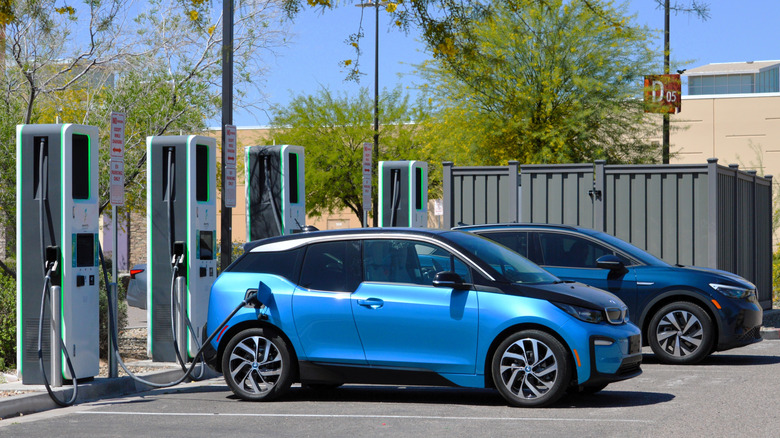
If you've never seen the basic charge cables that manufacturers provide, they may be thicker and heavier than you were expecting. As far as objects go, though, they're fairly light and easy to maneuver — just a bit more ungainly than your typical outdoor extension cord. The cables they use at fast chargers, however, are a different story. You need more wires to shoot electricity into the battery faster, so it makes sense that they'd be heavier. The public charging cables are sometimes frustrating to use based on how large they are, even for me, a generally healthy guy who's still able-bodied and ambulatory.
Older drivers and those with disabilities need to know it's possible they may struggle to use public chargers, especially in the winter when the cold makes charging cables stiffer. I promise you don't need to be an American Ninja Warrior champion to charge an EV, but I also wouldn't want someone to spend tens of thousands of dollars on a new car, only to find out they aren't strong or coordinated enough to use public chargers.
It's also a problem that deserves more attention because maneuvering public fast charger cables isn't part of the EV-buying experience. There's no upfront warning that the cable in the trunk isn't as heavy as the cables at fast chargers, and by the time a new EV owner struggles to plug in at their first public charger, it's too late.
Everyone needs groceries
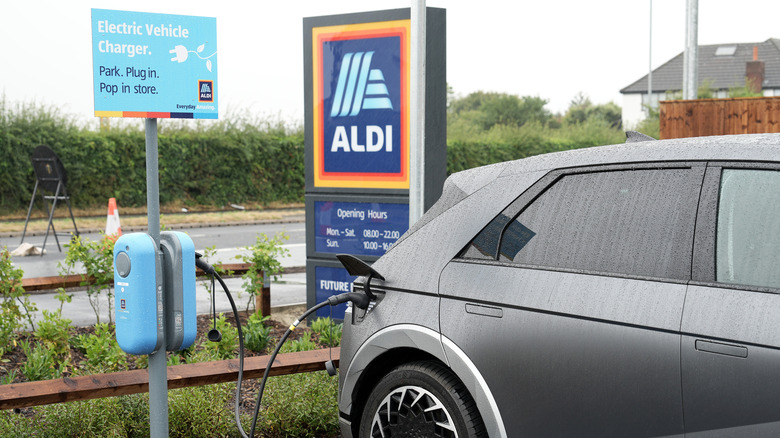
Most EV ownership advice assumes you can charge at home, and plenty of people will tell you not to buy an EV unless you can charge at home. They aren't necessarily wrong, but is it a requirement? Not really — it's just cheaper and more convenient. The key to figuring out whether or not you can make EV life work without home charging is to look at where the chargers are in your area and find the ones close to your regular watering holes. The building where you work is an obvious place to look for chargers, but grocery stores are another underrated option.
Depending on where you live, there's no guarantee that grocery stores near you will have chargers, but that's one of the locations where they're most common. And if your grocery store has chargers, the time you spend deciding whether you trust $5 sushi enough to try it, is also time your car can spend charging. Even if your diet is nothing but frozen pizzas and chicken nuggets, you've got to buy those things somewhere. Just make charging a part of something you're already doing, and who cares if it's slower than pumping gas? Wasted time is what matters here.
Other places you might find chargers are at large gyms, big parking lots with multiple restaurants, and at local malls. Even if you don't want to bring a book to read while you charge, or catch up with loved ones on the phone, odds are, there's at least one thing you could use inside the various stores near your charger. Maybe another bag of coffee or a box of cereal for when the one you have runs out?
Charge speed > range
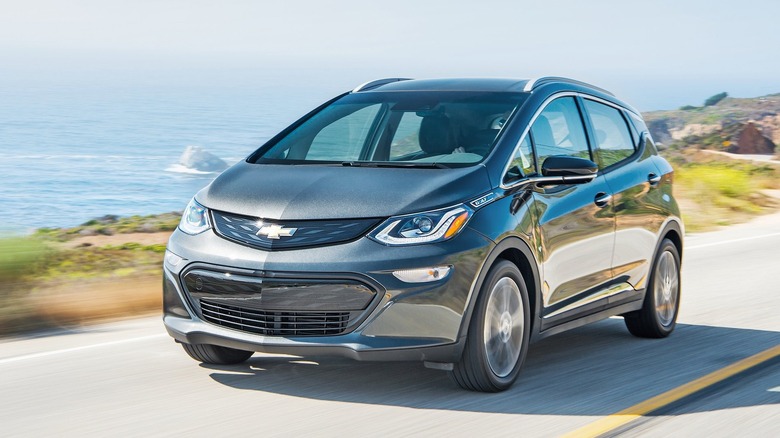
Even if you rarely drive more than 60 miles in a day, I doubt I could convince you to buy an EV with just 80 miles of range, but I also wouldn't try. I've owned two of them, and I have to say, having more than 100 miles of range is definitely better. Around 200 miles would allow me to drive to and from the airport without stopping to charge, and more than that would just mean not having to charge as frequently. But the main reason my new Fiat is so much more enjoyable to own than my old one isn't the range, it's the charging speed.
Compared to EVs that weren't designed to be practical, affordable city cars, my Fiat's charging speed is objectively slow, but it's so much faster than my old 2015 model. The range on the old one was acceptable for what I needed at the time, and charging in the garage worked just fine, but an emergency charging stop could take two hours before I had enough range to get home — even at a relatively quick public charger. I'll happily wander around a store for 15 minutes two or three times a month with no problems, but I cannot emphasize enough how much you don't want a slow-charging EV as a daily driver. Two hours!
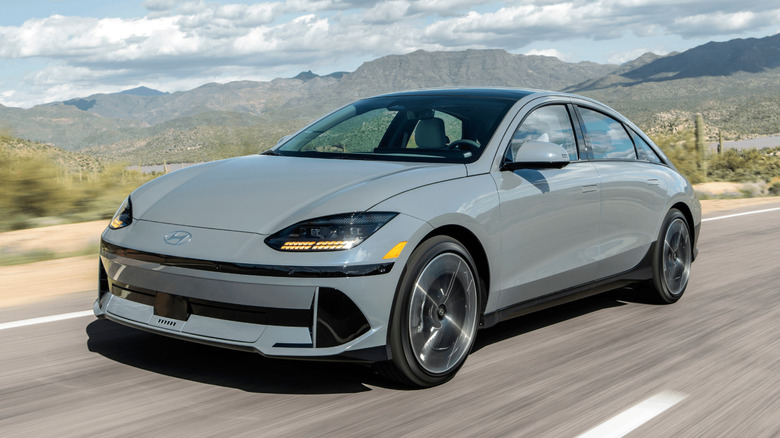
To put it in EV terms, the slowest charging speed I can recommend is 85 kW. That's enough to add some real range in the time it takes to place and receive a fast food order, and plenty of affordable used EVs already match or exceed that number. I promise you don't need to spend $80,000 on a brand new EV with the fastest possible charging speed in order to have a good experience. But I can also promise you that buying a slow-charging EV will come back to bite you.