

The US Is Ending Trade With Spain, Now I'll Never Get The SEAT Ibiza Of My Dreams
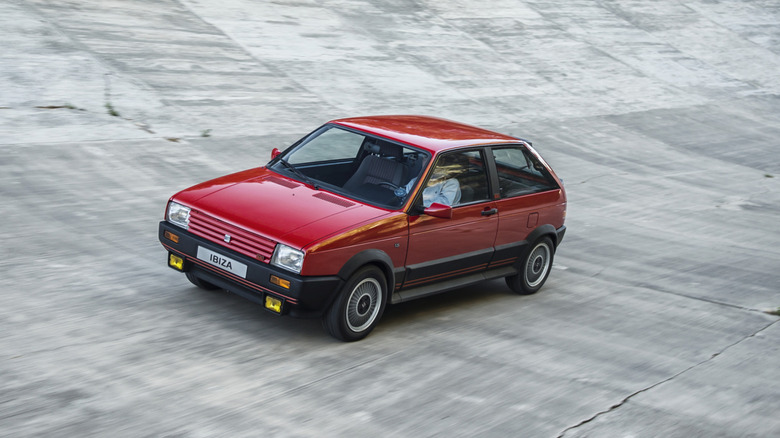
Which 1980s European hot hatchback was designed by Giugiaro, kicked off a tuning revolution, made use of incredible German engineering, and developed a cult following that still shines over forty years later? You might be surprised to learn that I'm not talking about the Volkswagen GTI. No, this is the car that was supposed to be the Mk2-generation Golf GTI, but Volkswagen ditched the design in favor of the more upright shape the Golf became known for. This is the SEAT Ibiza, and in particular, the SXi model with a 1.5-liter Porsche-designed four-cylinder making a cool 100 ponies. This is one of those esoteric machines American collectors haven't discovered yet, and it's on my dream list to import one day.
Unfortunately, because Spain is woke or whatever, and won't let U.S. fighter jets bomb the Middle East from Spanish bases, we're allegedly ending all trade with the European former ally nation and my Ibiza dream will never come true.
Last month, U.S. President Donald Trump said, "Spain has absolutely nothing that we need," and "we're going to cut off all trade with Spain." While it's arguably not possible to single out an EU nation for a trade embargo—that's kind of the point of the EU—Trump has doubled down on his anti-Spain rhetoric. Meanwhile, Spanish Prime Minister Pedro Sánchez is using the growing wedge between European nations and the U.S. as a springboard to accelerate discussions and cooperation with China, visiting Xi Jinping, urging China to help end the Israeli-U.S. attacks on Lebanon, Iran, and Gaza, while strengthening Spain-China trade relations.
So the Chinese can get a SEAT Ibiza, but I can't? Come on, that's hardly fair! I want to be ripping around in a Spanish hot hatch this summer, but Spain doesn't love war in the Middle East, so our President says I can't. How does that make any sense?
Why we should all get Ibizas
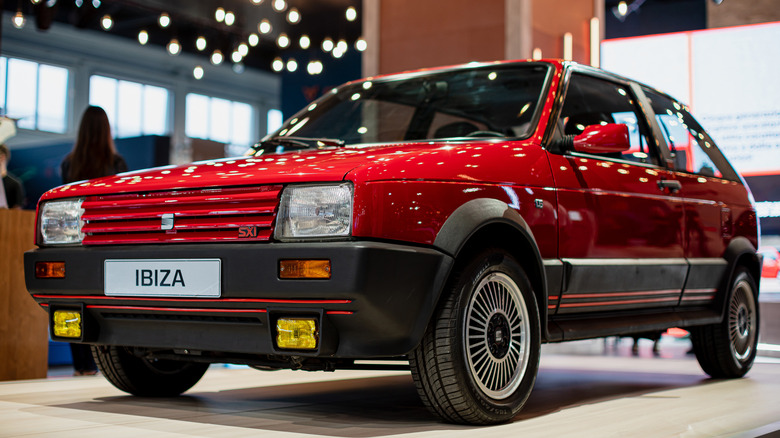
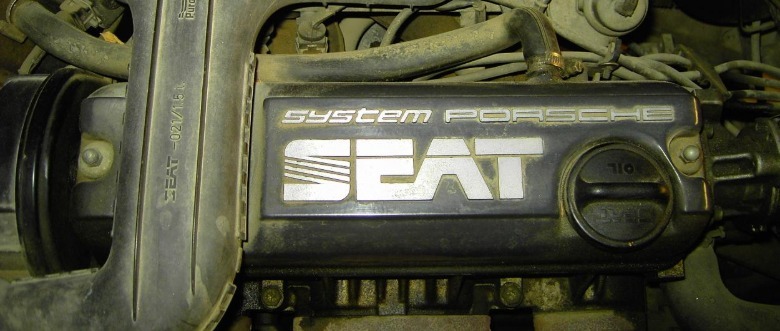
At the height of its powers, the SEAT Ibiza was selling like proverbial hotcakes, moving some 1.3 million units in its first generation. With attractive Italdesign bodywork like that, it's easy to see why. The base model gasoline and diesel versions were equipped with tiny workhorse engines from Fiat, but upmarket trims were powered by "System Porsche" 8v four-cylinders displacing between 1.2 and 1.7 liters, with a special 1.5-liter turbocharged model specific to the high-altitude Swiss market. For around a decade, this was the quintessential Spanish car, and when I lived in Spain back in 2005, they were still everywhere. I'm certain they're a little rarer today, but I still want one.
When it came to market, the Ibiza ended up being a size smaller than the Volkswagen Golf it was originally intended to be. Marketed as a Supermini, it offered a more spacious interior than contemporaries like the Ford Fiesta or Opel Corsa, but didn't quite balloon to the size of a compact like the Ford Escort or Opel Kadett. SEAT also came to the market in a low-cost package, priced competitively with the absolutely abysmal Hyundai Pony or a variety of low-rent Eastern Bloc machines available at the time.
Doesn't that just sound like the perfect car to you? A little high-revving Porsche engine powering the front wheels of a tiny hot hatch from the 1980s? While I haven't driven an SXi in anger before, there's just something about the look and feel of this dramatic hatch that keeps drawing me in.
According to Autocar magazine, however, I'll have to do something about the steering. This review of a SEAT heritage car from 2014 isn't exactly the most inspiring.
The steering is incredibly slow, seemingly needing arm fulls of lock for a relatively small change in direction. The long, spindly, gear lever also requires a very long throw. Nothing about the SXi is quick or snappy, though it does have a pleasant gait and a wonderful airiness.
Then again, I could go for a pleasant gait and wonderful airiness in 2026, couldn't you?
Why not something more normal?
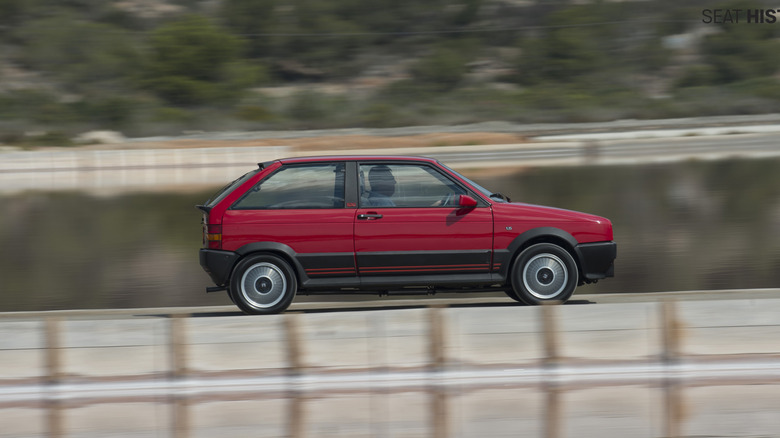
Is there anything available on the market today that could be described as having a pleasant gait or any type of airiness? I've driven a lot of new cars, and neither of these seem to be characteristics modern automakers even feign an interest in imbuing. Plodding, heavy, stifling, maybe. Any lightness or effortlessness after, say, 2010, feels extremely artificial. It's time to return to the era of compact fun.
Could I get a similar, or even better, driving experience from any number of hot hatches that were already available in the U.S. in the 1980s? Yeah, probably. A Volkswagen Scirocco 16v, for example, probably drives circles around this little thing. And I've spent a bit of time in a Chevrolet Sprint Turbo, and that's about as pleasant a gait and wonderful airiness as anyone could ask for. None of these cars is particularly fast in the world of three-second 0-60 time electric crossovers, but there's a return-to-basics driver engagement that nothing modern can even hope to replicate. I'm also a sucker for anything Porsche touched, and have a bit of Spanish pride for my onetime home country. I never said car purchases were entirely logical.
I want to import one of these from Spain, but apparently, President poopy pants won't let me. Fine, I guess I'll just have to buy this 4,500 Euro example from France instead. We haven't locked down trade with France yet, have we?