

What Happens To Your Insurance If You Crash Into A Really Expensive Car?
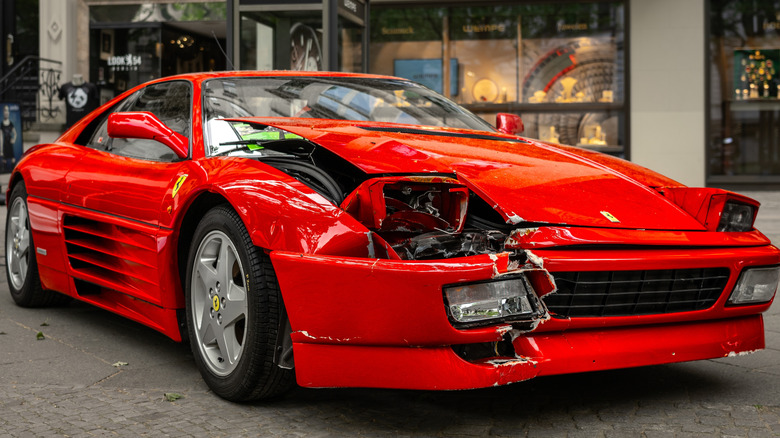
Causing a car accident can be an expensive proposition, even if you're covered. According to U.S. News & World Report, the average rate hike for getting into just one accident is an additional $1,312 per year. That's more than $100 per month. The rate goes up the more accidents you have, and that's not even the worst part – just look at some of your worst car insurance stories. What if you hit a really expensive luxury car that you don't have enough coverage to pay for? What happens then?
The simple answer is that someone has to pay for the damage, even if your insurance only pays for a small part of it. If you're at fault for the accident, that someone is you. There can be some heavy legal penalties if you don't pay an entire judgment. And that large judgment can impact your credit for years.
That's why it's recommended that you get as much liability as you can afford, not just the minimum mandated by the state you live in. Yes, opting for the minimum legally-required liability insurance can save you some money on your monthly premiums, but one accident with a Bugatti could cause you to lose everything, including your house. Luxury cars often have expensive proprietary parts and have to be repaired by technicians with expertise specific to that car brand. Even minor fender benders with these cars will not turn out cheap for the driver at fault.
What if you don't have enough coverage?

We get it. Life is expensive, and it keeps getting more expensive. You may have made a choice to opt for the legal minimum insurance coverage just so you have money left for groceries. Some have dropped their auto insurance altogether (please don't do that). Unfortunately, minimum coverage is often woefully inadequate to cover damage to a luxury car. For example, states require drivers to carry liability coverage, but some set the minimum coverage at $10,000. That's nothing, since it can easily cost thousands just to fix small damage on a luxury car like a Rolls-Royce.
So what does your insurance do if you're only covered for $10,000, but you've done $100,000 in damage? It will pay the $10,000, and then it's done, other than raising your premium or perhaps even dropping you altogether. That means you're on the hook for the other $90,000. Who comes after you for that remainder depends on what kind of coverage the other driver has. If the other driver has sufficient collision coverage or an uninsured/underinsured policy, their insurance company may make them whole. Great, problem solved, right? Not quite. If the other driver's insurance company had to pay them for an accident you caused, the company can come after you to get reimbursed. And if the other driver's insurance doesn't cover it, then the driver themselves can come after you.
What if you can't pay the difference?
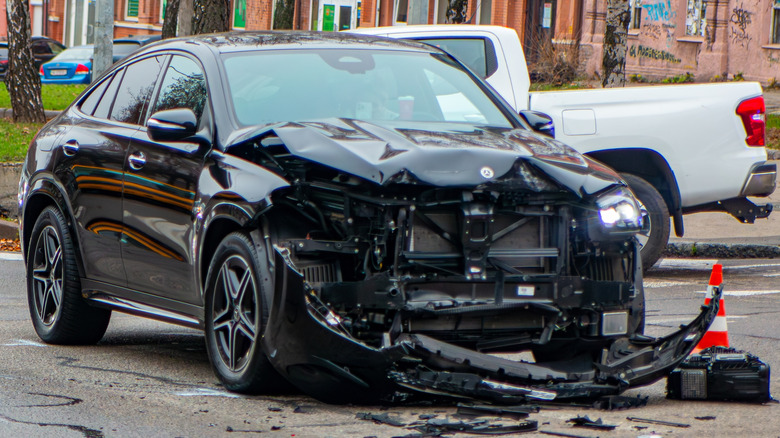
What if you don't have $90,000 lying around to pay the other driver or their insurance company? Do you have a job? Then the other party often has the right to garnish your wages. Do you have a house? Again, the other party can put a lien on it, meaning if you sell it, they get paid first from the proceeds, and you'll get whatever is left over, if anything. It can get even worse. "You should be afraid that you're going to have your house taken away," insurance claim attorney Lynette Simmons Hoag told CarInsurance.com.
The consequences of causing an accident you can't pay for go beyond that. In some states, your license can be suspended if you don't fully reimburse the other party for damage you inflict. To get your license back, you will need to pay the judgment on the claim, as well as any fines the state levies. As you can see, choosing just the legal minimum for liability is a gamble.
Something you might think about getting is umbrella liability insurance. This type of policy will cover damages beyond what your standard policy covers, and often costs between $150 and $300 per year. This is not the same as having two overlapping insurance policies on the same car. The one catch is that many umbrella policies require you to have auto coverage far beyond the minimum.